Swiss Voters Reject Neutrality Curbs That Would Have Limited Sanctions
The referendum result preserves Bern’s ability to align with European sanctions, a decision with implications for Washington, NATO and global firms.
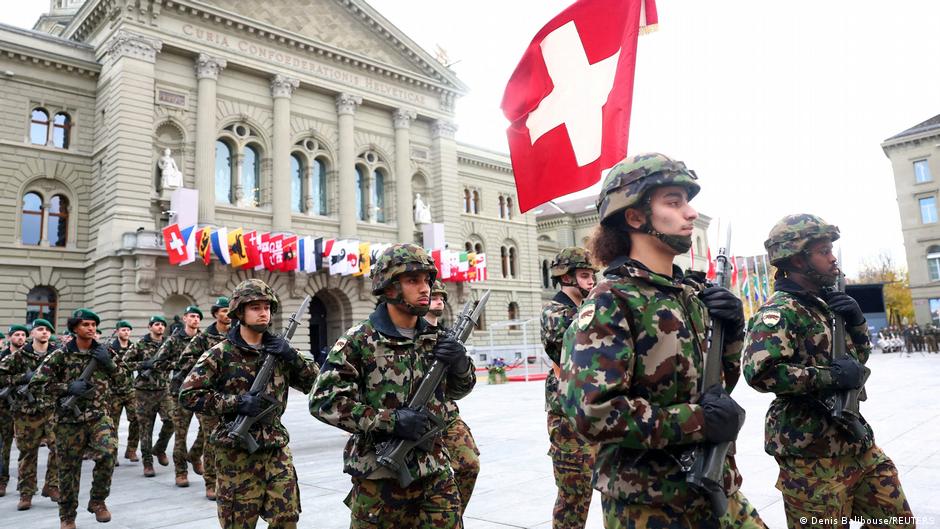
Swiss voters have decisively rejected a proposal that would have imposed a stricter interpretation of the country’s political neutrality, including sharp limits on Bern’s ability to join sanctions against countries at war. The outcome keeps Switzerland’s current, more flexible approach intact and preserves an important point of coordination between Bern, European capitals and Washington.
According to official results published by the Swiss government on Sunday, September 27, 70.15 percent of voters opposed the initiative. The proposal, titled “Preserving Swiss Neutrality,” was advanced by Pro Schweiz, an organization close to the right-conservative Swiss People’s Party. Its backers argued that Switzerland’s government had weakened the principle of non-intervention by joining European Union sanctions against Russia over the war in Ukraine.
For U.S. policymakers and multinational companies, the vote matters because Switzerland occupies an outsized role in finance, commodities trading, pharmaceuticals, insurance and wealth management. A constitutional bar on sanctions except those approved by the United Nations Security Council would have made Swiss policy less aligned with the U.S. and EU sanctions architecture, especially in cases involving Russia, where Security Council approval is blocked by Moscow’s veto power.
Neutrality Without a Sanctions Freeze
The initiative sought to enshrine the principle of “permanent and armed” neutrality in the Swiss Constitution. It also aimed to prohibit Switzerland from joining military alliances, such as NATO, or cooperating with them except in cases where Switzerland itself came under attack. Most significantly for business and foreign policy, the proposal would have introduced a broad sanctions ban: the Swiss government could impose economic sanctions only after approval by the UN Security Council.
That condition would have represented a major constraint. In practice, many of the West’s most consequential sanctions regimes are coordinated through Washington, Brussels, London and allied capitals rather than the Security Council. For American companies operating in or through Switzerland, a Swiss retreat from sanctions alignment could have created compliance friction, split regulatory expectations and new reputational risks in sectors where U.S. rules still apply.
Instead, voters opted to maintain the current system, under which Switzerland can preserve its traditional neutrality while still responding to violations of international law through sanctions decisions. The result gives Bern continued room to coordinate with the EU and, indirectly, with U.S. policy priorities on Russia and other security crises.
Swiss Foreign Minister Ignazio Cassis argued during televised debates that neutrality has always been applied with a measure of “flexibility.”
Cassis said neutrality should not be equated with “indifference.” In his view, Switzerland should not turn a blind eye to violations of international law in the name of protecting its own interests or preserving peace. That argument appears to have resonated well beyond the center of Swiss politics.
Washington and Corporate Compliance
The referendum was closely tied to the broader debate over Russia’s war in Ukraine. Switzerland is not a member of the EU or NATO, but it has joined EU sanctions against Russia, a step criticized by right-conservative supporters of the initiative as a departure from neutrality. For Washington, Switzerland’s ability to keep participating in sanctions is relevant because sanctions work most effectively when major financial and trading hubs move in the same direction.
Swiss banks and financial intermediaries have long been important to cross-border capital flows. The same is true for commodities traders based in Switzerland, which sit near the center of global energy, metals and agricultural markets. If Swiss law had barred sanctions unless they cleared the UN Security Council, U.S. firms doing business with Swiss counterparties could have faced a more complicated landscape in which American restrictions remained binding while Swiss policy offered a different standard.
The vote does not create a new sanctions regime, and it does not change Switzerland’s non-membership in NATO. But it does reduce the risk of a structural break between Swiss policy and the broader Western sanctions system. For U.S. businesses, the bottom-line impact is continuity: compliance teams can continue to treat Switzerland as a jurisdiction likely to remain broadly aligned with EU sanctions, while still monitoring Swiss-specific implementation.
The political message is also notable. The proposal was opposed by all major Swiss political forces except the Swiss People’s Party. Its defeat by more than 70 percent suggests that Swiss voters were unwilling to lock the country into a form of neutrality that would sharply limit the government’s ability to respond to wars and breaches of international law.
A Second Vote on Food Security Also Fails
Swiss voters also rejected a separate food security initiative by a margin of more than 70 percent. Supporters of that proposal wanted to raise the share of food produced domestically to at least 70 percent of consumption, increase production of plant-based foods, reduce the use of crop protection products and fertilizers, and strengthen protections for drinking water, soil fertility and biodiversity.
While separate from the neutrality debate, the food security vote also carries business implications. Had it passed, it could have increased pressure on agricultural supply chains, food producers and importers operating in Switzerland. Its defeat leaves existing policy parameters in place and avoids a mandated shift toward a higher domestic production threshold.
Taken together, the referendum results point to a Swiss electorate that rejected sweeping constitutional constraints in favor of policy flexibility. For Washington, the most immediate consequence is that Switzerland remains able to cooperate with sanctions measures linked to Russia’s war in Ukraine. For American companies, the decision preserves a more predictable compliance environment in one of Europe’s most important financial and commercial hubs.