Tanker Linked to Russia’s Shadow Fleet Burns Off Sochi, Closing Beaches
The fire on a Liberia-flagged oil tanker near Sochi adds new risk to Black Sea shipping, energy flows and sanctions enforcement.

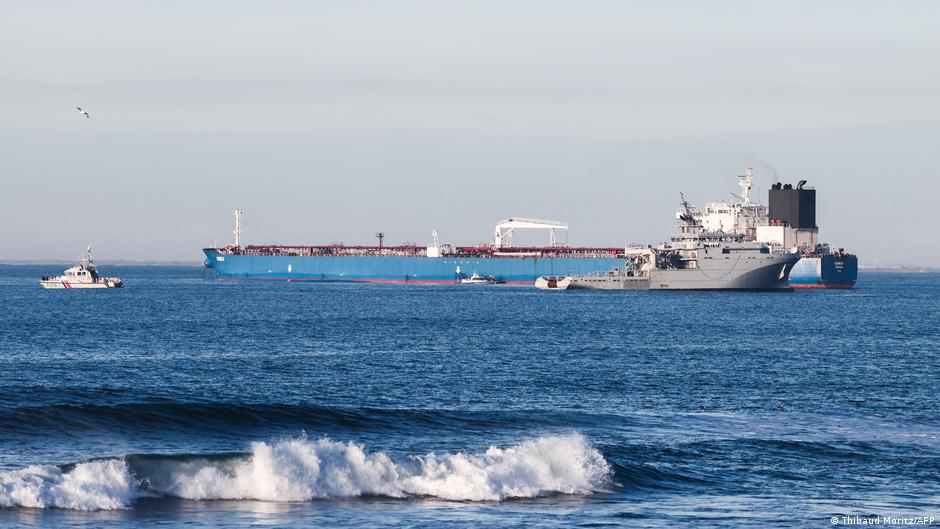
A Liberia-flagged oil tanker associated by media reports with Russia’s so-called shadow fleet caught fire in the Black Sea off the coast of Sochi, prompting local authorities to close beaches in the nearby federal territory of Sirius and evacuate the crew.
Dmitry Plishkin, head of the Sirius administration, said on Tuesday, October 6, that an oil tanker had caught fire off the Sochi coast. Beaches in Sirius would be temporarily closed because of the incident, he said. Plishkin also asked local residents to avoid spending prolonged periods outdoors and, where possible, not to open windows inside buildings.
The Russian Transport Ministry said the vessel, carrying oil and sailing under the Liberian flag, had been attacked by unmanned boats. The ministry identified the tanker as the Aframax Rio after a meeting of the headquarters dealing with the consequences of the attack off the Black Sea coast.
“At present, open burning of oil is taking place in the Black Sea waters,” the Russian Transport Ministry said.
The ministry said firefighting could begin only after the intensity of the blaze decreased enough to allow rescue vessels to approach the tanker safely. It added that the available forces and resources were sufficient to deal with the aftermath.
Why Washington Will Be Watching
For U.S. policymakers, the incident lands at the intersection of energy security, maritime risk and enforcement of sanctions related to Russia’s oil trade. The Aframax Rio is not on European Union or U.S. sanctions lists, according to the source report, but Ukraine has imposed restrictions on the vessel. The Insider reported that the ship “probably” belongs to Russia’s shadow fleet.
That distinction matters in Washington because shadow-fleet vessels have become a central concern for Western governments seeking to limit Moscow’s oil revenue without triggering broader shocks in global energy markets. Even when a vessel is not under U.S. or EU sanctions, its ownership, insurance, destination and cargo can draw scrutiny from regulators, insurers, traders and banks. For American companies that touch maritime finance, compliance screening, energy logistics or shipping insurance, incidents like this raise the cost of judging counterparty risk.
The outlet Astra also reported that the vessel in question was the Aframax Rio, sailing under the Liberian flag, and said it could carry up to 100,000 tons of oil. The Telegram channel Mash reported that the tanker was transporting crude oil from Novorossiysk to India and was almost fully loaded. According to Mash, the crew of 23 was successfully evacuated, while two people were injured.
The reported route is commercially significant. Novorossiysk is a major Russian Black Sea oil export point, while India has been one of the key destinations for Russian crude since Western restrictions reshaped trade flows after Moscow’s full-scale invasion of Ukraine. For U.S. businesses, the bottom-line impact is not limited to oil prices. Higher perceived risk in the Black Sea can feed into freight rates, insurance premiums, compliance costs and contract delays across commodity markets.
The fire also comes against a broader diplomatic impasse over Black Sea security. On August 14, Russian Foreign Ministry spokeswoman Maria Zakharova said Moscow saw no grounds for improvement in the situation and therefore no basis to agree to a proposed Black Sea ceasefire. She said a Turkish proposal had been voiced by Foreign Minister Hakan Fidan in the media, but that Russia had not received an official request from Ankara.
At the same time, Zakharova accused Ukraine of carrying out attacks on vessels, while not mentioning strikes conducted by the Russian army. She also ruled out a return to the Black Sea grain export initiative that operated in 2022 and 2023, calling such a move “inappropriate.”
Shipping Risk Beyond the War Zone
Turkey’s role remains central. On August 8, Foreign Minister Hakan Fidan told Anadolu that Turkey had proposed that Russia and Ukraine agree to a moratorium on strikes against ships in the Black Sea. He said Turkey had urged Moscow and Kyiv to create a mechanism that would allow attacks in the Black Sea to stop. Fidan also noted that Ukraine had previously made such a request.
For the United States, Turkey’s position is important because Ankara controls access between the Black Sea and the Mediterranean through the Turkish Straits, giving it diplomatic leverage in any arrangement aimed at reducing maritime attacks. A halt to strikes on vessels could lower risks for grain, oil and other cargoes moving through the region. The absence of such an arrangement leaves companies to price in a more volatile operating environment.
The immediate local consequences were visible in Sirius, where authorities closed beaches and warned residents to limit exposure outdoors. The environmental and commercial consequences may take longer to assess. The Russian Transport Ministry said open burning of oil was under way and that rescue vessels could not safely approach until the fire weakened. That means the timeline for extinguishing the blaze, containing possible pollution and resuming normal coastal activity remains uncertain based on the available information.
For American firms, the incident is another reminder that Russia-related maritime exposure can extend beyond sanctioned names. A Liberia-flagged tanker not listed by the EU or United States, but restricted by Ukraine and described by media as potentially linked to Russia’s shadow fleet, presents the kind of gray-zone risk that compliance teams increasingly have to evaluate. Energy buyers, shippers, insurers and banks may face pressure to determine not only whether a vessel is formally sanctioned, but whether its activity creates reputational, legal or operational exposure.
The attack also underscores the fragility of Black Sea trade routes at a time when Washington is balancing support for Ukraine, pressure on Russia and concern over global commodity prices. If attacks on oil vessels increase, U.S. officials could face renewed pressure to tighten enforcement against shadow-fleet shipping while avoiding steps that sharply disrupt energy supplies. For U.S. businesses, that balance will translate into a familiar calculation: higher risk, more compliance work and potentially higher costs tied to every cargo moving through contested waters.