Trump Announces New Phase of US-Iran Negotiations Amid Military Tensions
President Trump signals diplomatic efforts with Iran starting August 3, while keeping military options open, impacting US businesses with Middle East exposure.
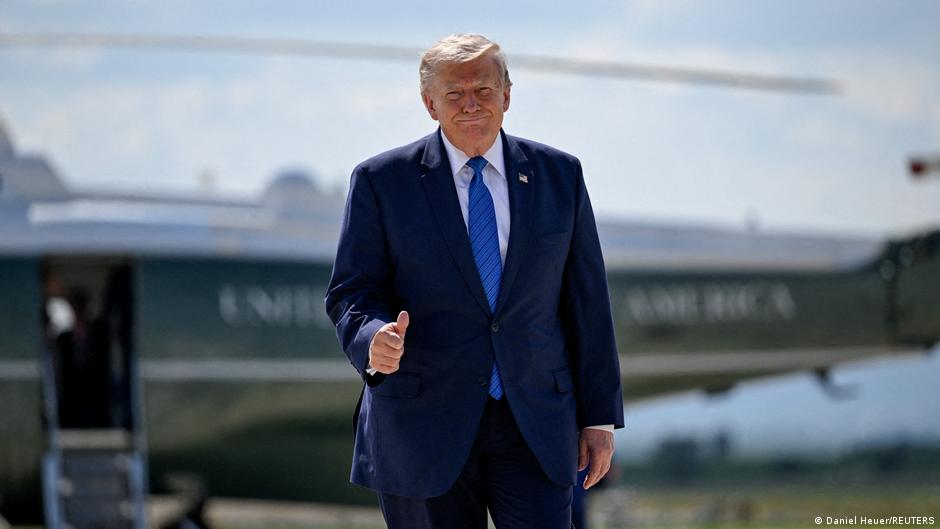
President Donald Trump has announced that a new phase of negotiations between Washington and Tehran will commence on Monday, August 3. This diplomatic development comes amid heightened tensions in the region and a recent pause on planned US military strikes against Iran.
Speaking to reporters aboard Air Force One, Trump indicated that the White House has decided to delay further military action to allow diplomatic talks a chance to succeed. "This will save many lives," he stated, emphasizing a preference for a negotiated agreement over conflict.
"I would rather make a deal. I don’t like killing people," Trump said, highlighting his administration's willingness to pursue a diplomatic solution.
Implications for US Businesses and Washington's Strategy
The planned negotiations are expected to address critical issues including the security of the Strait of Hormuz—through which a significant portion of the world’s oil supply transits—and Iran’s nuclear program. For American companies with interests in global energy markets or supply chains vulnerable to Middle Eastern volatility, these talks carry significant economic implications.
Trump also cautioned that the US retains the option to resume strikes "if necessary," underscoring the administration’s dual-track approach combining diplomacy with military deterrence. Earlier, the President revealed that the US and Israel postponed an attack on Iran at the request of the Islamic Republic itself and regional partners, reflecting complex geopolitical dynamics.
The US military has recently intensified operations against the Islamic Revolutionary Guard Corps (IRGC), targeting dozens of facilities associated with missile and drone capabilities—actions that have escalated tensions and resulted in casualties, including civilians, as reported in Iranian state media.
For Washington, balancing military pressure with negotiations serves both to contain Iran’s regional influence and to stabilize markets sensitive to disruptions. However, the recent cycle of attacks followed by diplomatic overtures illustrates the unpredictability that US businesses must navigate, especially in sectors such as energy, defense contracting, and global logistics.
Since signing a memorandum of understanding in June 2026 to halt hostilities temporarily and engage in peace talks, the US and Iran have experienced intermittent escalations, complicating the path forward. The administration’s announcement of a new negotiation phase suggests a potential easing of tensions but does not eliminate the risks for American economic interests in the region.
In sum, Washington’s evolving approach to Iran poses a complex scenario for US businesses, combining the prospects of diplomatic resolution with the reality of ongoing military risks. Companies engaged in the Middle East will need to closely monitor developments as they could impact supply chains, energy prices, and regional stability.