Trump Jr. Repaid Russian Boxing Chief for Wedding Event Costs, Kremlin Says
The claim renews scrutiny in Washington over foreign-linked spending around the president’s family and potential oversight risks.
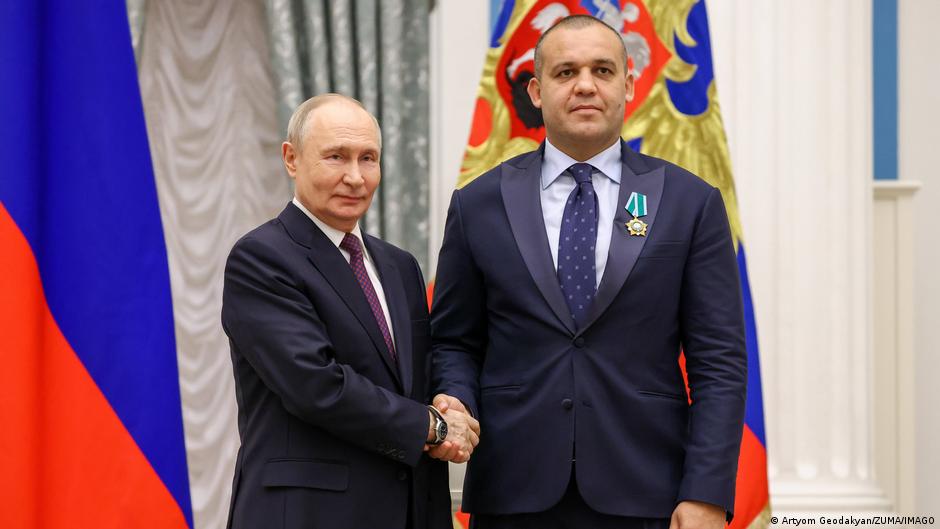
Russian businessman Umar Kremlev said Donald Trump Jr. repaid him for money spent on organizing part of Trump Jr.’s wedding-related celebrations, adding a fresh political and ethics dimension to a story already drawing attention in Washington.
Kremlev, a businessman close to Vladimir Putin and head of the International Boxing Association, made the statement on Tuesday, October 6, at a press conference in Istanbul. His comments followed earlier remarks by President Donald Trump, who also confirmed that his son had returned money to Kremlev.
The matter has become politically sensitive in the United States because it combines several pressure points for Washington: the president’s family, a Russian-linked businessman, questions over private benefits, and the possibility of congressional scrutiny if Democrats gain leverage in the House of Representatives. For American companies and investors, the issue is less about a private celebration than about the wider political risk environment surrounding foreign influence, ethics oversight and reputational exposure.
“As far as I understand, he repaid him the debt,” President Trump told reporters on September 18.
Russian Businessman Says Money Was Returned
According to Kremlev, Donald Trump Jr. reimbursed him for expenses connected to part of the wedding festivities. Russian state news agency TASS quoted Kremlev as saying that he and Trump Jr. had been at a common event and that he had not attended the wedding itself.
“As for whether he returned the expenses or not, yes, he returned them,” Kremlev said, according to the Russian report. At the same time, he expressed confusion over why the money had been repaid, saying he did not view the spending as a special gift.
Kremlev described the occasion as a shared event rather than a personal wedding gift. He compared it to inviting guests to a private gathering, saying it would be absurd to bill them afterward. He also said he has a friendly relationship with Donald Trump Jr. and that he had “never asked him or anyone else” to help him.
President Trump confirmed the repayment on September 18 in a conversation with journalists. He said he regarded it as normal for a friend to pay for a wedding celebration and also considered it acceptable for a businessman close to Russian authorities to have helped finance festivities connected to his son.
The president’s remarks appeared aimed at reducing the political significance of the episode. But in Washington, private financial arrangements involving presidential relatives can quickly become matters of official concern, especially when they involve foreign business figures with political ties.
ProPublica Report Put the Event Under Scrutiny
The controversy began after ProPublica published an investigation on September 14 reporting that Kremlev had paid part of the expenses for Donald Trump Jr.’s wedding celebration in the Bahamas. The report prompted questions about the nature of the event, whether the spending constituted a gift, and whether the repayment resolved any ethics or disclosure concerns.
President Trump later told Axios that he had no idea who Umar was, had never heard of him, and that Kremlev had not paid for the wedding of Don and Bettina. The president said that wedding took place in a completely different place and on a different day from the party in question.
Trump characterized the event as an after-party held in their honor and said there was “nothing terrible” about it. He also said he did not attend the party.
That distinction may matter politically. The White House position, as reflected in Trump’s comments, separates the wedding itself from a related celebration. Critics, however, are likely to focus on the broader optics: a Russian businessman close to the Kremlin spending money on an event honoring the president’s son, followed by repayment only after media scrutiny.
For US businesses, such episodes can have practical consequences beyond partisan argument. Companies operating in regulated sectors, lobbying in Washington, or dealing with cross-border compliance often track ethics investigations closely because they can affect access, policy priorities and the tone of congressional oversight. A renewed focus on foreign-linked benefits could also influence how corporations vet political donations, sponsorships, hospitality and executive relationships.
Democrats Signal Potential Oversight Path
Axios also reported that a senior Democratic member of the House Oversight Committee could investigate reports that Kremlev paid for Trump Jr.’s festivities. Representative Robert Garcia of California sent a letter to White House Chief of Staff Susie Wiles saying committee Democrats were investigating multiple ways in which the Trump family had tried to enrich itself by using proximity to the head of state.
The possible investigation has immediate political stakes. Axios wrote that if Democrats win control of the House of Representatives in the upcoming November 3 midterm elections, Garcia would likely become Congress’s lead investigator. The outlet said the matter offered a clear indication of the direction he would take in that role.
That makes the Kremlev-Trump Jr. episode a potential preview of a broader oversight agenda. A Democratic-controlled House could use subpoena power, hearings and document requests to examine whether the president’s relatives benefited from foreign-linked individuals or businesses. Even if no legal violation is established, the process itself could shape headlines, consume White House attention and affect policy negotiations.
The bottom-line impact for American companies is tied to volatility. Congressional investigations can alter the political calendar, complicate dealmaking and heighten sensitivity around compliance practices involving politically exposed persons. Firms with government contracts, international operations or Russia-related exposure may face more questions from boards, investors and regulators about how they manage reputational and political risk.
Kremlev’s account does not allege that Donald Trump Jr. requested help. In fact, Kremlev said he had never asked Trump Jr. or anyone else for assistance. But the episode still places the president’s family at the center of a familiar Washington debate: where private relationships end and public accountability begins.
For now, the key factual point is that both Kremlev and President Trump have said the money was returned. Whether that closes the matter politically will depend less on the repayment itself than on who controls Congress after November 3 and how aggressively lawmakers choose to pursue questions about foreign-linked spending around the president’s inner circle.