Trump Says Putin Wants Ukraine Peace Deal More Than Zelensky
The U.S. president’s remarks shift attention to Washington’s leverage over Moscow as Ukraine presses for enforcement of an energy ceasefire.
U.S. President Donald Trump said Russian President Vladimir Putin is more interested than Ukrainian President Vladimir Zelensky in reaching a peace agreement over Ukraine, comments that immediately put the focus back on Washington’s role in trying to manage the war’s diplomatic track and its economic fallout.
Speaking to reporters late Monday night, October 12, and into Tuesday, October 13, Trump was asked about Russia’s alleged violation of an energy ceasefire in the war against Ukraine. The president said the situation first needed to be examined, adding that “there were violations on both sides.”
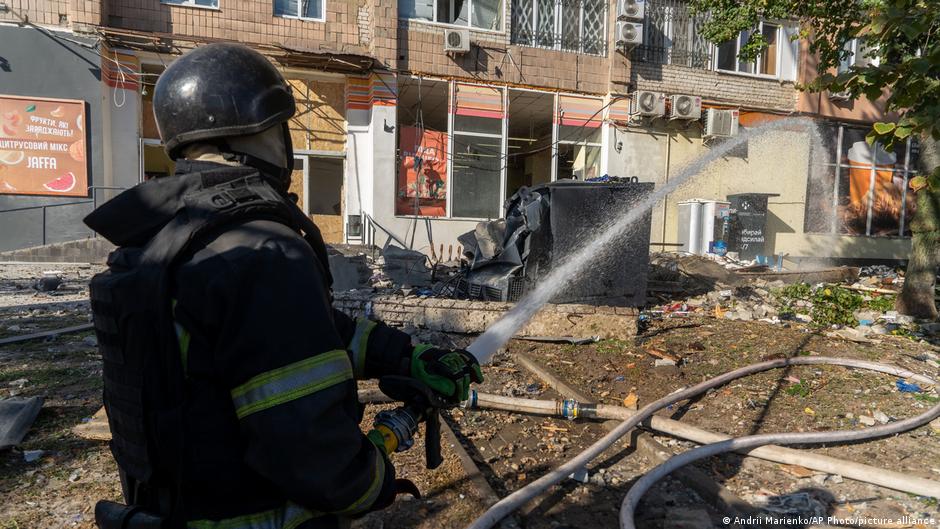
Trump’s assessment came as Kyiv was pressing the United States to use its influence on Russia to ensure that Moscow observes a ceasefire covering the energy sector. For U.S. policymakers and companies, the issue is not only diplomatic. Attacks on energy infrastructure in Ukraine have repeatedly carried implications for European power markets, reconstruction planning, sanctions policy, insurance risk, and the broader cost environment facing American firms with exposure to Europe.
Washington’s Leverage Comes Under Scrutiny
One reporter asked Trump what specifically led him to see Putin as ready for compromise while Russia continues attacking Ukraine. Trump responded that he believed the sides would reach an agreement.
“I really think that Putin is more interested than Zelensky in making a deal,” Trump said.
The president’s remarks suggest a White House view that the central obstacle to an arrangement may not rest only with Moscow. That framing is likely to draw close attention in Washington, where Ukraine policy has been tied to congressional funding fights, sanctions enforcement, energy security, and the question of how much pressure the United States should apply to Russia while maintaining negotiations.
Asked how he intended to make the Russian president comply with the energy ceasefire, Trump said, in effect, that he believed Putin wanted an agreement and that Zelensky needed to be persuaded to accept one. That position contrasts with the Ukrainian government’s public line that Kyiv has already accepted the energy ceasefire and that Russia has not followed through.
Zelensky had earlier called on the United States to influence Russia so that it would begin observing the ceasefire regime in the energy sector. Speaking at the Warsaw Security Forum, he said Ukraine was waiting to see what concrete steps the Americans were prepared to take.
For American business, the practical question is whether Washington can convert statements about de-escalation into enforceable conditions on the ground. Energy infrastructure damage in Ukraine can add uncertainty to regional supply chains, power availability, and postwar investment assumptions. U.S. companies involved in engineering, power equipment, logistics, insurance, technology, and reconstruction finance have a direct interest in whether an energy ceasefire becomes a durable arrangement or remains a contested political claim.
Ukraine Says It Backed the Energy Ceasefire
Zelensky said Kyiv was very surprised on October 11 by social media reports that all attacks on energy facilities in Russia’s war against Ukraine would immediately stop. According to the Ukrainian president, Russia struck a thermal power plant in Kharkiv directly after the statement was published, causing additional damage to Ukraine’s energy system.
On the evening of October 12, Zelensky wrote on Telegram that Ukraine supported an energy ceasefire and that its position was clear. He said Ukraine was ready to guarantee an energy ceasefire as announced by the U.S. president, and that Russia needed to take corresponding steps.
“Much depends precisely on the position of the United States so that de-escalation can work after all,” Zelensky wrote.
Zelensky also said that, at that moment, Ukraine was not recording Russia’s implementation of the conditions voiced by the U.S. president. He added that pressure on Russia was necessary and that Ukraine was continuing talks with the American side at all levels.
The competing accounts leave the Trump administration in a politically sensitive position. If Washington accepts Moscow’s assurances, it may face criticism from Ukraine’s supporters that it is easing pressure without proof of compliance. If it moves to punish Russia for alleged violations, it risks hardening the negotiating environment that Trump says he believes can still produce a deal.
The bottom-line stakes extend beyond diplomacy. Continued attacks on Ukrainian energy sites may increase the cost of keeping Ukraine’s economy functioning, raise reconstruction needs, and complicate private-sector planning. A credible halt to such strikes, by contrast, could reduce immediate infrastructure losses and help stabilize expectations for companies assessing future projects in Ukraine and neighboring markets.
Trump’s comments also land in a domestic political environment where Ukraine policy remains a test of executive authority, congressional oversight, and the administration’s approach to Russia. Any move to press Zelensky more heavily than Putin would likely become a point of debate among lawmakers who see U.S. backing for Ukraine as a strategic barrier against Russian expansion.
For now, the president has signaled confidence that an agreement is possible and has argued that Putin wants one. Ukraine, meanwhile, says it has accepted the energy ceasefire and is waiting for Russia to comply. That leaves Washington as the decisive arena where diplomatic pressure, enforcement choices, and economic consequences will converge.