Trump Says US-Iran Talks at UN Were Productive After Threats Against Tehran
The indirect New York meeting points to renewed diplomacy with Iran, but US business exposure still hinges on sanctions, shipping and Gulf security risks.
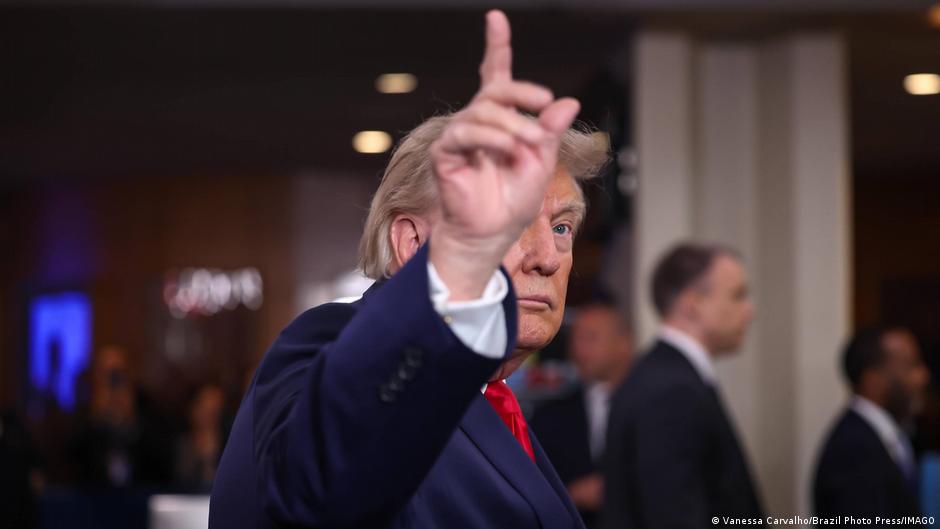
US and Iranian officials held their first known meeting in months on the sidelines of the 81st session of the United Nations General Assembly in New York on Tuesday, September 22, in a session President Donald Trump described as “very productive.” The talks lasted about three hours and came on the same day Trump publicly threatened to destroy the Islamic Republic.
For Washington, the meeting creates a narrow diplomatic opening at a moment when tensions with Tehran carry direct implications for American companies, energy markets and shipping flows through the Persian Gulf. The session was conducted through mediators, with Qatar and Pakistan facilitating contacts between the two sides, according to The New York Times as cited in the source report.
The US side was represented by Trump special envoys Steve Witkoff and Jared Kushner. Iran was represented by Foreign Minister Abbas Araghchi. Trump later said the roughly three-hour meeting had been “very productive,” while also telling Gulf leaders on the sidelines of the UN gathering that there was “great momentum” toward reaching an agreement with Iran, according to AFP.
A Diplomatic Channel With High Commercial Stakes
The immediate business relevance for the United States lies less in any completed agreement than in what the talks signal about potential de-escalation. Iran sits at the center of several risk categories watched closely by US companies: sanctions compliance, oil pricing, insurance costs for maritime trade, regional security exposure and the operating environment for firms with supply chains linked to the Gulf.
According to Iranian state media, Tehran used the talks to inform Washington of its conditions for resuming shipping through the Strait of Hormuz. Those conditions included an immediate end to what Iran described as a US maritime blockade, the unfreezing of all Iranian assets frozen because of sanctions, and the cessation of any military actions.
The Strait of Hormuz is a critical maritime passage for global energy markets. Any disruption or even the threat of disruption can affect fuel prices, shipping insurance, commodity planning and risk forecasts for American manufacturers, airlines, logistics firms and energy traders. The source report does not say Washington accepted Iran’s conditions, only that Tehran conveyed them during the talks.
Witkoff later wrote on X that US officials had held lengthy talks with the Iranian delegation through intermediaries who moved between the sides throughout the day. He said one round of discussions had been completed successfully and that mediators would continue their work.
“A round of discussions was successfully completed, which we hope will prove constructive and promising. The mediators will continue their work,” Witkoff said, according to the source report.
The careful phrasing underscores how preliminary the diplomacy remains. No final agreement was announced, and the parties appear to be operating through indirect contact rather than a direct bilateral format. Still, even a maintained channel can matter to American firms trying to assess whether sanctions pressure, military risk or shipping disruptions are likely to intensify.
Trump’s Threats Complicate the Signal
The talks followed a sharply confrontational speech by Trump before heads of state and government at the UN. Before the meeting, Trump threatened to send the Islamic Republic “to hell” and to “destroy” it. He framed the issue as a stark choice between an agreement that would allow Iran to recover and become a much stronger power, or the rapid destruction of the Islamic Republic so that it would never again have a chance to kill people and destroy countries.
AFP reported that the Iranian delegation left the hall during Trump’s speech. That walkout highlights the political volatility surrounding the negotiations. For US policymakers, the sequence of events combined maximum public pressure with private diplomatic engagement. For markets and corporate risk officers, it produced a mixed signal: an opening for talks, but one surrounded by explicit threats of military escalation.
The Washington implications are significant. Any negotiation touching sanctions, frozen assets, maritime security or military action would likely draw scrutiny from Congress, US allies in the Gulf and American companies required to navigate sanctions rules. The involvement of Qatar and Pakistan also points to a broader regional mediation effort rather than a purely bilateral US-Iran track.
American companies are unlikely to treat the meeting itself as a basis for changing compliance posture. Sanctions remain in place unless formally modified, and the source report does not indicate that any sanctions relief was granted. However, the fact that Iran linked the resumption of shipping through Hormuz to sanctions-related demands places commercial pressure points directly inside the diplomatic discussion.
For energy-intensive US businesses, the key question is whether the “momentum” Trump described can reduce risk around the Gulf or whether public threats and Iranian conditions will harden positions. For financial institutions and multinational firms, the mention of frozen Iranian assets is particularly consequential, though any release would require formal legal and policy steps not described in the source material.
The meeting also revives the role of Trump’s inner circle in Middle East diplomacy. Witkoff and Kushner’s participation places the talks within the president’s personal diplomatic orbit, rather than a conventional State Department-led process alone. That may affect how foreign governments and US businesses interpret the negotiations: as both a geopolitical initiative and a political project closely tied to the White House.
For now, the bottom line for US business is caution. The reported talks suggest a possible path away from immediate confrontation, but they also exposed the distance between the parties. Iran is tying maritime normalization to sanctions and military demands, while Trump is pairing claims of diplomatic progress with threats of destruction. Until mediators produce a concrete agreement, companies with exposure to Gulf shipping, energy markets or Iran-related sanctions will continue to price in uncertainty.