Trump Says US Will Scrap Tariff on Irish Whiskey After Ireland Visit
The announcement points to a narrow but notable trade reprieve for importers, bars, retailers and US companies tied to Irish spirits.
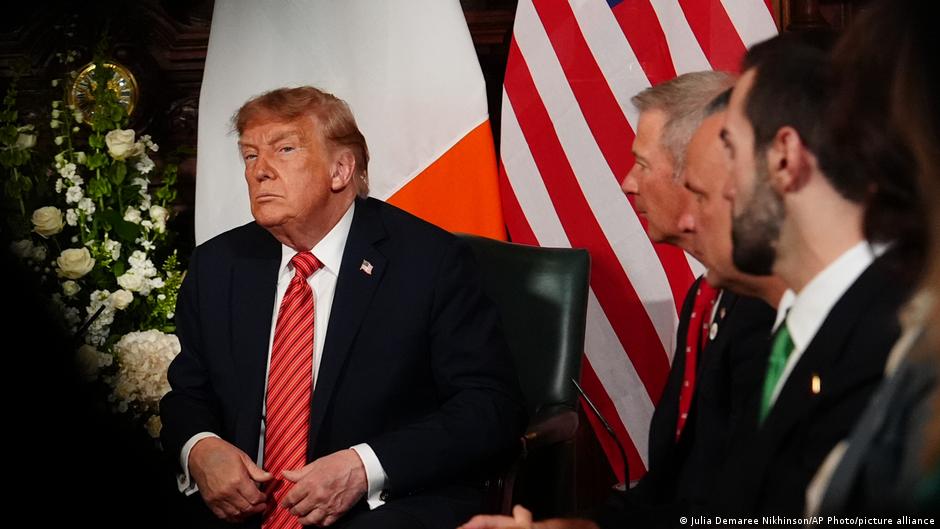
President Donald Trump said the United States will remove a 10 percent tariff on Irish whiskey, announcing the move at the close of a visit to Ireland and framing it as a response to repeated appeals from Irish officials and prominent figures. The statement, made on Sunday, September 13, before a cheering crowd at a golf tournament held at a golf club owned by his family, carries immediate significance for a highly visible corner of transatlantic trade: wine and spirits exports from the European Union to the American market.
Trump said he had agreed to numerous requests to end the US import duty on Irish whiskey. Among those who had asked him to reverse the tariff, he said, were Irish Prime Minister Micheal Martin and leading Irish golfer Shane Lowry. The setting was unusual for a trade announcement with commercial consequences in Washington and across the US beverage sector: a golf event in Ireland, in front of Irish golf fans, at a property linked to the president's family.
For US businesses, the bottom-line issue is straightforward. A tariff on imported spirits raises costs somewhere along the supply chain, whether for importers, distributors, restaurants, bars, retailers or consumers. Removing the 10 percent charge on Irish whiskey would ease pressure on American firms that buy, sell or serve the product, while also giving Irish producers improved access to one of their most important foreign markets.
A Targeted Trade Signal From Washington
The tariff currently applies as part of broader duties covering exports of wine and spirits from the European Union to the United States. Trump's statement singled out Irish whiskey, a product with strong brand recognition in the US and a symbolic place in US-Ireland commercial ties. While the announcement was narrow, it suggested a willingness by Washington to carve out exemptions or relief within a wider tariff regime affecting European alcoholic beverages.
The Irish Whiskey Association welcomed the president's remarks. Its director, Eoin O'Cathain, said Irish whiskey was a defining product in the relationship between the two countries and expressed hope that the decision would be fully implemented, according to Reuters.
"Nothing characterizes the trade relationship between the US and Ireland better than Irish whiskey," the Irish Whiskey Association said.
The association's cautious wording matters. A presidential announcement is politically significant, but businesses will look for formal implementation before changing forecasts, contracts or pricing. Importers and wholesalers typically need clarity on when a tariff change takes effect, which products are covered and how customs treatment will apply to shipments already in transit or under contract.
From a Washington perspective, the move could be read as a politically low-cost way to ease friction with Ireland while signaling responsiveness to a specific trade complaint. Irish whiskey occupies a narrower category than the full range of EU wines and spirits subject to duties, making it a manageable place for the administration to show flexibility without necessarily abandoning the broader tariff framework.
Impact for US Importers and Hospitality
The US companies most directly affected are those in the beverage import, distribution, retail and hospitality sectors. A 10 percent tariff can influence margins in several ways: businesses may absorb the added cost, pass it on through higher prices, renegotiate with suppliers or adjust inventory toward competing products. Removing the duty would give American firms more room on pricing and purchasing decisions, particularly if they operate in competitive retail or bar environments where consumers compare brands closely.
Restaurants and bars with significant whiskey programs could also benefit. Irish whiskey is often sold both as a premium pour and as a widely available consumer product, which means tariff relief may matter across different parts of the market. For retailers, the change could reduce pressure on shelf prices or improve margins, depending on how distributors and importers handle the adjustment.
The announcement may also matter for American companies that rely on Irish whiskey as part of broader beverage portfolios. Even when a tariff is aimed at foreign producers, the economic effect does not stop at the border. US logistics providers, alcohol distributors, hospitality groups and retailers all participate in the commercial chain that brings imported spirits to American consumers.
For Ireland, the statement was welcomed as a potential restoration of smoother access to the US market. For the Trump administration, it offered a trade message with political resonance: a concrete tariff rollback attached to a product with cultural and commercial ties to both countries. The president's reference to requests from Martin and Lowry also placed the decision within a personal diplomatic frame rather than a technical trade negotiation.
The remaining question is execution. The Irish Whiskey Association said it hoped the decision would be fully implemented, underscoring that the practical consequences depend on formal follow-through by the US government. Until that happens, the announcement remains a promise with meaningful business implications but incomplete operational detail.
If implemented, the removal of the 10 percent tariff would represent a focused reprieve within the broader US duties on European wine and spirits exports. For American businesses, the benefit would be less about geopolitical symbolism and more about cost structure: lower import friction, improved pricing flexibility and potentially stronger demand for a category that already has a clear place in the US market.