Trump Threatens EU Trade Freeze Over Brussels’ Push to Bring Canada Closer
The warning puts Washington’s trade posture back at the center of transatlantic politics as US companies face new procurement and tariff risks.
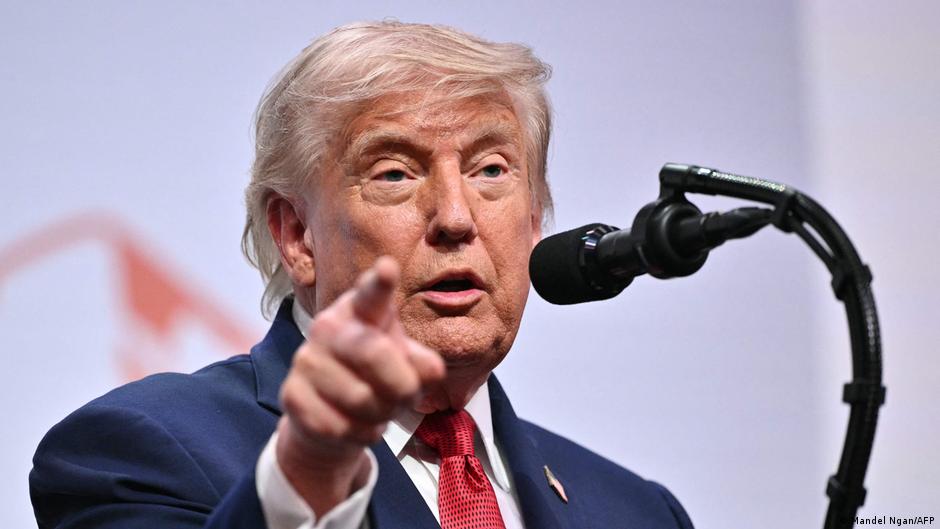
President Donald Trump has threatened to halt trade with the European Union if Brussels continues expanding its partnership with Canada, escalating a dispute that now touches three of Washington’s most important commercial relationships.
Speaking Wednesday, September 16, at a campaign event in North Carolina, Trump criticized European Commission President Ursula von der Leyen’s proposal to make Canada the EU’s first “associate member.” He called the idea “ridiculous” and warned that the United States could respond with steep tariffs or a broader trade cutoff if he concluded the move was hostile to US interests.
“If they do this and I consider it even in the slightest an unfriendly act, I will impose very high tariffs or stop trade with Europe,” Trump said.
Trump added that the consequences would depend on intent. “If the intentions are good, everything is fine. If the intentions are bad, we will impose very high tariffs on Europe; that is one possibility,” he said.
For US businesses, the comments raise the prospect of another round of uncertainty over tariffs, procurement access and supply chains. American companies already face a rapidly shifting trade environment with Canada, while a confrontation with the EU could widen the economic impact far beyond the sectors currently caught in the US-Canada dispute.
Washington Watches a Canada-EU Opening
Von der Leyen made the proposal on September 16 in the European Parliament, speaking in the presence of Canadian Prime Minister Mark Carney. She said the European Union wanted to bring its relationship with Canada to “the highest possible level” and that she and Carney wanted to work toward making Canada the first associate member of the EU.
The European Commission president did not provide details on what such a partnership would include. She did, however, mention cooperation in technology and the defense industry. Von der Leyen also stressed that joint work between Canada and the EU “will not be directed against others,” saying its aim would be to make both sides stronger.
That assurance may do little to calm Washington if the White House views the initiative as part of a broader effort by allies to reduce their exposure to US policy swings. According to AFP, Canada, like the European Union, has been suffering from the unpredictability of Trump’s trade and foreign policy. “That is why both Canada and the European Union are looking at new alliances,” the agency observed.
The political backdrop matters for American companies. A deeper EU-Canada relationship in technology or defense could affect market access, standards, procurement rules and cross-border investment decisions. If Washington responds with tariffs, US firms that sell into Europe, source components from Europe or compete with Canadian and European companies in public-sector contracts could face higher costs and new retaliation risks.
Canada Dispute Adds Pressure on US Firms
The White House also announced that Trump signed a memorandum on September 16 barring Canadian goods from participation in US federal government procurement. According to the release, Washington is taking the measure in response to Canada’s actions, which it said “unjustifiably introduced new barriers for American companies seeking access to the government procurement market.”
The move adds a procurement front to an already escalating tariff fight. Beginning September 15, the Trump administration imposed additional 50 percent tariffs on cheese, steel, aluminum, paper, furniture, lighting fixtures and other goods from Canada. Administration officials said the step was a direct response to new tariffs introduced by Ottawa.
Canada’s tariffs on roughly $20 billion in US exports also took effect on September 15. Those measures were themselves a response to US tariffs of 50 percent on $20 billion worth of Canadian goods that entered into force on August 22.
The sequence underscores how quickly trade measures between the United States and Canada have moved from negotiation to retaliation. On August 21, Canada withdrew from trade talks with the United States, further reducing the near-term prospects for a negotiated settlement.
For US companies, the immediate bottom-line impact depends on sector and supply exposure. Businesses reliant on Canadian steel, aluminum, paper products, furniture, lighting or food imports could see input costs rise. Exporters caught in Canada’s roughly $20 billion tariff package may face weaker demand, lower margins or pressure to reroute sales. Companies seeking federal procurement opportunities may also see competition rules shift as Canadian goods are pushed out of US government purchasing.
The larger risk is that the Canada dispute becomes linked to transatlantic trade policy. Trump’s threat against the EU suggests the White House may treat Brussels’ outreach to Ottawa not merely as a diplomatic initiative, but as a potential challenge to US leverage. That could place American multinationals in a more complicated position, especially those with operations spanning the United States, Canada and Europe.
Business groups are likely to watch for whether Washington defines specific conditions that would trigger tariffs on Europe, or whether the threat remains discretionary and tied to Trump’s judgment of European intent. The absence of detail from Brussels on what “associate membership” would mean also leaves companies with limited guidance for planning.
What is clear is that trade policy has again become a central instrument of US politics. Trump’s comments in North Carolina turned a European proposal about Canada into a Washington business issue, with possible consequences for manufacturers, exporters, defense suppliers, technology firms and federal contractors. If the dispute widens, American companies may be forced to manage simultaneous tariff and procurement shocks across both the Canadian and European markets.



