Ukraine Delegation to Meet Trump Envoys on New Plan to End Russia War
Talks with Jared Kushner and Steve Witkoff come as Kyiv presses Washington on sanctions, Starlink access and leverage over Moscow.
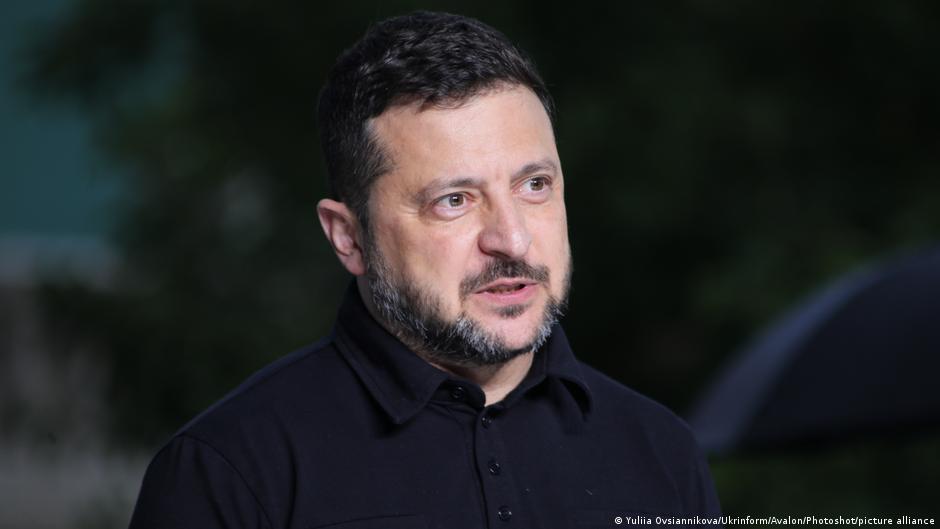
A Ukrainian delegation is set to travel to the United States for talks on October 9 and 10 with special representatives of President Donald Trump over a new plan to end Russia’s war against Ukraine, placing Washington again at the center of Kyiv’s diplomatic and military calculus.
Ukrainian President Volodymyr Zelensky said on Thursday, October 8, that the talks would be held with Jared Kushner and Steve Witkoff, according to comments reported by UNIAN. The Ukrainian side will include Kyrylo Budanov, head of the Presidential Office; Serhiy Kyslytsia, deputy head of the Ukrainian Presidential Office; Davyd Arakhamia, head of the Servant of the People faction in parliament; and Rustem Umerov, head of Ukraine’s Foreign Intelligence Service. Zelensky also said European representatives may join the discussions.
For U.S. policymakers and businesses, the meetings carry implications beyond battlefield diplomacy. The agenda touches sanctions enforcement, future economic dealings with Russia, satellite communications, defense technology and the operating environment for companies exposed to Eastern Europe, energy markets or dual-use infrastructure.
Washington Faces Pressure Over Leverage on Moscow
The Ukrainian service of Voice of America, citing a senior U.S. official, reported that the meeting will focus on a new proposal that “covers all aspects of the conflict” and aims to end the war. The source article did not provide further details on the proposal’s terms.
The talks follow a public disagreement between Zelensky and U.S. Secretary of State Marco Rubio, who said in an interview with the Greek newspaper Kathimerini that the war in Ukraine had reached a dead end and that, in his view, there were no prospects for resolving the conflict through negotiations.
Zelensky criticized that assessment and argued that the United States and its partners should intensify economic pressure on Russia rather than describe diplomacy as stalled. His comments were reported by Ukrinform.
“We are not in a diplomatic deadlock,” Zelensky said, urging the United States to close off Russia’s economy and impose sanctions tied to its weapons.
Zelensky framed the issue in explicitly economic terms, criticizing the idea of discussing future business projects with Russia while also saying the diplomatic track has run into an impasse. For American companies, that language underscores the risk that any future commercial opening toward Russia could become politically toxic if Washington does not first define the conditions for sanctions relief, market reentry or reconstruction-linked investment.
The Ukrainian leader’s remarks also sharpen the policy stakes for sectors that have spent years navigating Russia-related restrictions, including energy, finance, logistics, cloud services, aerospace and advanced manufacturing. A new diplomatic plan could eventually reshape compliance expectations, but Kyiv is signaling that it wants tighter pressure now, not premature normalization.
Starlink Request Puts U.S. Tech in the War Debate
Zelensky also called on the United States to allow Ukraine to use Starlink over Russian territory. He said such access would help Ukraine “dominate” the skies and eventually force Russian President Vladimir Putin to sit down at the negotiating table.
That request places U.S. commercial technology directly inside a high-stakes national security debate. Starlink has been an important communications tool for Ukraine, but expanded use over Russian territory would raise sensitive questions for Washington, private operators and defense planners about escalation risk, export controls, liability and the boundary between commercial infrastructure and wartime operations.
For American businesses, the broader message is that satellite networks, cloud systems, data centers and communications platforms are no longer peripheral to geopolitical conflict. They are part of the strategic architecture. Any U.S. company whose services can be used in contested environments may face increased scrutiny from regulators, lawmakers and foreign partners as the Ukraine war continues to shape policy expectations.
Zelensky’s comments came as Ukraine described its own responses to Russian strikes. He said Ukraine was answering Russian attacks in a mirror fashion, including against data centers. “Data centers, you all know, they struck and continue to strike our data centers. We responded to them. I cannot say all the details,” Zelensky said, according to RBC-Ukraine.
According to the source article, Ukraine’s armed forces carried out a drone strike overnight on October 8 against a Yandex data center in the city of Sasovo in Russia’s Ryazan region. A fire broke out, the data center completely stopped operating, and no one was injured.
The reported strike highlights another bottom-line issue for U.S. firms: digital infrastructure is increasingly treated as a target in modern war. That has consequences for insurers, cloud providers, cybersecurity vendors, investors and multinational companies assessing operational resilience in regions exposed to conflict or retaliatory attacks.
Business Stakes Behind the Diplomacy
The planned meetings with Kushner and Witkoff arrive at a moment when U.S. policy toward Ukraine is being measured not only by military aid but by economic leverage. Zelensky’s appeal was direct: restrict Russia’s economy, stop feeding it through sales, and sanction its weapons. Those demands point to a possible push for tighter U.S. sanctions or stricter enforcement of existing measures if the new diplomatic proposal fails to produce movement.
For Washington, the challenge is balancing negotiation with pressure. A plan that aims to end the war could attract interest from companies looking for stability, reconstruction opportunities or reduced market risk. But any perception that the United States is preparing future economic engagement with Russia while Ukraine remains under attack could provoke political backlash from Kyiv and its supporters in Europe and Congress.
The inclusion of senior Ukrainian political and intelligence figures also suggests that Kyiv is approaching the talks as both a diplomatic and strategic negotiation. The possible participation of European representatives would broaden the discussion further, linking U.S. decision-making to allied positions on sanctions, security guarantees and postwar economic arrangements.
For American companies, the practical takeaway is that Ukraine policy remains a live business risk. Decisions made in Washington over sanctions, technology access, satellite communications and any future settlement framework could affect compliance costs, investment planning, defense contracting, cybersecurity demand and exposure to Russia-linked counterparties.
The October 9 and 10 meetings may not immediately resolve the war, and the contents of the new proposal remain undisclosed. But Kyiv’s public messaging is clear: Ukraine wants Washington to use economic and technological leverage more aggressively, and it is tying that pressure directly to the prospect of forcing Moscow into meaningful negotiations.



