Ukraine Says Russian Missile and Drone Barrage Killed 28, Raising Pressure on West
Kyiv linked the deadly strikes to sanctions policy, arguing that Russia’s oil revenue keeps funding a war with direct consequences for the West.
Ukraine said 28 people were killed after a large-scale Russian attack involving missiles and drones, a strike that immediately sharpened the political argument facing Washington and other Western capitals over sanctions, energy revenue and the cost of allowing Moscow’s war economy to keep functioning.
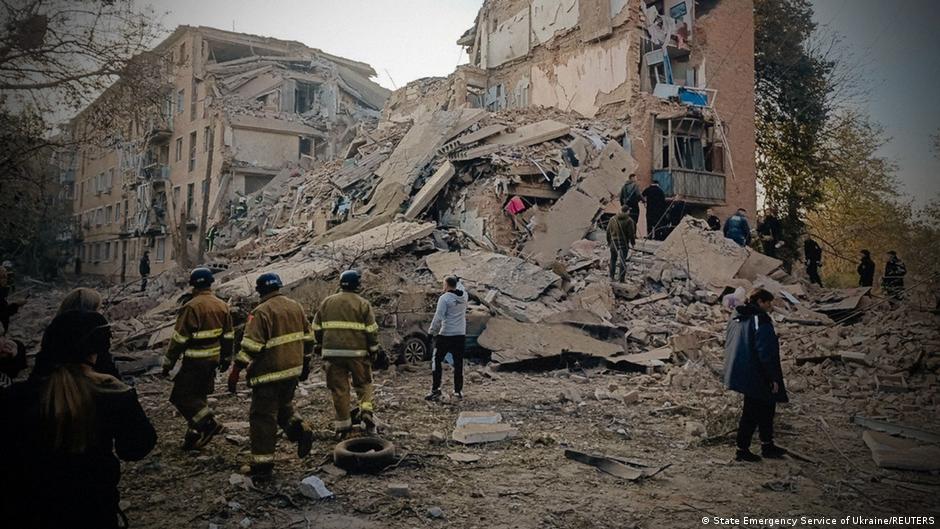
Ukrainian Interior Minister Ivan Vyhovskyi said in a Telegram post on Wednesday evening, October 7, that 28 people had died in the mass shelling by Russian forces. According to him, emergency workers and police were able to pull people from rubble, evacuate residents from destroyed buildings and rescue others from fire, saving 29 people in all.
Vyhovskyi said rescue teams had been clearing debris for more than 14 hours in Pryluky, where a missile struck a residential apartment building. The city, in Chernihiv region, became the central symbol of the attack’s civilian toll.
Ukrainian President Volodymyr Zelensky said the same evening that 100 people were wounded in the attacks. He described the strike as a combined assault using many ballistic missiles, many cruise missiles and Shahed drones, followed later in the day by additional Shahed drone and aerial bomb attacks.
“Putin still can sell oil, and when he counts profit in dollars and euros, the war still pays off,” Zelensky said, according to his Telegram post.
For a U.S. business and policy audience, the Ukrainian statements put the attack in a broader frame than the battlefield. Zelensky’s argument was not only that Russia had escalated militarily, but that signals from the West on sanctions could affect the Kremlin’s calculation of profit and risk. That framing lands directly in Washington, where sanctions enforcement, oil-market policy and pressure on Russian-linked wealth remain tools of foreign policy with consequences for American companies operating across energy, finance, shipping, insurance, compliance and defense supply chains.
Sanctions, Oil Revenue and Washington’s Policy Test
Zelensky urged leaders not to remain silent about what happened and about what he said was Russia’s intention to continue moving toward escalation, killings and shelling. He said Russian President Vladimir Putin did not feel that such actions were creating problems for him.
The Ukrainian president then connected that assessment to Western sanctions policy. In his view, weakening sanctions measures against Russia and sending signals about lifting sanctions on oligarchs amount to signals that the war against Ukraine is being normalized. He argued that Moscow is still able to sell oil and that, when Putin calculates profits in dollars and euros, the war remains financially worthwhile.
That message is aimed at more than European capitals. It also speaks to the U.S. debate over whether sanctions are being enforced tightly enough and whether pressure on Russian revenue streams is keeping pace with Moscow’s ability to adapt. For American businesses, the bottom-line implications are practical: sanctions rules can reshape counterparties, financing, insurance exposure, logistics routes and reputational risk. Any perception that sanctions may be loosened, or unevenly applied, can create uncertainty for companies that must make long-term decisions in markets affected by the war.
Zelensky called the situation a problem not only for Ukraine and its people, but for everyone in Europe and the Western world. That formulation places the attack inside the transatlantic security and economic relationship, where the United States remains a central actor even when the immediate destruction is in Ukrainian cities.
In Washington, the latest Ukrainian casualty figures are likely to reinforce pressure from Kyiv’s supporters for continued military assistance, stronger enforcement of sanctions and sustained attention to Russia’s access to hard-currency revenue. The claims also underline a recurring Ukrainian argument: that battlefield outcomes and economic pressure are connected, and that Russian strikes on civilians should be met not only with condemnation but with measures that alter Moscow’s cost-benefit calculation.
Pryluky Toll Includes Children
Zelensky said rescue work continued throughout the day after the Russian missile strike on Pryluky in Chernihiv region. According to Vyhovskyi, 20 people were killed there, including five children. Three of those children were one year old.
Vyacheslav Chaus, head of the Chernihiv regional military administration, had earlier reported more than 50 injured as a result of the attack. The continuing debris removal in Pryluky pointed to the scale of destruction at the apartment building and the difficulty of establishing the full human toll quickly after a strike on residential infrastructure.
Zelensky said Russian forces attacked 13 Ukrainian regions on October 7, using 70 missiles, many ballistic missiles and Shahed drones. His account presented the barrage as a nationwide assault rather than a localized strike, with missiles and drones used in combination across multiple regions.
The attack occurred as Ukraine continues to seek Western support while arguing that Russia’s war capacity depends not only on weapons production but also on revenue. Zelensky’s comments about oil sales, dollar and euro profits, and sanctions relief were meant to tie the deaths in Ukraine to decisions made far from the front line.
For U.S. companies, the immediate issue is not only geopolitical risk in Eastern Europe. It is the durability of the rules-based environment in which firms price exposure to sanctioned entities, energy markets and conflict-linked supply chains. The more Ukraine frames Russian attacks as financed by continuing revenue flows, the more sanctions compliance and political risk become boardroom issues rather than narrow foreign-policy questions.
Kyiv’s message after the October 7 barrage was therefore both humanitarian and economic: civilians were killed and wounded in a broad Russian strike, and Ukraine believes the West’s financial pressure on Moscow is still insufficient to make the war stop paying.