Ukrainian Strikes Hit Russian Refinery and Taganrog Sites After Trump Truce Claim
The reported attacks on fuel and industrial targets underscored risks to energy infrastructure as Washington weighs the business impact of the war.
A Ukrainian overnight attack set fire to the Syzran oil refinery in Russia’s Samara region and damaged several sites in Taganrog, according to regional officials and Ukrainian monitoring channels, adding fresh uncertainty for energy markets and companies exposed to the wider economic fallout from the war.
The strikes were reported early Tuesday, September 15, after U.S. President Donald Trump said the previous day that Ukraine and Russia were ready to stop mutual attacks on energy facilities. Ukrainian President Volodymyr Zelensky later confirmed on Telegram that Kyiv agreed to an energy ceasefire if Russia observed it. Moscow did not comment on Trump’s remarks.
For Washington, the timing is politically sharp. Any expansion of attacks on Russian energy infrastructure can affect global oil sentiment, sanctions calculations and risk planning for American firms with exposure to fuel costs, shipping, insurance, commodities or Eastern European supply chains. The reported fire at Syzran, part of Rosneft’s structure, points directly at the type of infrastructure that U.S. officials and businesses watch closely because refinery disruptions can ripple beyond the battlefield.
Refinery Fire in Samara Region
Vyacheslav Fedorishchev, the head of the Samara region, confirmed damage at “one of the industrial enterprises” after a drone attack on Tuesday morning. He said military personnel and mobile fire groups had spent the night shooting down Ukrainian drones and that more than 40 unmanned aerial vehicles were hit in total.
According to Fedorishchev, there were no deaths, though windows were blown out in several residential buildings. An operational headquarters was working in the region.
Ukrainian monitoring channel Exilenova+ said the target was the Syzran oil refinery, which belongs to Rosneft’s structure, and that an oil tank caught fire as a result. The Russian outlet Astra said its OSINT analysis confirmed that information. At least one fire site was located within the refinery’s tank farm, according to the report.
Regional officials said more than 40 drones were hit overnight in Samara region, while Ukrainian monitoring channels identified the Rosneft-linked Syzran refinery as the target.
The Syzran refinery has repeatedly been targeted by Ukrainian armed forces, according to the source article. It is one of the largest oil refining enterprises in the Samara region, making it a meaningful node in Russia’s domestic fuel system. For U.S. businesses, repeated attacks on such facilities matter less as isolated incidents than as signals of persistent infrastructure risk inside Russia, especially while sanctions, maritime restrictions and insurance costs already complicate energy trade.
Exilenova+ also reported that a missile threat had been declared overnight in the Volgograd region and that explosions occurred on the grounds of the Sebryakov cement plant in the city of Mikhaylovka. At the same time, neither regional authorities nor Russia’s Defense Ministry reported destroying drones or missiles over that region.
Taganrog Reports Damage After Missile Attack
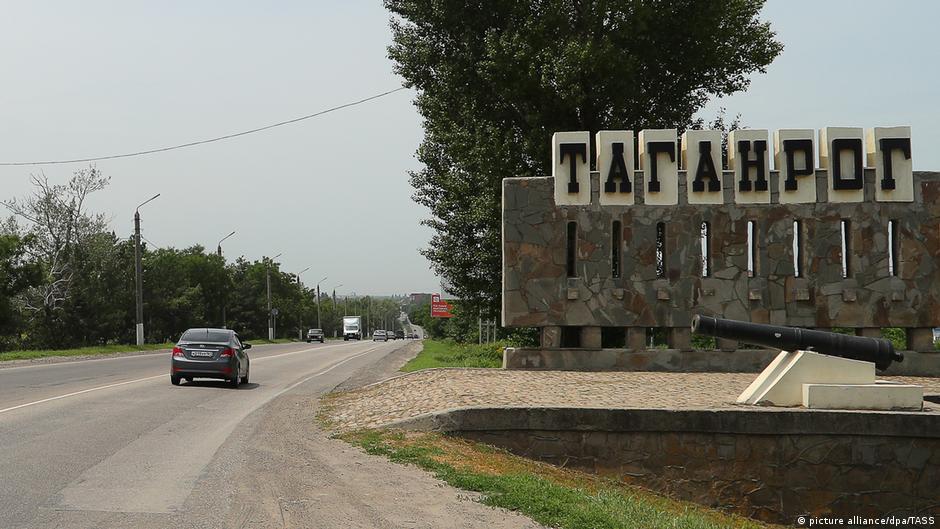
The same night, strikes were recorded in Taganrog. Rostov region Governor Yuri Slyusar wrote that a massive missile attack had caused “multiple consequences on the ground.” He said several fires broke out and that there were no wounded or dead.
Slyusar later said the missile attack damaged an Ozon company warehouse, warehouses belonging to agricultural enterprises, a grocery store, the glazing of two apartment buildings and three private homes, an educational institution, a commercial building and a gas pipe. He subsequently wrote that more than 30 drones and missiles were destroyed while repelling the attack on the Rostov region, including in Taganrog and nine districts of the region. Firefighting was continuing in Taganrog, he added.
Ukrainian monitoring channels said the main targets of the attack were the Beriev Taganrog Aviation Scientific and Technical Complex and the Taganrog Automobile Plant, known as TagAZ, which they said is used for military purposes. Those claims were not confirmed by the Russian officials cited in the source article, who described damage across civilian, commercial and infrastructure sites.
The reported damage to an Ozon warehouse is notable from a business perspective because it suggests that attacks around military-industrial targets can also affect logistics and retail infrastructure. U.S. companies do not need direct operations in the region to feel secondary effects: disruptions to warehousing, fuel supply, cement production, agriculture storage or transport routes can feed into broader assessments of counterparty risk, sanctions compliance, shipping coverage and pricing volatility.
Broader Drone Intercepts Across Russia
Authorities in the Voronezh region also declared a drone threat. Governor Alexander Gusev later wrote that 16 drones were destroyed “in the sky over Voronezh and seven districts of the region.” He said falling drone debris damaged glazing, roofs and facades of four private homes in one municipality. According to preliminary information, there were no casualties.
Russia’s Defense Ministry, which has continued its full-scale war against Ukraine for four and a half years, said it destroyed 222 Ukrainian aircraft-type drones over the Oryol, Belgorod, Voronezh, Tula, Tambov, Bryansk, Rostov, Kursk, Lipetsk, Ryazan, Saratov, Samara, Kaluga and Ulyanovsk regions, the Republic of Tatarstan, annexed Crimea and the Black Sea.
The scale of that reported interception count indicates a broad overnight operation across Russian territory. For U.S. policymakers, it raises immediate questions about whether any proposed energy truce can be monitored, enforced or translated into a durable reduction in risk. For U.S. businesses, the bottom-line issue is more practical: whether energy infrastructure will remain a recurring target and whether companies should assume continued volatility in fuel-linked costs and war-risk premiums.
The episode also lands in a difficult political space for Washington. Trump’s statement suggested momentum toward halting strikes on energy facilities, while the events reported overnight showed attacks continuing across multiple Russian regions. Zelensky’s conditional acceptance placed responsibility on reciprocal compliance, while Moscow’s silence left uncertainty over whether Russia would accept, reject or ignore the proposed arrangement.
Until that position becomes clear, American companies are likely to treat the war’s energy dimension as unresolved. The reported refinery fire, missile impacts in Taganrog and Russia’s claim of 222 drones destroyed all point to a conflict in which infrastructure remains central. That keeps pressure on Washington to balance diplomacy, sanctions policy, support for Ukraine and the domestic economic consequences of another round of energy-market stress.