United Russia Set for Duma Victory With Implications for Washington and U.S. Firms
Russian election officials said the ruling party was on course for a constitutional majority after most ballots were processed.
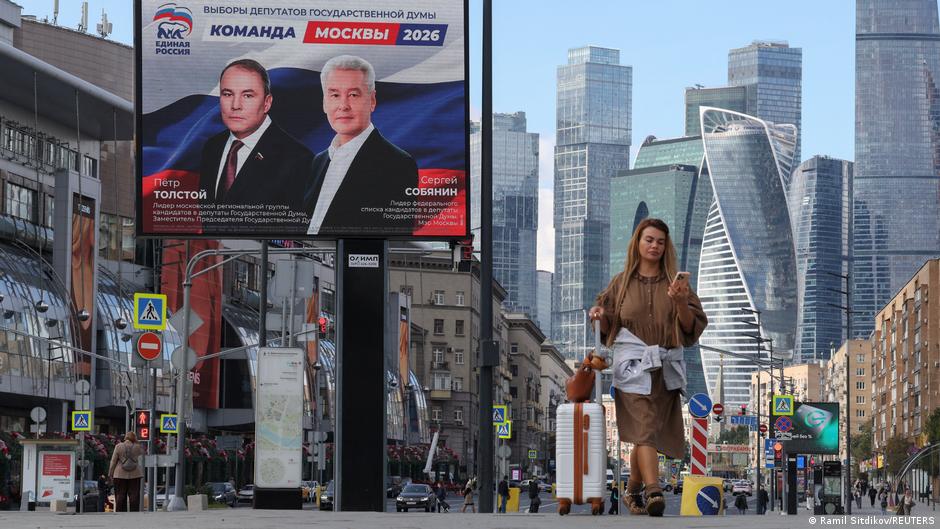
Russia’s ruling United Russia party is heading for victory in elections to the State Duma, according to figures released by the country’s Central Election Commission after 82.19 percent of protocols had been processed. The commission said the party had 57.76 percent of the vote, putting it far ahead of its nearest rivals and positioning it to retain decisive control over Russia’s lower house of parliament.
The result, reported overnight into Monday, September 21, by the Central Election Commission and carried by Russia’s TASS news agency, points to a political outcome that matters well beyond Moscow. For Washington, the vote reinforces expectations that the Kremlin will face little institutional resistance from the Duma on budgetary, security, foreign policy or wartime legislation. For American companies still exposed to Russia-related sanctions, export controls, energy markets or geopolitical risk, the bottom-line implication is continuity rather than policy moderation.
The Communist Party of the Russian Federation was in second place with 13.89 percent. The Liberal Democratic Party of Russia followed with 8.77 percent, while New People had 7.97 percent. A Just Russia stood at 4.99 percent, leaving it at risk of failing to clear the five percent threshold, according to the commission’s figures.
United Russia had 57.76 percent of the vote after 82.19 percent of protocols were processed, the Central Election Commission said.
United Russia’s showing marks a rise from the 49.82 percent it received in the 2021 State Duma elections. The party’s candidates were also leading in 208 of 225 single-member districts. On that basis, the ruling party is set to win more than the 301 seats needed for a constitutional majority in parliament.
Washington Reads Continuity in Moscow
From a U.S. policy perspective, the emerging result suggests that the Duma will remain firmly aligned with the executive branch at a time when relations between Washington and Moscow are defined by sanctions, military confrontation over Ukraine, restrictions on technology flows and disputes over energy, finance and security policy. A constitutional majority gives the ruling party the ability to pass legislation with little dependence on smaller factions.
That matters for U.S. businesses because Russia-related risk is no longer confined to companies operating directly inside Russia. American manufacturers, banks, insurers, technology providers, commodity traders and logistics firms all face compliance exposure tied to sanctions, dual-use goods, financial restrictions and counterparties connected to Russian entities. A parliament dominated by United Russia is unlikely to produce a legislative shift that would ease those pressures.
The election also took place across three days and, this time, was held in Russian-occupied territories of Ukraine. That element is likely to remain a central point for Western governments. Germany and the European Union criticized the Russian parliamentary elections, pointing to what they described as their staged character and to repression against the opposition. Those criticisms are likely to influence how U.S. officials and allied capitals frame the legitimacy of the vote and any future legislative actions arising from the new Duma.
For U.S. policymakers, the inclusion of occupied Ukrainian territories in the vote adds another layer to the sanctions and recognition questions surrounding Russia’s actions in Ukraine. For corporate legal departments, it underscores the importance of careful screening around geography, ownership, payment routing and end use. The vote does not itself create a new U.S. regulatory regime, but it strengthens the political context in which additional restrictions could be debated or justified.
Opposition Pressure and Business Risk
The political field was also narrowed before the vote. Yabloko, described in the source account as the only major party that opposed the war, was removed from the election. That fact is significant for outside observers because it limits the range of dissenting voices represented in parliament and reduces the likelihood that Russian lawmakers will challenge the Kremlin’s core security and foreign policy agenda.
For American executives, the practical takeaway is that Russia’s domestic political system appears set to deliver predictability on one front and risk on another. Legislative predictability may make Moscow’s policy direction easier to forecast, but it also points to continued confrontation with the West, limited space for opposition politics and persistent reputational and regulatory danger for companies linked to Russia-facing activity.
The Duma’s composition can affect decisions on state spending, industrial policy, wartime measures, counter-sanctions and rules affecting foreign businesses. While many U.S. companies have already reduced, suspended or exited Russian operations since the full-scale war in Ukraine began, others remain indirectly exposed through suppliers, customers, distributors, intellectual property arrangements, financial channels or commodities markets. A stronger United Russia majority does not remove those exposures; it signals that Russia’s political course is likely to remain tightly coordinated with the Kremlin.
Investors watching emerging markets, energy prices and defense spending will also read the vote through the lens of geopolitical durability. A ruling party majority above the constitutional threshold can help sustain long-term policy commitments, including those connected to the war and domestic controls. That, in turn, may keep pressure on Western governments to maintain or expand economic measures against Moscow.
With 82.19 percent of protocols counted, the official figures already show a wide margin for United Russia. The final composition of the Duma will determine the exact parliamentary balance, but the central political signal is clear: Russia’s ruling party is on track to consolidate its control, while Western criticism over occupied territories, the treatment of opposition forces and the conduct of the election is likely to keep the result under scrutiny in Washington and European capitals.