U.S. Charges Russians in Alleged Terror Financing and Murder-for-Hire Network
Federal prosecutors say a Russian-linked network sought recruits for killings and attacks tied to Moscow’s campaign against Ukraine’s allies.
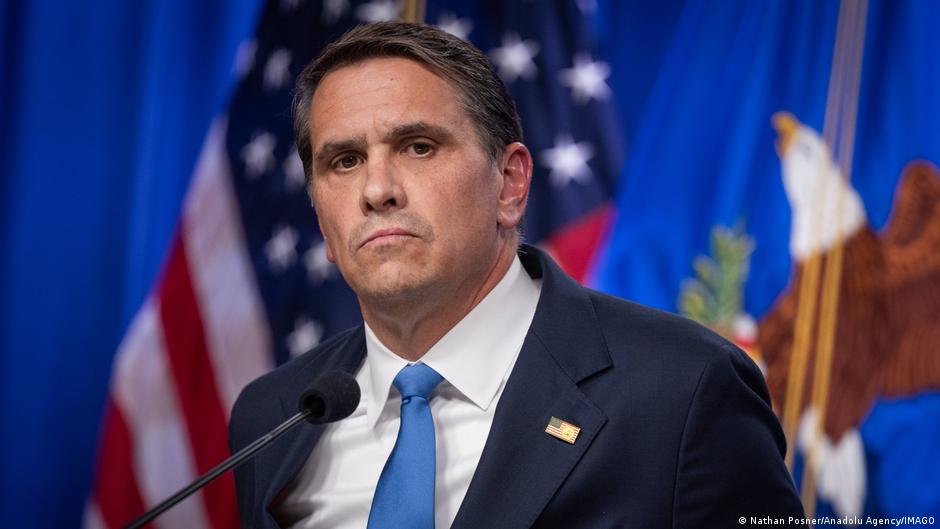
U.S. federal prosecutors have charged several Russian nationals and alleged associates with financing terrorism and conspiring to carry out contract killings around the world, including on American soil, in a case that brings Moscow’s covert operations into direct focus for Washington policymakers and U.S. business leaders assessing geopolitical risk.
According to the U.S. Attorney’s Office, Yuri Khrameev and Kirill Khrameev worked for RIS Network, which prosecutors describe as operating on behalf of Russian intelligence services. The network allegedly financed terrorist attacks against countries allied with Ukraine and prepared the killings of Russian dissidents. The charges were filed in the Southern District of New York and announced in a Justice Department press release made public on Tuesday, September 15.
The indictment, as summarized by the Justice Department, alleges that the defendants paid people in the United States and other countries to conduct advance surveillance and carry out targeted killings. Prosecutors also say they instructed associates to commit, and attempt to commit, terrorist attacks against civilian and military infrastructure in European countries that support Ukraine or are perceived to support it. The FBI participated in the investigation.
Washington Treats the Case as a National Security Threat
The case lands squarely in the overlap between criminal law, counterintelligence and U.S. foreign policy. For Washington, the allegations offer another example of what American officials describe as Russia’s willingness to project coercive power beyond its borders, using networks that can reach dissidents, defectors and Ukraine’s partners.
Prosecutors say the defendants operated as part of RIS Network, described as a global murder-for-hire organization that also conducted activity in the United States. Assistant Attorney General for National Security John Eisenberg said the defendants tried to recruit U.S. citizens and foreign nationals to carry out killings on behalf of the Kremlin.
They “attempted to recruit U.S. citizens and foreigners to commit murders on behalf of the Kremlin,” according to Eisenberg.
ABC News, citing U.S. Attorney General Todd Blanche, reported that the charges include allegations related to attempts to murder a Russian dissident whom the defendants believed was located in Washington, D.C. That detail is likely to intensify scrutiny in Congress and among national security agencies because it suggests the alleged network did not merely use the United States as a logistical or financial hub, but viewed the country as a potential operating environment.
For U.S. businesses, particularly those with operations in Europe, the indictment underscores the practical consequences of Russia’s confrontation with Ukraine’s allies. Prosecutors’ references to civilian and military infrastructure in European countries raise questions for companies in logistics, energy, telecommunications, defense contracting and critical infrastructure services. Even without new sanctions or regulatory measures, such cases can affect security planning, insurance costs, compliance reviews and decisions about exposure in countries seen as high-value targets.
Alleged Network Targeted Dissidents and Ukraine’s Allies
The Justice Department describes RIS Network as a unit of the Russian state apparatus responsible for attacks abroad, including killings. According to U.S. authorities, the network focused on Russian dissidents and defectors and, more recently, on countries considered allies of Ukraine.
That alleged shift matters in Washington because it links political violence against Russian opponents to the broader war-related pressure campaign against Ukraine’s supporters. If prosecutors prove the allegations, the case could strengthen arguments for tighter counterintelligence measures, expanded sanctions, closer coordination with European security services and heightened protection for dissidents living in the United States.
The indictment also illustrates the challenge facing American companies operating across jurisdictions affected by the war. Businesses that support Ukraine directly or indirectly, including through supply chains, humanitarian contracts, defense procurement, infrastructure repair, energy services or dual-use technology, may face a risk environment shaped not only by cyberattacks and sanctions, but also by alleged sabotage and physical threats.
U.S. authorities named three defendants as holding senior positions inside RIS Network. Yuri Khrameev, also known by the nickname “Colonel Yuri,” is described as a former colonel in Russian intelligence services who participated in recruiting people to carry out killings of Russian dissidents. His son, Kirill Khrameev, is described by U.S. prosecutors as an officer of Russia’s Federal Security Service, the FSB.
Another defendant, Oemis Romagoza Durruti, a Cuban living in Russia, is suspected of coordinating attacks for the network. U.S. authorities also identified Cuban national Yaidel Delgado Suarez, known as “Viking,” and Venezuelan national Angel Eduardo Castro as suspects in recruiting people to carry out assignments for the network.
The terrorism financing charge carries a potential prison sentence of up to 20 years for the five named defendants. Yuri Khrameev, Suarez and Castro also face charges of conspiracy to commit murder-for-hire, which carries a potential sentence of up to 10 years. The defendants are currently wanted.
The allegations remain charges, and the defendants have not been reported in the source material as being in U.S. custody. But the case already has policy significance. It gives the Justice Department and national security officials a public legal vehicle for describing what they say is a Russian-backed operational network, while also warning potential recruits, intermediaries and facilitators that U.S. law enforcement is tracking activity that crosses from espionage into terrorism financing and murder plots.
For corporate America, the bottom line is less about any single defendant than about the operating climate the indictment describes. Companies with government contracts, European assets, Russian dissident employees or public positions connected to Ukraine may have to treat geopolitical exposure as a security issue, not only a reputational or compliance concern. The charges suggest that the costs of Russia’s war and its confrontation with the West can reach beyond sanctions lists and diplomatic statements into the day-to-day risk calculations of American firms.



