U.S., Denmark and Greenland Outline Arctic Security Deal With Business Stakes
Trump says Washington has secured broad security rights in Greenland, but Copenhagen and Nuuk describe the agreement as still expected.
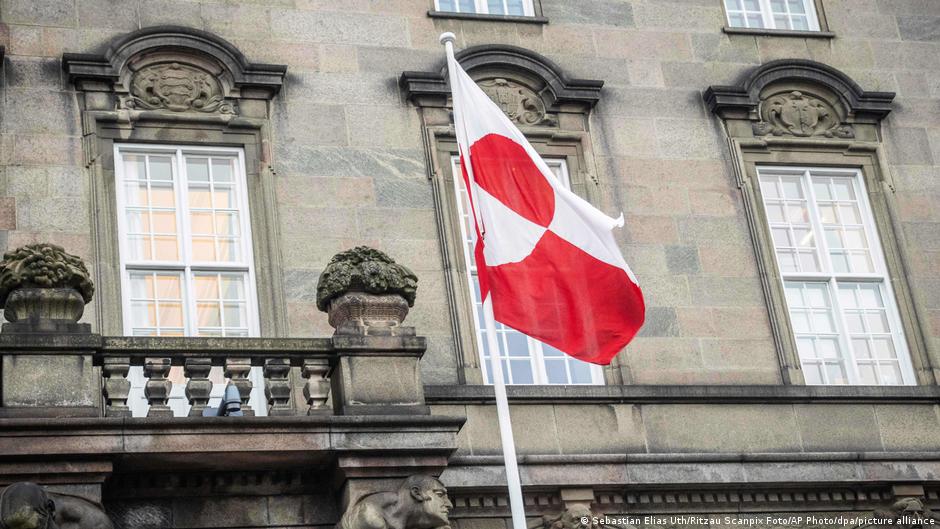
President Donald Trump said the United States has reached an agreement with Denmark and Greenland to expand the U.S. military presence on the island, a move that could reshape Washington’s Arctic strategy and carry implications for American defense, shipping and critical-minerals interests.
Trump announced what he called a deal on “Greenland security” in a post on Truth Social on Friday evening, September 18. According to the president, the arrangement would give the United States “permanent control over security and all other needs in Greenland.” He said Washington had obtained an indefinite right to do whatever is necessary in Greenland to ensure and protect the security of both the island and the United States.
The announcement was welcomed in Copenhagen and Nuuk, but with more cautious language. The governments of Denmark and Greenland issued a statement referring to an “expected agreement” with the United States, wording that may indicate the underlying documents have not yet been signed. That distinction matters in Washington, where Trump-era negotiations with foreign governments have repeatedly run into last-minute complications and where the White House has previously faced accusations of trying to alter deal terms at the final stage.
Washington’s Arctic Bet
For U.S. policymakers, Greenland sits at the intersection of defense planning, NATO coordination and economic competition in the Arctic. The island is located off the coast of North America but is part of the Kingdom of Denmark. Trump has long argued that U.S. security requires a greater role there, including during his first term, when he publicly discussed buying Greenland.
Since returning to the White House, Trump has increased pressure on Denmark and its European allies. That pressure has included threats of large customs tariffs, according to the source account. The president has framed his interest in Greenland as a national-security priority, while officials close to him have repeatedly noted that the island is rich in rare earth resources.
Under the arrangement described by Trump, adversaries of the United States would be unable to establish military bases in Greenland or make “sensitive investments” in the Danish autonomous region without U.S. approval. That provision, if formalized, would give Washington a powerful veto over strategic activity in one of the world’s most important emerging security zones.
Trump also said the United States would immediately begin expanding its military presence in several parts of Greenland. He praised himself for securing a deal that, in his telling, his predecessors had failed to conclude for 100 years, and said its results would be highly valued by the American people.
Trump said Washington had obtained an indefinite right to do what is necessary in Greenland to protect the security of both the island and the United States.
Cost Claims and Business Impact
The White House is presenting the Greenland arrangement as a strategic win without a direct price tag. Trump said the deal would “cost nothing” for the United States. Secretary of State Marco Rubio made a similar argument in comments to Fox News Digital, calling the Greenland deal a “huge victory” for the United States and Americans.
Rubio said the agreement would “forever guarantee” U.S. security interests in the Arctic without any cost to American taxpayers. He also suggested the deal was enabled by Denmark and Greenland’s assessment of their own defense capacity. According to Rubio, Denmark and Greenland understand that they lack the financial resources needed to defend Greenland in the event of an attack or threat, while the United States has the necessary means.
For American companies, the bottom-line impact will depend on the final terms. Expanded U.S. military activity could create opportunities for defense contractors, logistics providers, construction firms and companies supporting Arctic infrastructure. A stronger U.S. role could also affect future investment conditions around Greenland’s rare earth resources, which are increasingly important to technology, defense manufacturing and clean-energy supply chains.
At the same time, the agreement could create diplomatic and commercial risk if it deepens tensions with Europe or becomes tied to tariff threats. U.S. companies with exposure to transatlantic trade would be watching whether the security arrangement stabilizes relations with Denmark and NATO allies or becomes another front in broader trade and political disputes.
Denmark and Greenland Stress Sovereignty
Denmark’s prime minister, Mette Frederiksen, said the understandings with Washington would benefit NATO by strengthening “our common security in the Arctic and in the North Atlantic region.” Copenhagen and Nuuk also emphasized limits around the deal, saying the understandings recognize Denmark’s “sovereignty and territorial integrity” as well as “the right of the people of Greenland to self-determination.”
Greenland Prime Minister Jens-Frederik Nielsen said the agreement “ensures and strengthens the security of Greenland, the Kingdom of Denmark, the United States and the Western alliance.” He added that it recognizes Greenland’s interests and the autonomous region’s place in international cooperation.
Those statements point to the political sensitivity surrounding any U.S. role in Greenland. Washington may see the island as a strategic platform, but Denmark and Greenland are stressing that any new U.S. security rights must coexist with Danish sovereignty and Greenlandic self-determination.
If finalized, the agreement could mark the end of Trump’s years-long push for control over Greenland, replacing the earlier idea of acquisition with a broad security arrangement. But until signed documents are confirmed, the deal remains politically significant and procedurally incomplete: a potentially major U.S. Arctic breakthrough, but one still shaped by diplomatic language, domestic scrutiny and the unresolved question of what “permanent control” will mean in practice.



