US senators press Trump to abandon Putin diesel deal over Ukraine war funding
A bipartisan Senate group says Russian diesel would do little for US fuel prices while giving Moscow fresh revenue for its war.
A bipartisan group of 12 US senators is urging President Donald Trump to abandon a diesel agreement with Russian President Vladimir Putin, warning that the move would not meaningfully lower fuel costs for American families but would provide the Kremlin with additional funds to sustain its war in Ukraine.
The senators, organized around Democratic Senator Richard Blumenthal, sent the appeal to Trump on Tuesday, October 13, in a letter calling on the administration to reject the planned return of Russian diesel supplies to the American and global markets. A copy of the letter was posted by Blumenthal on X.
The message puts the proposed diesel arrangement at the center of a broader Washington debate over sanctions, energy prices and the economic leverage available to the United States. For US businesses, the issue is not only whether extra diesel supply could ease operating costs, but also whether any short-term market relief would be outweighed by geopolitical risk, sanctions uncertainty and pressure on companies to avoid transactions linked to Moscow.
The senators wrote that Congress and the American people support ending the war in Ukraine, which they said has taken hundreds of thousands of lives over four and a half years. But they argued that peace must come on fair terms, not through measures that would strengthen Russia’s capacity to continue the conflict.
“This deal is a gift to our adversary and a betrayal of our allies; it must be canceled,” the senators said.
Sanctions, fuel prices and the business bottom line
According to the senators, lifting US sanctions on Russian diesel exports would “only provide Putin with additional funds to finance his war machine” and allow Russia to continue attacks on Ukrainian civilians. They argued that American households already facing high fuel prices are unlikely to see much benefit from the arrival of Russian diesel on the world market.
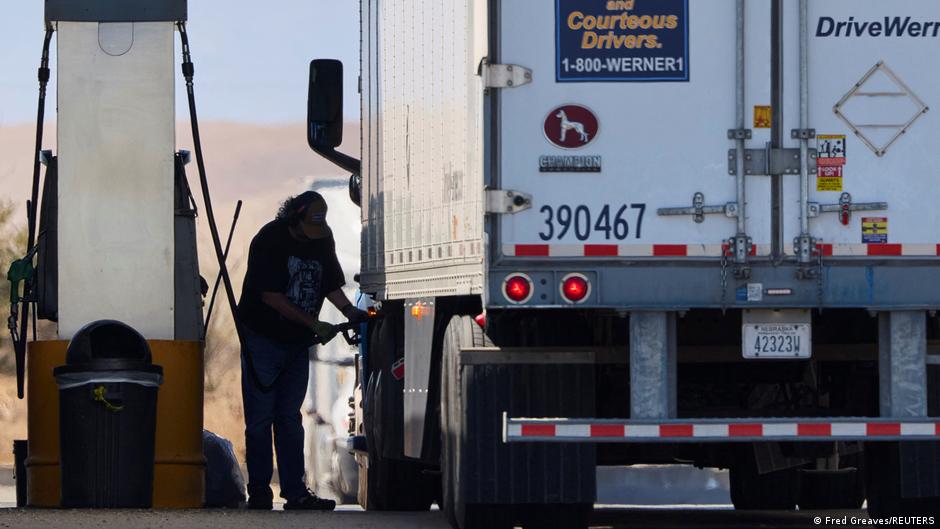
That claim goes directly to the economic case the administration may make for the deal. Diesel prices affect trucking, agriculture, construction, shipping and a wide range of supply chains across the United States. Any increase in available supply can be politically attractive because diesel costs flow through to consumer prices and business margins. But the senators’ argument is that the scale and structure of the Russian shipments would not translate into noticeable relief for American families or firms.
The letter therefore frames the proposed arrangement as a poor trade-off: limited upside for US fuel buyers, and a potentially significant benefit for the Kremlin. In practical terms, it also raises compliance questions for American companies, refiners, shippers, insurers and traders that would have to evaluate whether Russian-origin diesel can be handled without legal, reputational or operational exposure.
The senators called on Trump to increase economic pressure on “Russia and those who play a leading role in enabling its war, particularly China.” They urged him to use powers granted under Senator Lindsey Graham’s sanctions legislation targeting Russia and Iran.
Copies of the appeal were sent to Secretary of State Marco Rubio and Treasury Secretary Scott Bessent, placing both the diplomatic and financial arms of the administration on notice. The Treasury Department’s role is especially significant because sanctions licenses and enforcement guidance shape the real-world choices available to US companies and financial institutions.
Bipartisan pressure from Capitol Hill
The signatories include six Democratic senators and six Republicans, underscoring the political sensitivity of any step that appears to ease economic pressure on Moscow. In addition to Blumenthal, the Democratic signers are Jeanne Shaheen, Richard Durbin, Sheldon Whitehouse, Jack Reed and Christopher Coons.
They were joined by Republican senators Mitch McConnell, Thom Tillis, Susan Collins, Alan Stewart Armstrong, Lisa Murkowski and John Cornyn. The mix of names signals that opposition to the diesel arrangement is not confined to one party’s foreign policy lane. It also suggests that any administration effort to keep the deal intact could face congressional scrutiny from both sides of the aisle.
Trump announced on October 9 on Truth Social that he had held an “extremely successful” phone call with Putin, during which the two leaders agreed on supplies of Russian diesel fuel “to the American and world market.” According to Trump, Russian companies would “immediately” ship more than 300,000 tons, followed by another 500,000 tons in November and 1 million tons “immediately after that,” apparently in December. He also said an additional 3 million tons could follow later, “depending on the condition of refineries,” though the period for those volumes was not specified.
The US Treasury Department then issued a general license suspending US sanctions on Russian diesel fuel until April 2027. Russian state television program Vesti reported on October 12 that the first cargo of Russian diesel had left St. Petersburg for the east coast of the United States and was expected to arrive within 48 to 72 hours.
For Washington, the dispute now tests whether the administration will prioritize potential fuel-market relief or maintain sanctions pressure as a central tool of Ukraine policy. For American businesses, the answer could determine not only near-term diesel supply options, but also the stability of the sanctions environment in which energy, logistics and finance companies must operate.