US Significantly Scales Back Military Drills with South Korea Amid Strategic Reassessment
President Trump orders reduction of joint US-South Korea exercises, citing cost and diplomatic considerations with North Korea.
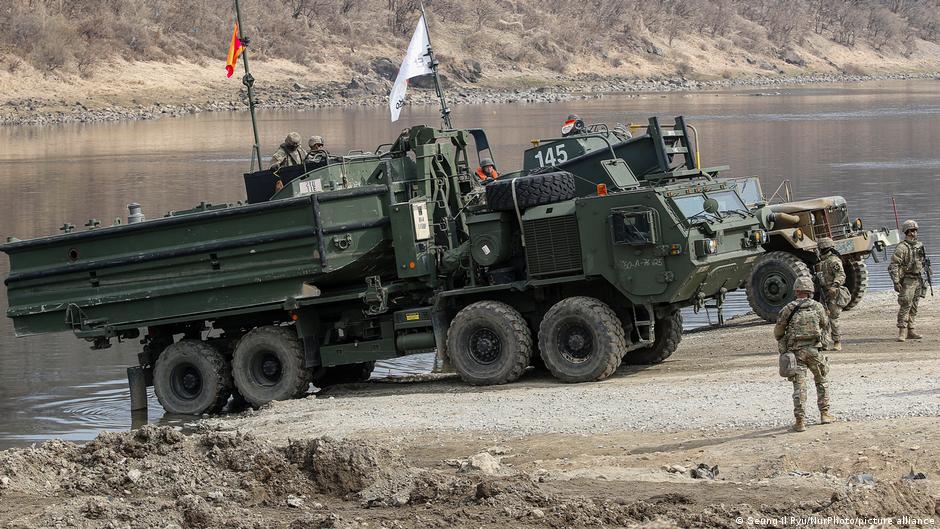
The United States will significantly reduce the scale of its joint military exercises with South Korea, according to an announcement made by President Donald Trump on August 16. This directive to downsize the maneuvers reflects a broader strategic recalibration with important implications for US military posture in Northeast Asia and for American companies involved in defense contracting.
Trump Cites Costs and Rapprochement with North Korea
In a post on his social media platform Truth Social, President Trump conveyed his reluctance over continuing these exercises, emphasizing his "very good relationship" with North Korean leader Kim Jong Un. He criticized the drills as costly, noting that the United States typically bears most of the financial burden. More importantly, he highlighted the exercises as sending a "completely inappropriate and hostile signal" to a nation that, during his presidency, has not posed a threat and has shown respectful behavior.
"These exercises not only are expensive, with most of the costs paid by the U.S. (as usual!), but they also send a completely inappropriate and hostile signal to a country that, while Donald Trump is president, represented no threat and acted respectfully."
Beyond diplomatic considerations, President Trump also pointed to South Korea's refusal to support the US in its conflict with Iran, suggesting this as a factor diminishing Seoul's role in joint security operations.
Strategic and Economic Implications for US Interests
The planned exercises, known as Ulchi Freedom Shield, are 11-day military drills scheduled to begin on August 17. Their stated purpose is to prepare South Korean and US forces for potential aggression from North Korea. The US currently stations approximately 28,500 troops in South Korea, reflecting a long-standing alliance that has been central to regional security since the Korean War armistice of 1953. However, no formal peace treaty between South and North Korea has yet been signed.
Reducing the scale of these drills could have multiple impacts. From a defense contracting perspective, American companies that supply military equipment and logistics support stand to see decreased demand for their services and products in the short term. The move also signals a shift in Washington's military and diplomatic approach, possibly affecting deterrence dynamics on the Korean Peninsula.
South Korean President Yoon Suk-yeol, who took office last year, has been advocating for rapprochement with North Korea. Recently, on August 15, he proposed peace talks with Pyongyang, though no response had been received at the time of this report.
While the Trump administration's decision reflects an attempt to reduce tensions and costs, it raises questions about the US commitment to its regional allies and the future of American defense industries servicing these joint operations.