Yabloko Enters Novgorod Regional Parliament, Preserving Ballot Access
The liberal Russian party cleared the regional threshold in Novgorod, a result with practical consequences for future national election access.
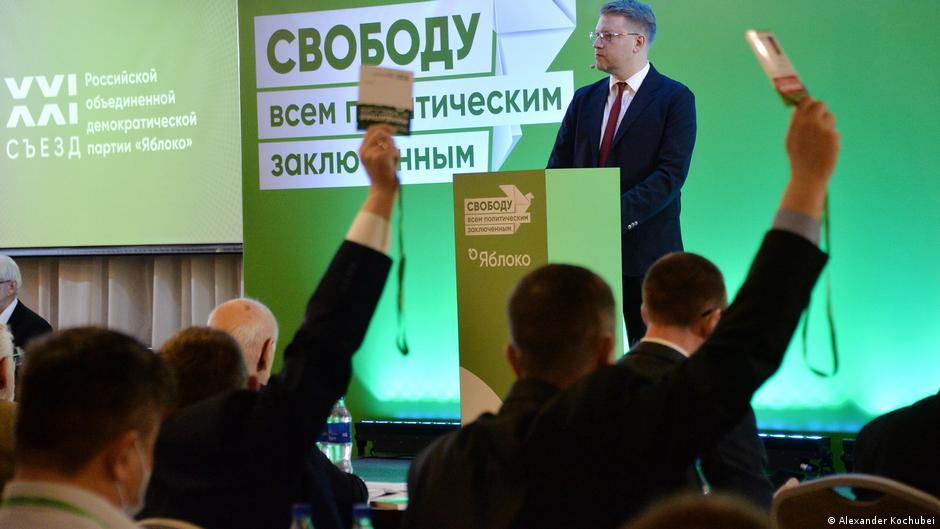
Russia’s liberal Yabloko party is set to enter the Novgorod regional parliament after winning 6.2% of the vote with 96.86% of protocols counted, according to Russia’s Central Election Commission. The result allows the party to clear the 5% threshold in elections to the eighth convocation of the Novgorod Regional Duma and gives it a foothold with consequences beyond one region.
For Washington, the vote is less about Novgorod’s local legislature than about the narrowing political architecture inside Russia. Yabloko has long occupied a small but symbolically important place in Russian politics as a legal opposition party, and it is described in the source article as the only Russian party to have opposed the war in Ukraine. Its survival in a regional legislature matters because representation can allow the party to continue taking part in State Duma elections without collecting voter signatures, a procedural hurdle that can be decisive in a tightly managed electoral system.
The Central Election Commission reported the figures overnight on Monday, September 21. Yabloko’s 6.2% showing marks an improvement over its performance in the same level of election in 2021, when it received 3.83% of the vote. That gain comes even as the party faced administrative and legal obstacles during the campaign.
Why A Regional Vote Carries National Weight
The Novgorod result has a practical effect for Yabloko’s ballot access. A party source, speaking anonymously, said the preliminary outcome in Novgorod was a source of relief because representation in a regional parliament would allow Yabloko to keep participating in State Duma elections without gathering signatures. The source said the party previously had three factions in Pskov, St. Petersburg and Karelia, but that lists there had been removed.
“For the party it has a quite practical significance: having a deputy in a regional parliament will allow Yabloko to continue participating in State Duma elections without collecting signatures,” the party source said.
That mechanism is a key reason the Novgorod vote will be watched by Russia analysts, diplomats and companies tracking the country’s political trajectory. For U.S. businesses, the direct commercial impact of one regional election is limited. But the broader signal is relevant: Russia’s institutional environment continues to shape sanctions risk, market access, compliance exposure and the predictability of any remaining commercial engagement tied to the Russian market.
Companies with historical exposure to Russia, counterparties in nearby markets, or supply chains affected by sanctions and export controls tend to monitor not only Kremlin policy but also signs of political pluralism, legal discretion and administrative pressure. The conditions surrounding Yabloko’s campaign underscore why political risk in Russia remains high and difficult to separate from legal and regulatory risk.
According to the reported results, United Russia led the Novgorod Regional Duma election with 38.37%. The Communist Party followed with 14.54%, the Liberal Democratic Party with 12.01%, New People with 9.87%, A Just Russia with 7.7%, and the Party of Pensioners with 5.55%. Yabloko’s 6.2% placed it above the threshold but behind the major pro-system parties.
Campaign Under Pressure
The Yabloko source said the Novgorod campaign was conducted in extremely difficult conditions. The entire party list on the ballot was marked with a “foreign agent” label because the list leader, party deputy chair Anna Cherepanova, had been recognized as affiliated with a “foreign agent.” Cherepanova herself was removed from the election because of an administrative case under Article 20.3 of Russia’s Code of Administrative Offenses.
The source argued that neither the label nor the removal of the list leader prevented Yabloko from producing a strong result. The episode illustrates the way Russian elections can combine formal competition with legal and administrative constraints, a dynamic that has become central to Western assessments of Russia’s domestic system.
On August 10, Russia’s Supreme Court removed Yabloko’s federal list from State Duma elections in response to a lawsuit from Rodina, which accused the party, among other things, of copyright violations and illegal payments for campaign advertising. Even so, Yabloko candidates in single-member districts are still taking part in the vote.
The removal of the party from the federal list has drawn international political attention because of Yabloko’s position on Ukraine. Jürgen Hardt, the foreign policy spokesman for the CDU/CSU parliamentary group in Germany’s Bundestag, said in a comment cited by the source article that by sidelining Yabloko, Russian President Vladimir Putin had excluded the last significant opposition voice from the electoral process.
For U.S. policymakers, that framing feeds into an existing debate about how to interpret Russian elections under the current system and how much weight to give formal party competition. It may reinforce views in Washington that Russia’s political system offers fewer internal checks on Kremlin policy, particularly on the war in Ukraine, sanctions confrontation and relations with Western governments.
The bottom-line implication for American companies is not a sudden shift in Novgorod’s regional policy. It is the continuation of a larger pattern: Russia remains a market where political decisions, legal tools and administrative design are tightly intertwined. For firms managing sanctions compliance, stranded assets, legal claims, export-control exposure or reputational risk, the Yabloko result is a reminder that even small electoral openings can matter, but they operate inside a constrained system shaped by Moscow’s broader political priorities.