Yemen Offensive Against Houthis Raises New Risks for U.S. Trade and Energy
Yemen’s internationally recognized government says it is advancing near Mocha as Houthi claims of Saudi attacks sharpen concerns over shipping and oil markets.
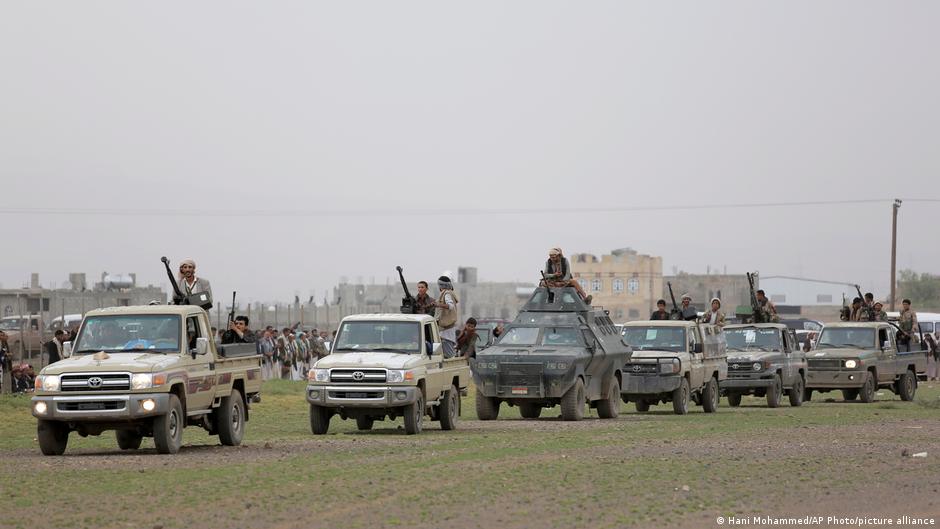
Yemen’s internationally recognized authorities are pressing a new military operation against the Houthi movement, a campaign that could carry direct consequences for Washington, U.S. energy interests and American companies dependent on stable Red Sea trade routes.
For the United States, the fighting is not a distant regional conflict. The latest moves center on Mocha, a port city near the Bab el-Mandeb Strait, one of the world’s most sensitive maritime chokepoints. Any disruption there can affect shipping costs, insurance premiums, delivery schedules and energy prices, with knock-on effects for American manufacturers, retailers, refiners and logistics firms.
Forces loyal to Yemen’s internationally recognized government have reached the approaches to Mocha, where they aim to push out the Houthis, who seized the city a month earlier. Reuters cited Yemeni authorities on Monday, October 5, as saying government forces had advanced deeper into positions held by the Houthi group Ansar Allah.
The reports of fighting around Mocha were among the first accounts of government strikes on Houthi positions after Rashad al-Alimi, chairman of Yemen’s Presidential Leadership Council, announced on October 4 the start of a large-scale military operation against the Islamist group.
Yemen’s recognized authorities say the goal is to restore control over all territory held by the Houthis.
Washington Watches a Strategic Waterway
Al-Alimi has described the operation’s goal as returning all of Yemen to the control of the internationally recognized authorities. That objective would require a major effort. The Houthis hold significant parts of the country, including its most densely populated areas and the capital, Sanaa.
In late September, Yemen’s authorities announced the start of a general mobilization to fight the Houthis. They also promised amnesty to all members of Ansar Allah who switch to the side of government forces.
For U.S. policymakers, the timing and geography of the offensive matter. The Houthis have intensified attacks in Yemen with the aim of taking control of the country’s entire Red Sea coast. Their military gains, including the capture of Mocha on the Bab el-Mandeb Strait, have allowed Iran and its allies to consolidate control over key waterways in the region, according to the source account.
That is the part of the conflict most likely to command attention in Washington. The Bab el-Mandeb connects the Red Sea with the Gulf of Aden and sits along routes used for global commerce and energy shipments. The source article states that Houthi attacks have threatened global trade routes and contributed to rising energy prices. Houthi leaders also separately declared the Bab el-Mandeb Strait closed to vessels from Saudi Arabia.
Those developments create a business risk map that extends well beyond Yemen. U.S. companies moving goods between Asia, Europe and North America may face longer routes, higher freight costs or greater exposure to volatility if the security situation deteriorates. Energy-sensitive sectors in the United States, from airlines and trucking to chemicals and consumer goods, could also feel the effect if regional attacks push fuel prices higher.
Both Sides Claim Battlefield Success
Yemen’s recognized government is not the only side claiming gains. The Yemen Press Agency, citing a representative of Ansar Allah, reported that the Houthis had captured one district in Taiz province as well as former residences of Rashad al-Alimi in the region.
Al Masirah, a television channel controlled by the Houthis, also showed video footage said to depict the capture of al-Alimi’s multistory house. In the video, Houthi fighters raised the group’s flag over the building.
Houthi military spokesman Yahya Saree also claimed the group had carried out a series of operations inside Saudi Arabia. According to Saree, the Houthis attacked King Khalid International Airport in Riyadh, an Aramco refinery in Rabigh and several military sites in the kingdom.
Saudi Arabia did not confirm those claims. Still, the source account says Riyadh, Ankara and Islamabad have agreed to the rapid deployment of forces in the region under the Mecca Defense Pact signed in August. The pact provides for a collective response by Turkey, Saudi Arabia and Pakistan to an attack on any of the three countries.
Reuters, as cited in the source article, reported that Riyadh is ready to take part in the offensive by Yemeni government forces against the Houthis by providing air support. That prospect would raise the regional stakes and increase the likelihood that Washington would face pressure to assess the security posture of Gulf partners, energy infrastructure and maritime lanes used by U.S.-linked commerce.
The current escalation follows a broader pattern. In early September, the Houthis announced an expansion of military operations in the Middle East and struck four cities in southern Saudi Arabia. More than 70 people were injured in the heavy shelling, and fires broke out at oil facilities. Saudi Arabia, in turn, carried out more than 60 airstrikes across several provinces controlled by the Houthis.
On September 19, the Saudi-led Coalition to Restore Legitimacy in Yemen said Yemeni rebels had attempted for the first time the previous night to strike the Saudi capital, Riyadh, with a ballistic missile. Brig. Gen. Turki al-Maliki, the coalition’s official spokesman, said on X at the time that the missile had been intercepted and destroyed.
The renewed fighting puts Washington’s strategic and commercial interests on the same track. U.S. officials have long treated Gulf energy security and Red Sea navigation as core concerns. For American businesses, the immediate question is more practical: whether the battle for Yemen’s coast will widen into a disruption that raises transport costs, squeezes margins and adds another geopolitical shock to global supply chains.



