Zelensky Says North Korea Plans to Send 10,000 More Troops to Russia
Ukraine’s president says Pyongyang is preparing another deployment as Washington weighs the security and business fallout of a widening war.
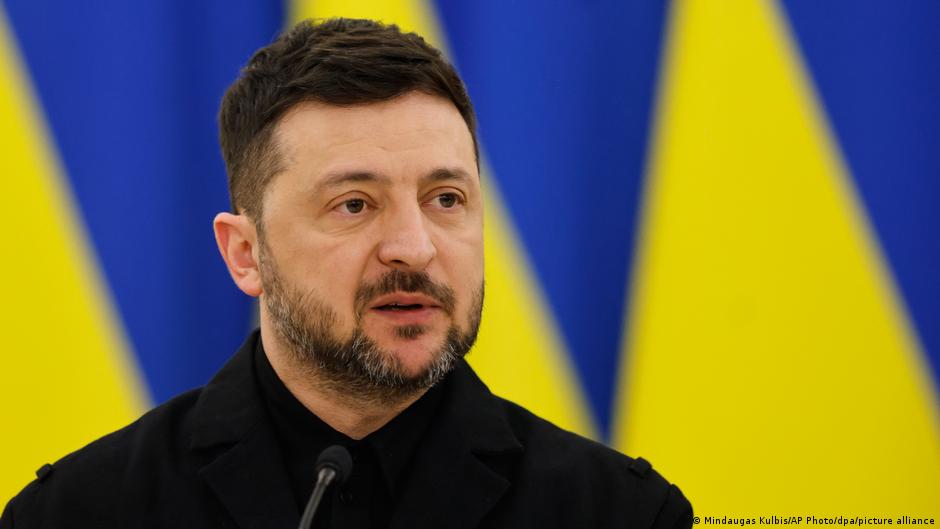
Ukrainian President Volodymyr Zelensky said North Korea is preparing to transfer about 10,000 more troops to Russia, citing new intelligence from Ukraine’s military spy agency and warning that Moscow intends to expand its use of foreign manpower in the war against Ukraine.
In his evening address on Monday, September 28, Zelensky said more than 8,000 North Korean soldiers are already on Russian territory. He said the latest information came from a report by the Main Intelligence Directorate of Ukraine’s Defense Ministry, known as HUR.
The claim adds another point of pressure for Washington as U.S. policymakers assess how far the Russia-North Korea relationship may go, what it means for sanctions enforcement, and how American defense, technology and energy companies could be affected by a longer and more internationalized conflict. For U.S. businesses, the bottom-line issue is whether the war’s expansion keeps geopolitical risk elevated across supply chains, defense procurement, cybersecurity, commodity markets and Asia-Pacific security planning.
“It is important that the governments of the countries from which Russia attracts people into its army counteract this,” Zelensky said. “We will inform every government.”
According to Zelensky, the North Korean troops now under consideration are being selected for training and later transfer to Russia. He said Russian authorities “plan to increase” the recruitment of foreigners to take part in the war against Ukraine.
Washington Faces a Broader Russia-North Korea Challenge
For the United States, Zelensky’s statement points to a challenge that is no longer limited to the battlefield in Ukraine. If North Korea continues to supply personnel to Russia, the arrangement could deepen military cooperation between two heavily sanctioned states and complicate U.S. efforts to isolate Moscow financially and diplomatically.
South Korean intelligence has estimated that North Korea has already sent about 15,000 troops to support Russia in the war. In return, Pyongyang is believed to receive money, military technology and security guarantees from Moscow. Zelensky said in August that North Korea intended to deploy between 30,000 and 50,000 fighters on Russian territory.
Those figures, if borne out, would matter in Washington not only as a military question but as an economic one. A larger foreign troop presence could allow Russia to sustain pressure on Ukraine while preserving more of its own manpower, potentially prolonging the conflict. That would keep U.S. aid debates alive in Congress and maintain demand for weapons, ammunition, air defense systems and battlefield technologies supplied or supported by American firms.
The defense sector may see continued procurement momentum if the war remains intense, but other parts of the U.S. economy face less favorable consequences. Companies with exposure to Europe may confront persistent security costs, sanctions compliance burdens and energy-market volatility. Technology firms remain exposed to export-control enforcement risks, especially if military technologies are moving between Moscow and Pyongyang. Banks, insurers and logistics companies must continue screening transactions and shipments for links to sanctioned networks.
Business Risk Extends Into Asia
The North Korean dimension also creates implications for U.S. companies operating in South Korea and across East Asia. Any perception that Pyongyang is gaining Russian money, technology or security assurances could sharpen regional tensions and increase the security premium for American firms with manufacturing, semiconductor, automotive, battery or logistics operations in the region.
South Korea is a critical partner in U.S. industrial strategy, particularly in chips, electric vehicle batteries and advanced manufacturing. A deeper Russia-North Korea partnership could push Washington and Seoul toward tighter coordination on sanctions, export controls and defense readiness. That may create opportunities for some U.S. contractors and security providers, while raising compliance and planning costs for multinational companies.
The latest comments from Kyiv also come at a sensitive diplomatic moment. Zelensky’s statement about Russia seeking additional North Korean personnel followed a dispute between Ukraine and South Korea that erupted several days earlier. South Korean President Lee Jae Myung sharply criticized Ukrainian authorities after Zelensky publicly disclosed the transfer to Seoul of two North Korean soldiers captured during fighting with Ukrainian forces in Russia’s Kursk region.
Lee accused Zelensky of violating a confidentiality agreement. Zelensky’s office responded that no such nondisclosure agreement existed between the two countries. Seoul called that response false. On September 28, South Korea’s Foreign Ministry summoned Ukraine’s acting ambassador, and a deputy foreign minister conveyed Seoul’s “firm position” on the matter, according to Yonhap.
That diplomatic clash matters for Washington because U.S. strategy depends on alignment among partners facing Russia, North Korea and China. Public friction between Kyiv and Seoul could complicate intelligence sharing, messaging and coordination over prisoners, troop movements and military assistance. It may also force U.S. officials to play a quiet role in keeping both partners focused on the larger security challenge.
For American executives, the practical takeaway is that the Ukraine war remains a moving geopolitical risk rather than a contained regional conflict. Russia’s reported reliance on North Korean personnel, Pyongyang’s expected compensation from Moscow, and Seoul’s anger over sensitive disclosures all point to a conflict whose effects reach from European battlefields into Asian security and U.S. corporate planning.
Washington’s response will likely be judged by whether it can deter further troop transfers, tighten sanctions enforcement and keep allies aligned without triggering additional instability for U.S. companies already navigating export controls, supply chain disruptions and unpredictable defense spending cycles.