Zelenskyy Plane Delayed by Drone Threat Over Moldova, Norway Says
The reported incident underscores the widening airspace risks around Ukraine that continue to shape Washington’s security and business calculus.
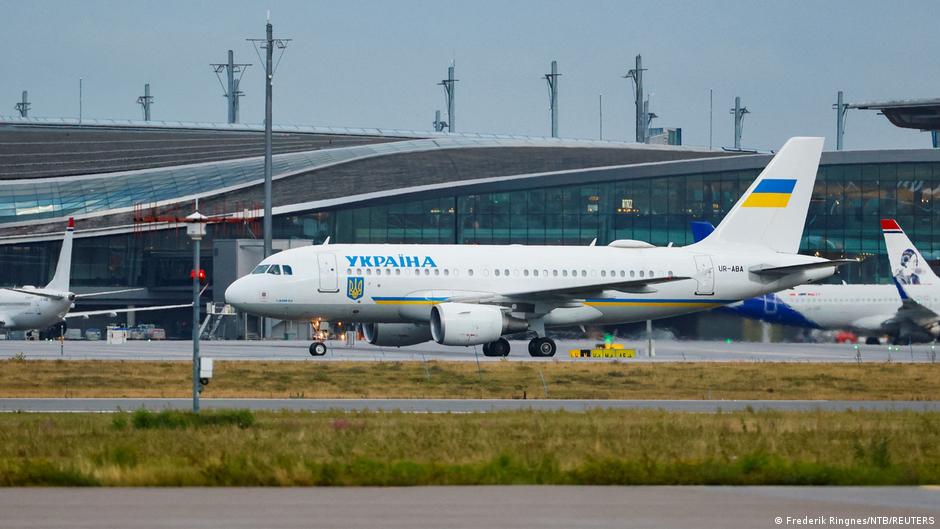
Ukrainian President Volodymyr Zelenskyy’s aircraft was delayed by a drone threat in Moldovan airspace as he was departing for Norway, according to Norwegian Prime Minister Jonas Gahr Stoere, adding a fresh reminder of how the war’s security risks extend beyond Ukraine’s borders and into European aviation corridors watched closely by Washington and U.S. companies.
Stoere said in an interview with Norwegian broadcaster NRK on Wednesday, September 9, that Zelenskyy’s plane had “barely” avoided a collision with a drone while leaving Moldova for Oslo. The Ukrainian president’s office had not commented on the incident, and Stoere did not say where he obtained the information. His remarks also did not clarify whether the episode was accidental or the result of a deliberate attempt to target Zelenskyy.
“His plane nearly collided with a drone when it was supposed to take off from Moldova. This is the reality he is in,” Stoere said, according to the Russian-language source article.
The Norwegian prime minister’s office later refined the account, saying there had been a drone threat in Moldovan airspace the previous day that delayed Zelenskyy’s aircraft on its way to Oslo. The office said such threats were part of the daily conditions under which the Ukrainian leader operates, but added that it was not known how close the drones were to his plane.
For U.S. officials and businesses, the report is another signal that the operational risks tied to Russia’s war in Ukraine are not confined to the battlefield. Moldova is not a NATO member, but it sits directly beside Ukraine and near key transport routes, border infrastructure and airspace used by European governments and delegations. Any drone incursion there raises questions about regional spillover, air safety, insurance exposure and the cost of maintaining diplomatic and commercial movement near the war zone.
Drone Threat Adds to Washington’s Regional Risk Calculus
A senior Ukrainian official told DW that while the Ukrainian president’s aircraft was waiting to depart from Chisinau, a Russian jet-powered drone entered Moldovan airspace. Zelenskyy’s departure was subsequently delayed, and other flights were suspended, according to the source article.
Those details matter in Washington because U.S. support for Ukraine has increasingly been assessed not only as a military commitment but also as a broader security investment in European stability. Drone activity near civilian routes in Moldova could strengthen arguments among Ukraine’s supporters that the conflict continues to threaten neighboring states and Western interests. It may also complicate discussions among policymakers who are weighing the costs of further aid, air defense support and intelligence cooperation.
The incident, as described, does not establish an attack on Zelenskyy’s aircraft. Norwegian officials explicitly said it was unknown how close the drones were to the plane. Still, the prospect of a drone entering airspace while a head of state’s aircraft is awaiting departure will be read by security planners as a serious aviation and diplomatic-security concern.
Zelenskyy arrived in Oslo from Moldova on the evening of September 8 to attend the funeral of King Harald V. After the ceremony, he met with Stoere. An official Norwegian government statement on their talks did not mention the drone incident, according to the source article.
Business Implications for Aviation, Insurance and Supply Chains
For American companies with exposure to Eastern Europe, the reported episode adds to a familiar but expensive list of risks: disrupted air routes, higher insurance costs, logistics uncertainty and the possibility that civilian infrastructure near Ukraine’s borders can be affected by drone activity. Airlines, aviation-services firms, insurers, energy companies and logistics providers all track incidents that could alter risk models or trigger new operating restrictions.
The Moldovan police said on September 9 that they had found a fallen drone equipped with a power unit. An explosion occurred when it hit the ground, leaving a large crater. The drone contained damaging elements in the form of metal balls, and no casualties were reported.
Separately, a local regional military administration said Russian drones attacked the Starokozache international road border crossing in Ukraine’s Odesa region, on the border with Moldova, during the night of September 9. NRK noted that the airport from which Zelenskyy flew to Oslo is roughly a two-hour drive from that border crossing.
That geography is significant for companies and governments alike. Border crossings in and around Odesa and Moldova are part of a wider network that supports civilian movement, humanitarian flows and commercial logistics. Even when a drone strike does not cause reported casualties, it can force temporary suspensions of flights, increase security checks and create uncertainty over whether routes remain viable.
For Washington, the bottom-line question is how far the risk environment around Ukraine can spread before it begins to impose larger costs on allies, companies and public budgets. U.S. defense contractors may see sustained demand for counter-drone systems and air-defense equipment, while transport and insurance firms face the opposite side of the ledger: greater exposure, more cautious underwriting and potential delays in regional operations.
The episode also lands at a time when American political debate over Ukraine remains closely tied to cost, accountability and strategic value. Reports of drone threats near a presidential aircraft and a neighboring country’s airspace may reinforce the case that the conflict carries direct implications for European security architecture. At the same time, skeptics of continued U.S. spending are likely to demand clearer evidence before treating any single incident as a basis for expanded commitments.
What is clear from the accounts cited by Norwegian officials, Moldovan police and a Ukrainian official is that drone activity around Moldova is becoming part of the operational backdrop to the war. The Ukrainian president’s office had not commented on the reported aircraft delay, and the Norwegian government’s formal readout of Zelenskyy’s meeting with Stoere did not include the incident. But the security message for Washington and U.S. business is difficult to miss: airspace and border risks near Ukraine remain volatile, and their financial and diplomatic consequences can travel quickly.