Zelenskyy Tells UN Putin Is War’s ‘Patient Zero’ as Energy Stakes Rise
Ukraine’s president used the UN General Assembly in New York to frame Russia’s war as a global business and security risk with direct implications for Washington.
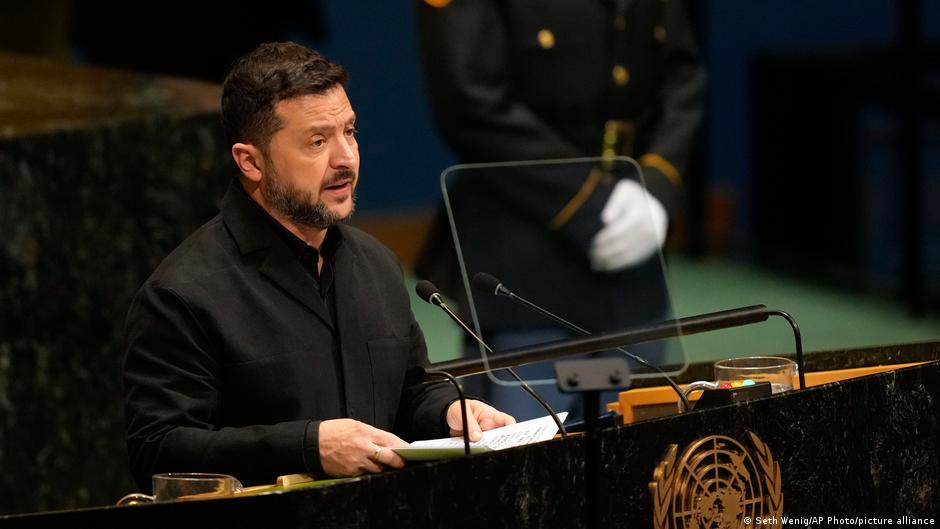
Ukrainian President Volodymyr Zelenskyy used his address to the United Nations General Assembly in New York on Wednesday, September 23, to cast Russian President Vladimir Putin as the origin point of a widening global contagion of war, instability and economic risk. Speaking in terms that will resonate in Washington and across boardrooms exposed to energy markets, sanctions compliance and geopolitical disruption, Zelenskyy said Putin must be prevented from acting further and from spreading what he called evil beyond Ukraine.
According to Zelenskyy, Putin is the “patient zero” from whom the idea of war is spreading around the world. Wherever that idea goes, he said, it brings “only pain, instability, new risks and, of course, new crises.” The formulation was aimed not only at diplomats in the UN chamber, but also at governments and companies weighing the cost of a prolonged war: higher security burdens, pressure on energy supply chains, increased sanctions enforcement and the prospect of wider instability touching markets far from the battlefield.
“He must not be allowed to act and must not be given the opportunity to spread this evil further,” Zelenskyy said of Putin.
For the United States, the speech underscored the connection between Ukraine policy and core business concerns. Russia’s war has already reshaped energy trade, defense procurement, sanctions risk, agricultural flows and shipping insurance. Zelenskyy’s message to the General Assembly was that leaving Russia with the capacity to finance and extend the war would invite more shocks, not fewer.
Energy Pressure Moves to the Center
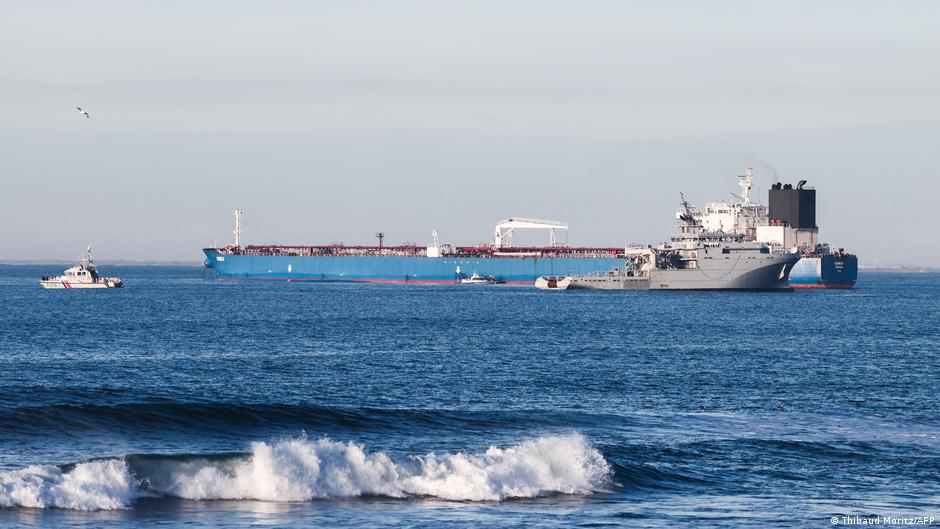
Zelenskyy placed particular emphasis on Russia’s oil sector, describing it as a source of national pride now operating “on its last legs.” He said it was hard to imagine a more humiliating defeat for a country that holds a permanent seat on the UN Security Council and has long taken pride in its oil exports. His point was not merely rhetorical. For policymakers in Washington, Russia’s ability to convert oil revenue into military capacity remains one of the central questions of the war.
The Ukrainian president stressed that oil itself is not Ukraine’s target, nor are gasoline, diesel fuel, factories or ports as ends in themselves. Rather, he said, Ukraine’s target is Russia’s ability to finance and prolong the war. That distinction matters for American companies operating in energy, logistics, insurance, commodities trading and financial services. Any expansion of pressure on Russia’s energy infrastructure or revenue streams can alter compliance risks, pricing assumptions and exposure to secondary effects across global markets.
Zelenskyy also warned that if Russia continues attacking Ukraine’s energy system and heating infrastructure, Kyiv will try to ensure that Russia’s “General Frost” changes sides this winter. The phrase was a reference to the possibility of retaliatory strikes. It also pointed to a familiar wartime pattern: Moscow’s attempts to weaponize winter against Ukrainian civilians and infrastructure, and Kyiv’s determination to raise the cost of that strategy.
For Washington, the winter energy equation has both strategic and commercial dimensions. US defense contractors, energy firms, LNG suppliers, infrastructure companies and insurers all face a war environment in which attacks on power systems can drive demand for air defense, grid repair, fuel alternatives and emergency financing. The more Russia targets civilian infrastructure, the more pressure grows on Western governments to provide equipment and funding that keeps Ukraine functioning.
Human Costs and Military Attrition
Zelenskyy cited heavy Russian battlefield losses, saying that from January through August the Russian armed forces lost 248,964 people on the battlefield in Ukraine. He framed the figure as evidence of Putin’s willingness to trade lives for limited territorial gains, saying Putin is paying 248 people for every kilometer and asking whether anyone still considers him rational.
The Ukrainian leader added that citizens of 47 other countries are fighting on the side of Russia’s army and are also dying on the battlefield. That claim broadened his argument beyond a bilateral war between Russia and Ukraine. He presented the conflict as an international security problem in which Russia draws manpower from beyond its borders while projecting the consequences of the war outward.
For US political leaders, these casualty claims feed directly into the debate over continued support for Ukraine. Supporters of assistance can point to Russian attrition as evidence that Ukraine is degrading a major adversary without US troops on the battlefield. Critics will continue to ask how long Washington should underwrite Kyiv’s defense and what defined outcome US policy is meant to achieve. Zelenskyy’s answer at the UN was that the cost of delay could be higher than the cost of support.
Artificial Intelligence and the Next Phase of War
Zelenskyy also issued a warning about the technological trajectory of the conflict. As soon as next year, he said, there is a real possibility that battlefield decisions could begin to be made by artificial intelligence, not only by humans. “We need peace before we reach that point,” he said.
That warning has particular relevance for the United States, where defense technology companies, artificial intelligence developers and policymakers are already debating the military use of autonomous systems. Ukraine has become a testing ground for drones, electronic warfare, data-driven targeting and rapid battlefield adaptation. Zelenskyy’s remarks suggested that the conflict could soon move into an even more consequential phase, with AI playing a larger role in decisions that carry lethal consequences.
For American businesses, the implications are not confined to defense contractors. AI governance, export controls, dual-use technology restrictions, cybersecurity requirements and investor scrutiny could all intensify as the war accelerates demand for autonomous and semi-autonomous systems. The battlefield may force faster decisions in Washington about what technologies can be transferred, how they are controlled and where liability begins.
Zelenskyy’s remarks came as an AFP analysis found that in the first 18 days of September, the number of Russian strikes was higher than in any full month since the start of the war in Ukraine, with the exception of March 2022. That assessment reinforced the urgency of his appeal: the tempo of attacks is not declining, and the war’s pressure on civilians, infrastructure and global risk calculations remains acute.
At the same time, Russian Foreign Minister Sergey Lavrov told the UN Security Council that there would be no “pause” in hostilities. Taken together, Zelenskyy’s speech and Lavrov’s statement left little room for optimism about an immediate diplomatic opening. For Washington, the message was blunt: absent a change in Russian behavior, the war will continue to demand political attention, public money, private-sector vigilance and strategic decisions about how much pressure to apply to Moscow’s capacity to keep fighting.