Armenia’s Parliamentary Vote Signals Continued Pro-Western Shift Amid Russian Tensions
Prime Minister Pashinyan’s party leads as Armenia’s elections underscore geopolitical realignments impacting US interests and regional stability.
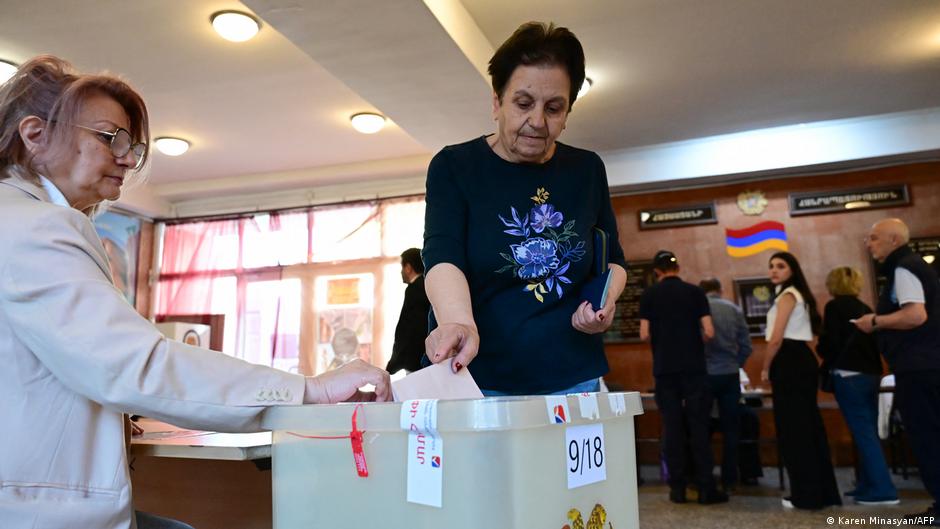
Armenia held pivotal parliamentary elections on June 7 that will shape the country’s foreign policy trajectory amid intensifying tensions between Moscow and Yerevan. Preliminary results from the Central Electoral Commission show Prime Minister Nikol Pashinyan’s Civil Contract party commanding a commanding lead with 50.86% of the vote, positioning it to form a single-party government.
The opposition alliance Strong Armenia, led by Russian-Armenian businessman Samvel Karapetyan, captured 23.19%, while the bloc Armenia, headed by former President Robert Kocharyan, secured 9.6%. Other parties passing the electoral threshold include the Prosperous Armenia party with 4.1%, and the Wings of Unity party with 2.3%. Voter turnout reached 58.97%, surpassing participation levels in the 2018 and 2021 elections.
Implications for US Businesses and Regional Geopolitics
Pashinyan’s government has legislated a strategic pivot towards the European Union, formalizing Armenia’s pro-Western orientation despite Russia’s traditional influence in the Caucasus. This realignment has raised concerns in Moscow, which has responded with economic restrictions on Armenian exports such as alcohol, agricultural products, and flowers ahead of the vote, signaling Moscow’s displeasure with Armenia’s EU rapprochement.
“The Civil Contract party will unilaterally form the government,” Prime Minister Pashinyan declared early on election night, underscoring his confidence despite only partial vote counting.
The Kremlin has drawn parallels between the Armenian situation and Ukraine’s 2014 crisis, heightening tensions in a region critical to Russian geopolitical interests. For US policymakers and businesses, Armenia’s trajectory presents both opportunities and challenges. A stable pro-Western government may enhance Armenia’s integration with European markets, potentially benefiting American companies seeking new trade or investment avenues in Eurasia.
Conversely, Moscow’s pushback and Armenia’s sensitive position as a border state near Russia’s sphere of influence mean US companies must navigate a complex geopolitical environment. Sanctions, trade restrictions, or regional instability could disrupt commerce and investment plans.
The election results also highlight fractures within Armenia’s domestic politics. Opposition parties criticized Pashinyan’s early claims of victory as premature and potentially unconstitutional, suggesting political volatility may persist. This internal tension combined with external pressures from Russia underscores the delicate balance Armenia must maintain going forward.
For Washington, supporting democratic processes and economic reforms in Armenia aligns with broader US strategic interests in promoting stability and diminishing Russian regional dominance. American companies eyeing expansion into the Caucasus region will need to monitor developments closely, assessing risks stemming from Russia’s countermeasures and the evolving political landscape.
Armenia’s nearly 2.5 million eligible voters participated under a proportional electoral system with a 4% threshold for parties and higher thresholds for coalitions. Electronic voting was introduced for diplomatic staff abroad, reflecting efforts to modernize electoral participation.
Ultimately, Pashinyan’s anticipated second term and firm commitment to EU integration signal a continued departure from Moscow’s orbit, reinforcing Armenia’s strategic recalibration. For US business and political interests, this transformation presents a cautiously optimistic outlook for deeper engagement in the South Caucasus amid an increasingly contested geopolitical environment.