Bulgaria Presidential Vote Heads to Runoff With Ukraine Policy in Focus
A Nov. 1 runoff between Iliyana Yotova and Andrey Gyurov could shape Bulgaria’s security posture and outlook for US businesses.
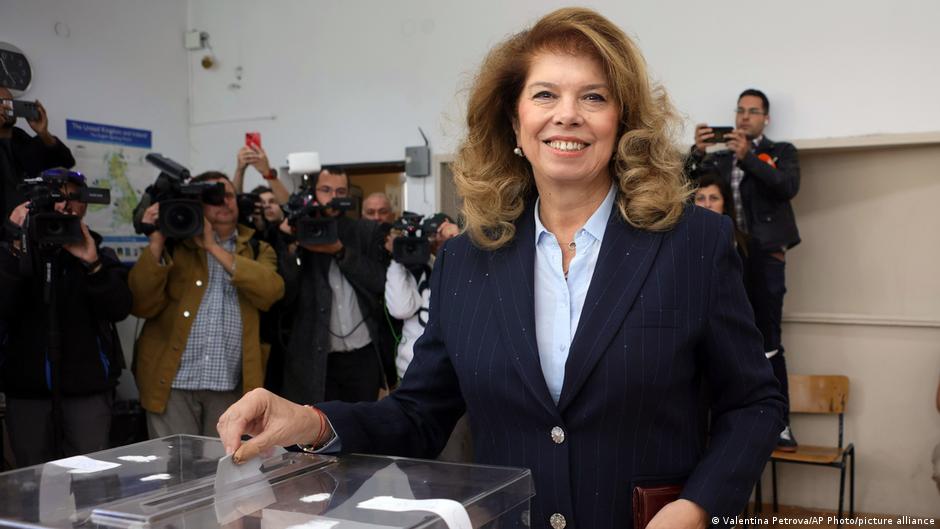
Bulgaria’s presidential election is heading to a second round after no candidate secured the required absolute majority in the opening vote, setting up a contest with implications for Washington’s security priorities and American companies operating around the Black Sea.
With 95.3% of ballots processed, incumbent President Iliyana Yotova had received 34.6% of the vote, according to the country’s Central Election Commission. Pro-Western former Prime Minister Andrey Gyurov was in second place with 32%, positioning the two candidates for a runoff expected on Nov. 1.
Turnout stood at only 22.2%, far below the required level of more than 50%. The result leaves Bulgaria facing another round of voting at a time when the country’s proximity to the war in Ukraine has increased the foreign-policy significance of an office whose formal domestic powers are limited.
Black Sea security raises the stakes
The runoff comes amid a series of security incidents affecting Bulgaria and the surrounding Black Sea region. In October alone, four merchant vessels off the Bulgarian coast were reportedly struck by drones. A Starlink station near Sofia was also damaged in an arson attack.
Yotova and Bulgaria’s government, led by Rumen Radev, responded cautiously to those incidents. They did not offer an unequivocal assessment or identify those responsible, an approach that also influenced the presidential campaign.
For Washington, the election presents a test of how a strategically located country will position itself as the conflict in Ukraine continues. Bulgaria’s Black Sea coastline and its exposure to disruptions involving commercial vessels make its political direction relevant to US defense planning, regional diplomacy and the security of trade routes.
The incidents may also matter to American technology and communications companies. Damage to a Starlink station underscores the physical risks facing commercially operated infrastructure with a role in regional connectivity. More broadly, drone activity near merchant shipping can create operational uncertainty for US companies that depend on Black Sea logistics, maritime insurance, energy flows or cross-border supply chains.
The runoff has taken on greater foreign-policy importance because of Bulgaria’s proximity to the theater of war in Ukraine.
Candidates diverge over support for Ukraine
The presidential campaign initially featured few rallies, no televised debates and numerous personal attacks directed at the two leading candidates. In its final weeks, however, differences over support for Ukraine moved to the center of the contest.
Yotova has advocated a diplomatic conclusion to the war. She also sought to reassure voters that Bulgarian troops would not be sent to Ukraine, even though the issue had not been the subject of broad public debate.
Gyurov has previously expressed support for Ukraine. While serving as head of government, he signed a security cooperation agreement with Kyiv. That record gives the runoff a clearer geopolitical dimension, contrasting his prior alignment with Ukraine against Yotova’s emphasis on diplomacy and assurances about keeping Bulgarian forces out of the conflict.
US officials and businesses will therefore be watching not only the final tally but also the political signal sent by Bulgarian voters. A Gyurov victory could indicate continued support for closer security cooperation with Kyiv and Western partners. Yotova’s position points toward a more restrained public posture centered on negotiation. The source material does not specify proposed changes to Bulgaria’s commercial or investment policies, but the candidates’ approaches could influence perceptions of regional stability.
Limited office, meaningful influence
Bulgaria’s president has formally constrained authority, but the position carries powers that can affect both foreign relations and domestic governance. The president represents the country internationally, subject to certain exceptions, and serves as commander in chief of the armed forces.
The officeholder also signs decrees appointing the prosecutor general and the heads of the highest courts. In addition, the president appoints an acting prime minister from a closed group of officials defined by the constitution and can veto legislation approved by parliament.
Those responsibilities mean the outcome could influence Bulgaria’s external representation, military messaging and periods of political transition. The veto power and appointment responsibilities also give the presidency a role in the legal and institutional environment, even without direct control over routine economic policy.
For American companies, the immediate bottom-line issue is uncertainty. Businesses with exposure to shipping, telecommunications, defense, energy or infrastructure in Bulgaria and the wider Black Sea region may need to follow the runoff closely. The election will not by itself settle the security risks highlighted during the campaign, but it will determine which political figure speaks for Bulgaria internationally and exercises the presidency’s strategic constitutional powers.