Canada Base Fire Kills Four, Raising Questions for Washington and NATO
The deadly Alberta training accident may intensify scrutiny of wildfire readiness, military safety and cross-border defense resilience.
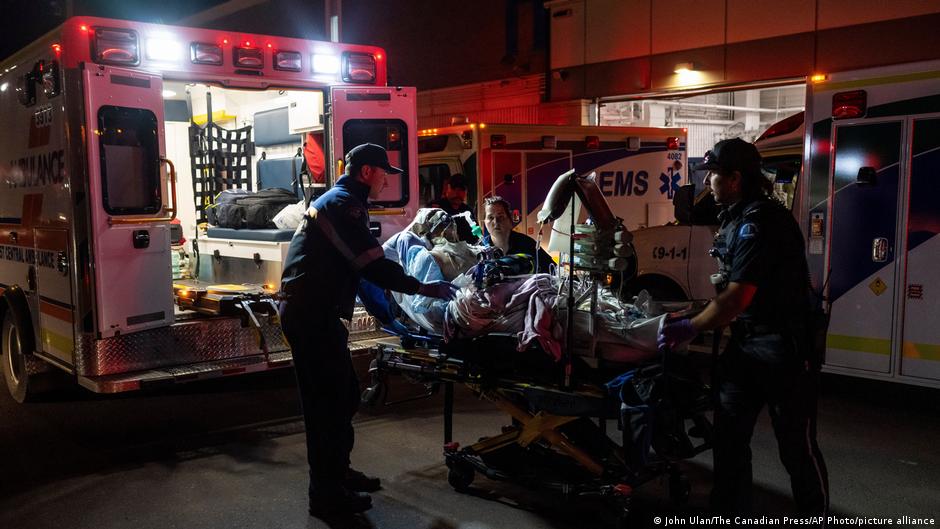
At least four Canadian Army personnel were killed and dozens were injured when a wildfire swept toward soldiers during a training exercise at Canadian Forces Base Wainwright in Alberta, Prime Minister Mark Carney said on Sunday, October 18.
Nineteen people injured in the fire were in critical condition, according to authorities. About 20 others sustained less serious injuries. The scale of the casualties makes the incident a major test for Canada’s military leadership and government, with potential implications for defense planning in Washington and for American companies operating across the closely integrated US-Canada market.
“It is with profound sorrow that I must confirm that, at this time, four service members have died, and their families have been notified,” Carney said at a news conference in Ottawa.
Carney said dozens of other personnel had suffered serious injuries and described the fire as one of the worst tragedies faced by the Canadian Armed Forces on Canadian territory during peacetime.
Decision to continue training faces scrutiny
The wildfire began during the afternoon of October 18, but military leaders decided not to halt the exercise, according to the account provided by authorities. Strong winds then drove the flames rapidly across the prairie toward the soldiers.
Canadian generals said the fire traveled one kilometer in 36 seconds. That extraordinary rate of advance left personnel facing a fast-moving emergency in open terrain and is likely to put the military’s risk assessments, evacuation procedures and chain of command under close examination.
The immediate priorities are the treatment of the injured, notification and support of military families, and clarification of how the training exercise continued after the wildfire started. With 19 casualties reported in critical condition, the ultimate human toll could remain a central concern for the Canadian government and armed forces.
For Washington, the tragedy matters beyond Canada’s border. The United States and Canada are deeply connected through continental defense arrangements, joint military planning and a broad network of government and commercial suppliers. A serious accident at a Canadian training base can therefore prompt questions about whether climate-related hazards are being incorporated adequately into exercises conducted by North American forces.
The incident does not by itself establish a broader failure in bilateral defense readiness. It does, however, create pressure for Canadian officials to explain the operational decisions made before the fire reached the troops. US defense planners will have an interest in any lessons involving wildfire monitoring, emergency communications, command responsibility and the protection of personnel during rapidly changing conditions.
Bottom-line risks for US businesses
For American defense contractors and other companies supporting military operations in Canada, the fire highlights a practical business risk: bases and training areas can face sudden disruption from extreme fire behavior. Suppliers involved in communications, protective equipment, emergency logistics, medical support and environmental monitoring may see procurement priorities reassessed as Canadian authorities review the disaster.
No new contracts or policy changes have been announced in connection with the Wainwright fire. Any commercial impact will depend on the findings of Canadian authorities and on whether Ottawa changes training rules, equipment requirements or emergency planning. US businesses should therefore avoid treating the tragedy as evidence of immediate spending decisions while monitoring the government’s response.
The broader exposure is not limited to defense vendors. Alberta is economically important to cross-border commerce, and severe wildfires can disrupt transportation, labor availability and local operations. Although the reported casualties occurred during a military exercise, the speed at which the flames crossed the prairie illustrates the operational challenge facing employers with personnel or assets in fire-prone areas.
Companies may examine whether their own emergency plans account for rapidly shifting winds and evacuation windows measured in minutes or seconds. Insurers, logistics providers and firms with Canadian facilities will also be watching for any official findings that could influence safety standards or liability expectations. Those potential effects remain prospective; the available information concerns the military deaths, injuries and circumstances of the fire rather than any documented interruption to private-sector activity.
Political implications for Ottawa and Washington
Carney’s public characterization of the event as one of the Canadian military’s worst peacetime tragedies on home soil raises the political stakes. The decision to continue the exercise after the wildfire began is likely to be central to demands for accountability, particularly given the reported speed of the advancing flames.
For US policymakers, the relevant question is whether the episode reveals lessons that should be applied to American training grounds exposed to similar wildfire conditions. Washington routinely assesses the resilience of military installations and the continuity of joint operations. Evidence from Canada’s review could inform those discussions without predetermining responsibility for what happened at Wainwright.
The deaths also arrive at a moment when military readiness must be balanced against personnel safety. Training under difficult conditions is an essential part of preparedness, but commanders are expected to reassess exercises when hazards change. The Wainwright disaster will place that balance under intense scrutiny as officials reconstruct the timeline and determine why the exercise was not stopped.
For now, the confirmed facts present a stark picture: at least four Canadian soldiers are dead, dozens are injured, 19 of them critically, and roughly 20 others have less severe wounds. A wildfire that began during the afternoon accelerated under strong winds and moved toward troops at a pace generals measured at one kilometer in 36 seconds. The consequences will be felt first by the victims and their families, while the institutional, political and business implications depend on what Canada’s examination of the tragedy ultimately finds.