Cyberattacks Disrupt Public Warning Apps in Ukraine and Russia
False nuclear, radiation and chemical alerts highlight cyber risks with implications for Washington and US technology providers.
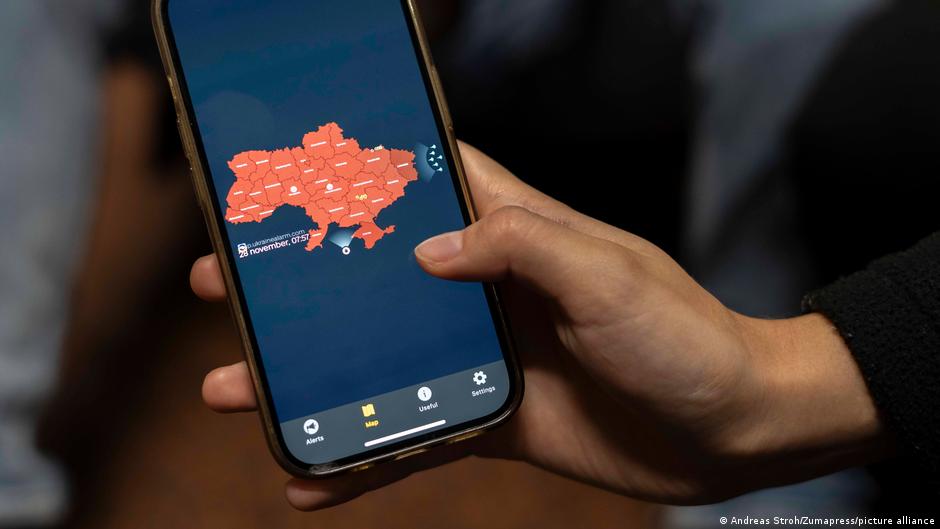
Cyberattacks disrupted government-linked public warning applications in Ukraine and Russia, sending users false messages about radiation, chemical hazards, street fighting and incoming nuclear warheads. Developers and authorities in both countries said their systems had been compromised.
The incidents underscore the vulnerability of digital emergency communications during a period of heightened geopolitical tension. For Washington, the attacks carry implications beyond the immediate disruption: the United States supports Ukraine, American technology companies provide critical digital infrastructure around the world, and false alerts can complicate crisis assessment when nuclear language is involved.
Ukraine’s official Air Alert application, which is used to warn civilians about threats, came under cyberattack on the evening of Sunday, Nov. 1. Users began receiving fabricated warnings about radiation and chemical dangers, as well as notices claiming that street fighting threatened Kyiv.
Ukraine’s Air Force was among the first institutions to respond. The military said the application had probably been subjected to “hostile interference” and stressed that there was no radiation threat. Ukraine’s State Emergency Service said the nationwide warning system continued to operate normally and that all genuine threat signals were still being transmitted to regional administrations and street-based alert systems.
Push notifications suspended after unauthorized access
The application’s developers later confirmed that the service had been breached. They disabled push notifications and temporarily suspended the application while responding to the incident. Users were also urged not to open links contained in suspicious alerts.
“Today, unauthorized persons interfered with the operation of the application. We disabled push notifications and temporarily suspended the application,” the developers said.
During the night of Nov. 2, the development team reported that service was being restored gradually following the cyberattack. Users had again begun receiving air-raid notifications, although some functions remained temporarily unavailable.
The team said the application does not store users’ personal data and that additional cybersecurity protections were being introduced. That distinction may limit concerns about direct exposure of personal information, but the incident demonstrates another form of operational risk: attackers can undermine trust in a warning channel even when they do not obtain a database of user records.
For US businesses, particularly cloud, telecommunications, cybersecurity and mobile-platform providers, the episode illustrates the commercial and reputational stakes attached to systems that deliver urgent public information. A compromised alert can create confusion without disabling the broader emergency network, making authentication, backup channels and rapid public correction central to operational resilience.
Russia reports false nuclear-warhead messages
Russia’s Emergency Situations Ministry reported a cyberattack on its mobile application at almost the same time. The ministry described the incident as a “massive cyberattack” that allowed perpetrators to distribute false information claiming that nuclear warheads had been launched toward Russia.
The ministry said specialists were working to eliminate the vulnerability and restore normal service. The source account did not identify the attackers in either country, explain whether the incidents were technically connected, or provide details about the methods used to compromise the applications.
The nearly simultaneous reports are significant for policymakers because both involved official or government-linked communications channels and fabricated messages about extreme threats. In Ukraine, the false notices referenced radiation, chemicals and fighting in the capital. In Russia, the messages invoked an alleged nuclear attack. Such claims can spread rapidly and may force authorities to divert attention toward verification and public reassurance.
From a Washington perspective, the incidents add urgency to longstanding questions about the cyber resilience of civilian infrastructure in conflict environments. US officials and companies evaluating exposure to the region must account not only for theft, ransomware or service outages, but also for manipulation of trusted communications. The bottom-line risk includes interrupted operations, emergency response costs and reputational damage when customers cannot distinguish authentic warnings from malicious ones.
The Ukrainian response also showed the importance of maintaining separate layers of emergency communication. Authorities said the national warning system, regional administrations and street alert infrastructure continued functioning while the mobile application was suspended. That redundancy provided alternative channels as developers investigated the breach and restored notifications.
Neither government disclosed the full scope of the technical damage. Ukraine’s application resumed core air-raid alerts while some functions remained unavailable, and Russian specialists continued work on the vulnerability and service restoration. The incidents left both governments confronting the same immediate challenge: restoring not only application functionality, but public confidence in messages designed to prompt rapid action during emergencies.