German Youth Protests Turn Violent, Raising Risks for US Businesses
Unrest across major German cities highlights political and operational risks for American companies exposed to Europe’s largest economy.
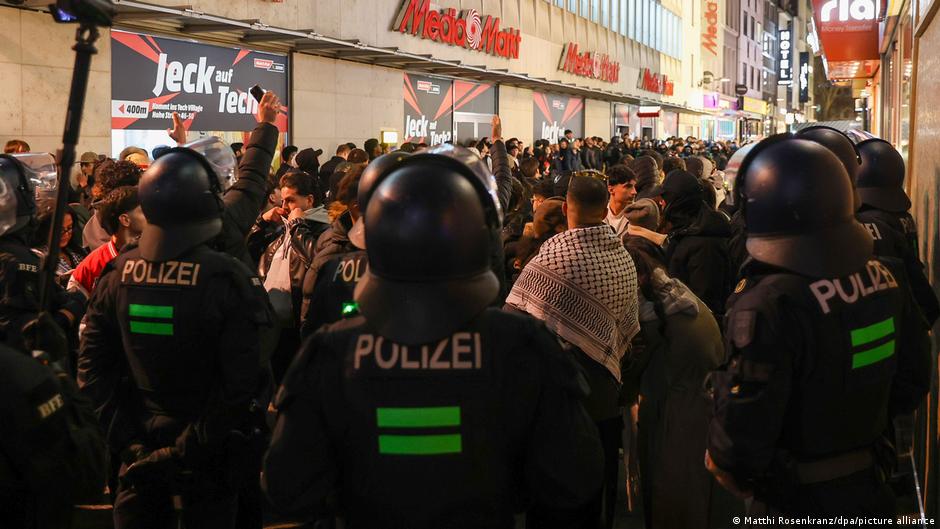
Youth-led demonstrations across Germany descended into riots and clashes with police on Saturday, October 31, creating a fresh source of political and operational uncertainty in Europe’s largest economy and a key market for American companies.
The protests were organized by the Gen-Z regelt movement, whose name translates as “Generation Z Decides.” Events took place in more than 30 German cities and drew more than 100,000 people, according to organizers. Demonstrators demanded improvements in education, measures to address the rising cost of living, stronger climate protections, easier access to psychotherapy and addiction treatment, and an end to proposed compulsory military service and cuts in social spending.
Although the movement’s platform centers on domestic German policy, the scale of the demonstrations and the violence in several commercial districts carry wider implications. For Washington, the unrest underscores the pressure facing a major NATO ally as Germany debates defense commitments, public spending and social policy. For US businesses with German stores, offices, employees or supply-chain exposure, the immediate concerns include property damage, transportation disruption and the possibility of further demonstrations.
Frankfurt unrest reaches commercial properties
In Frankfurt am Main, a demonstration that began peacefully with between 8,000 and 9,000 participants later deteriorated into looting and attacks on police. Some protesters smashed the windows of several businesses, including a gun store, and threw Molotov cocktails at officers.
A group of aggressive demonstrators entered the weapons retailer as well as a clothing and sneaker store operated by Snipes. Authorities confiscated two weapons from those who attacked the gun shop.
Hesse Interior Minister Roman Poseck said approximately 100 violence-prone left-wing extremists had embedded themselves among the demonstrators. Police checked the identification of roughly the same number of people and detained more than 30 others.
Authorities brought the disorder under control closer to nightfall after deploying water cannons, armored police vehicles, a helicopter and drones. Police also closed part of Frankfurt’s city center, disrupting an important commercial and financial district.
“Those who behave like the perpetrators in central Frankfurt place themselves outside our society,” Hesse Premier Boris Rhein said.
Rhein said officials would closely analyze the attackers’ conduct, the composition of the offending groups and the sequence of events before drawing conclusions. For businesses, that review may help determine whether future demonstrations bring tighter security measures or additional restrictions in central shopping and office areas.
Dozens detained in Berlin
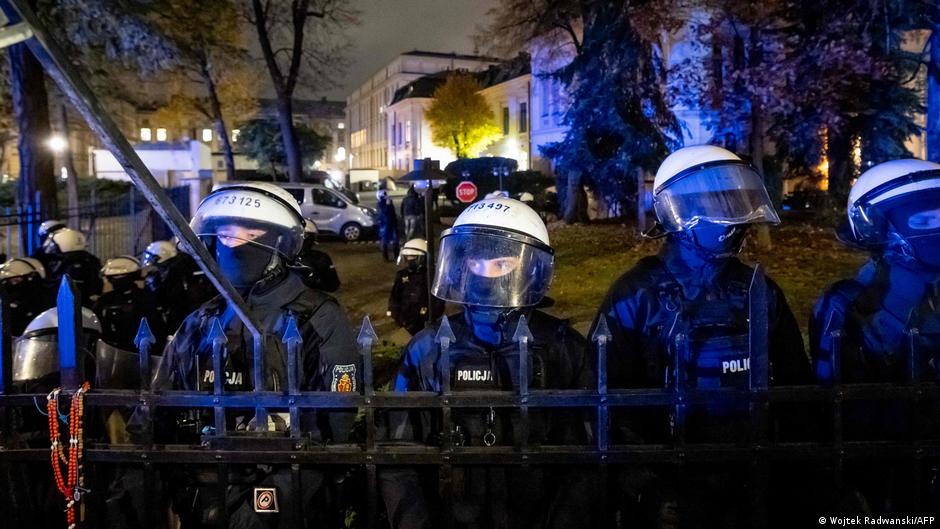
In Berlin, one of two major demonstrations turned violent. The affected rally drew about 3,500 people, primarily members of far-left groups. Police said some participants threw firecrackers and bottles toward officers and set off fireworks. Demonstrators also damaged property and violated weapons laws.
Police detained 56 people, while 27 officers suffered minor injuries. The disturbances in the German capital add a political dimension for US officials monitoring the stability of allied governments and public resistance to defense and spending policies.
The protesters’ opposition to compulsory military service is particularly relevant to Germany’s continuing debate over security responsibilities. The demonstrations also expose the competing fiscal demands facing policymakers: greater spending on education, mental health, addiction treatment and climate policy, alongside resistance to social-spending cuts. Those tensions could shape the environment in which Germany makes future economic and defense decisions, although the source reported no specific policy changes resulting from the protests.
Police restrict marches in other cities
In Cologne, authorities prohibited protesters from holding a march and allowed only a stationary gathering. Police cited masks worn by some demonstrators and the use of pyrotechnics, including devices thrown at officers. Water cannons were deployed at the end of the event.
In Hamburg, some protesters built and ignited barricades during the evening and threw bottles and stones at police. Demonstrations ended in similar disorder in Stuttgart and Bremen. The spread of incidents across multiple urban centers suggests that the operational impact was not confined to a single city or region.
For American retailers, manufacturers and service providers active in Germany, the bottom-line risk remains primarily local and practical: temporary street closures, reduced access to commercial areas, potential damage to storefronts and higher security requirements around future gatherings. The reported attack on Snipes illustrates how businesses can become targets or suffer collateral damage even when protests focus on public policy rather than individual companies.
European protest wave expands
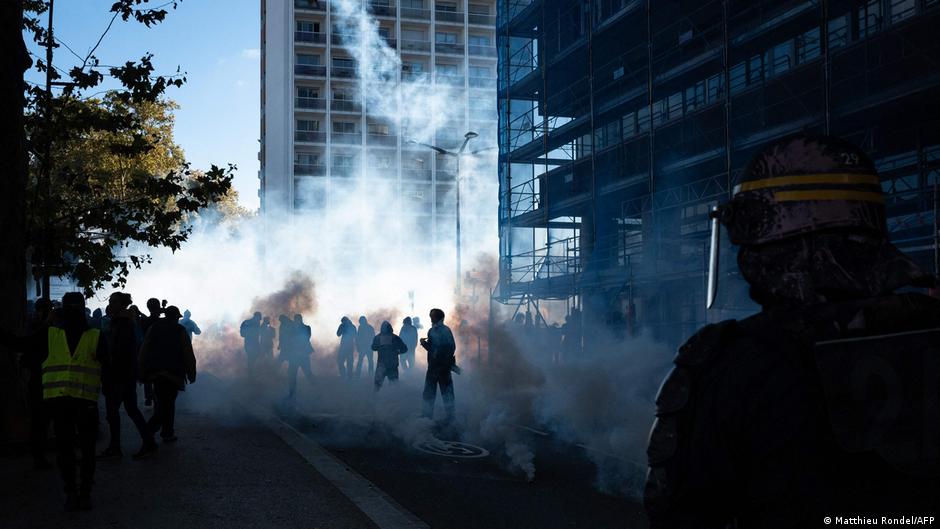
Germany’s October 31 demonstrations formed part of a broader wave of youth protests that has spread across Europe in recent weeks. In France, demonstrations in several cities also developed into riots and confrontations with police. Belgium has experienced protests as well.
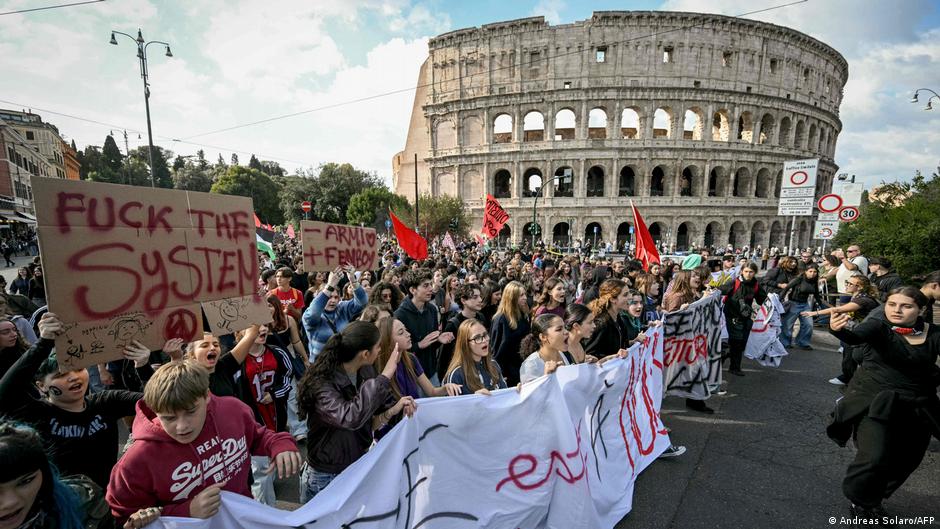
Italy has faced particularly serious unrest. Organizers said more than one million people joined protests there on October 30. Following severe rioting in Milan, Italian authorities ordered 500 military personnel into the city to help maintain order.
The regional scope matters for US companies whose European operations span several countries. Repeated unrest can affect staffing, logistics and consumer activity beyond any single national market. It also presents Washington with a more complicated European political landscape as allied governments attempt to balance social demands, climate policy, defense priorities and fiscal constraints.
German authorities restored order in the affected cities, but the protests demonstrated how quickly large, peaceful gatherings can be overtaken by smaller violent groups. The next policy and policing responses will be closely watched by US officials and corporate risk managers assessing whether the disruption represents a short-lived security episode or a more persistent challenge for European business conditions.