Polish Court Crisis Deepens, Raising Risks for US Business and NATO
A confrontation over Poland’s Constitutional Tribunal has triggered protests and sharpened political uncertainty in a key US ally.
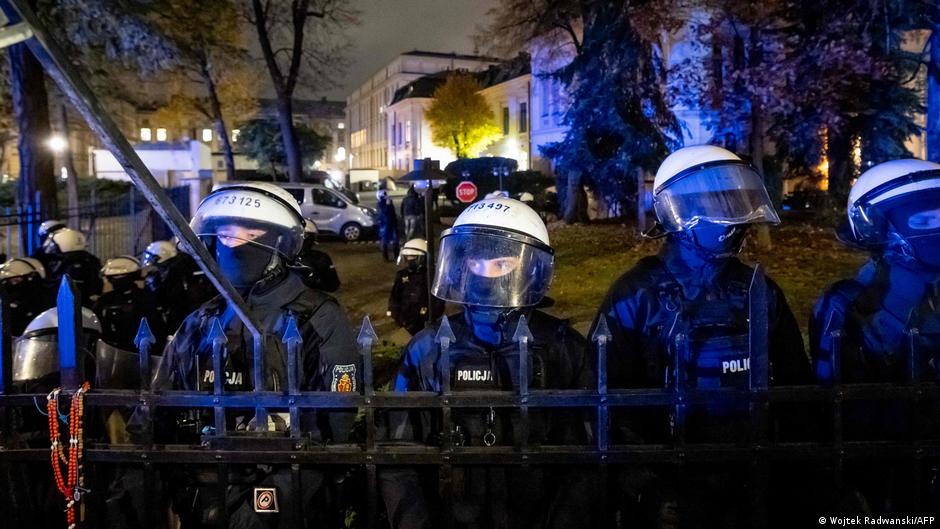
Poland’s prolonged constitutional conflict escalated sharply in Warsaw after a judge announced the temporary suspension of the chairman and deputy chairman of the Constitutional Tribunal, prompting protests, a police cordon and the emergency return of President Karol Nawrocki.
The confrontation has immediate implications for Washington because Poland is a central NATO ally, a major purchaser of US defense equipment and an important destination for American investment in Central Europe. Although the dispute is primarily domestic, a sustained institutional crisis could complicate government decision-making, regulatory predictability and cooperation with US officials and companies.
Anna Korwin-Piotrowska, one of the tribunal’s 15 judges, announced that Chairman Bogdan Święczkowski and Deputy Chairman Bartłomiej Sochański would be removed from their duties for one month. Her decision was published on the tribunal’s website on the evening of Friday, October 30.
The document said the two officials had, among other things, obstructed judges appointed by the Sejm in 2026 and sworn into office from participating in cases. Korwin-Piotrowska cited a 2016 law governing the tribunal’s organization and procedures, arguing that it gave the longest-serving judge authority to act. She also called a general meeting of tribunal judges for November 3.
Rival claims expose a divided institution
A post on an X account presented as belonging to the tribunal described the website as having been unlawfully seized and rejected the suspensions.
“The chairman of the tribunal remains Bogdan Święczkowski, and his deputy remains Bartłomiej Sochański. Anna Korwin-Piotrowska is not a judge of the Constitutional Tribunal,” the post said, alleging that those involved were committing the crime of a coup.
The tribunal’s website, however, said that the X account was not affiliated with the institution, underscoring the extent to which competing camps were asserting control over its public communications.
Sochański told the newspaper Rzeczpospolita that Korwin-Piotrowska had called to say she was now running the tribunal. He said he knew nothing more about the situation and called it unprecedented. He also said he was unaware of any complaints against him or any legal provision permitting his suspension, arguing that the action interfered with the independence of the tribunal and amounted to a coup.
Prime Minister Donald Tusk, whose government and parliamentary majority are opposed to Nawrocki, supported the temporary removal of the tribunal’s leadership. Tusk said restoring the rule of law was the government’s duty after years of lawlessness under the Law and Justice party, known as PiS. He described the process as difficult and sometimes painful but said decisive action was necessary.
President returns as police secure the court
Nawrocki, who was traveling to Senegal on October 30, said he turned his plane around because of the crisis. After returning to Poland, he met Święczkowski and Supreme Court First President Zbigniew Kapiński. Nawrocki and Kapiński then entered the tribunal building, according to presidential chief of staff Paweł Szefernaker.
Korwin-Piotrowska had offered to meet the president only at the Presidential Palace. Maciej Berek, a tribunal judge elected by the Sejm but not permitted by Nawrocki to take the oath, said the president had chosen “the path of physical confrontation” by seeking entry. Berek also said people identifying themselves as presidential staff had attempted to obtain keys to tribunal rooms.
Warsaw police said Prosecutor General and Justice Minister Waldemar Żurek had asked officers to pay particular attention to security during demonstrations around the building. Police also received a letter from a tribunal judge reporting a potential threat to life and health.
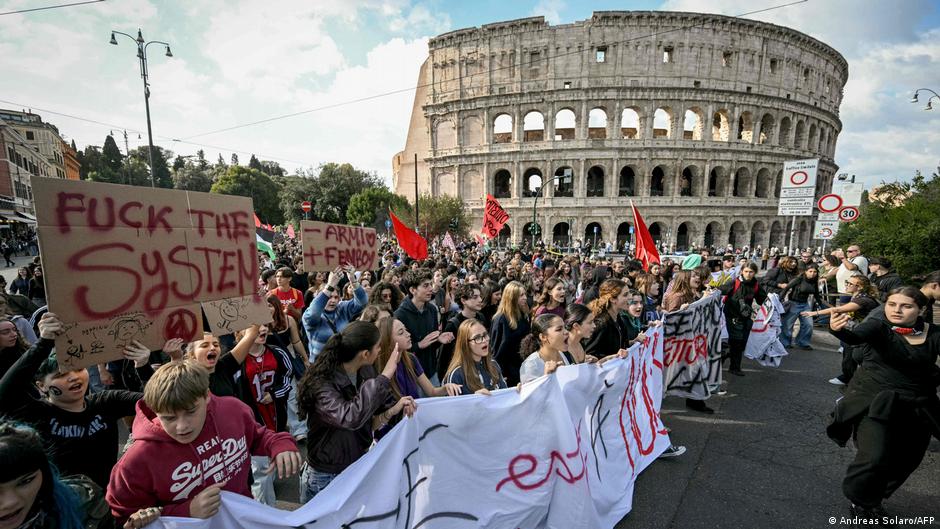
Officers cordoned off the building but said they were not stationed inside. Police reported that protesters threw dangerous objects at officers. Three demonstrators were detained after climbing over a barrier and entering tribunal grounds.
Washington faces another European governance test
The underlying conflict has lasted for months and centers on the struggle between Tusk’s government and Nawrocki’s PiS camp. It began when the president refused to administer the oath to new judges selected by the current parliament. Święczkowski likewise refused to recognize their authority or allow them to hear cases.
The government considers the tribunal illegitimate because judges chosen by the previous authorities remain on it. The governing coalition and judges supporting its position view Nawrocki’s actions as unlawful obstruction of a state institution.
On October 30, Żurek said he had submitted five motions to the Constitutional Tribunal seeking the removal of immunity. He said the applications included matters involving Święczkowski and Sochański.
For US businesses, the bottom-line concern is whether the standoff remains confined to the court or begins delaying legislation, enforcement decisions and public procurement. American companies with operations or contracts in Poland will be watching for changes in regulatory continuity and the enforceability of government decisions. For Washington, the immediate priority is likely to be institutional stability in an ally that plays an important role in NATO’s eastern defenses, without becoming directly involved in Poland’s competing domestic legal claims.