Stalin-Era Victims Remembered in 101 Cities as US Embassy Stays Away
The global Return of the Names campaign continued despite restrictions in Russia, while no US Embassy representative attended the Moscow tribute.
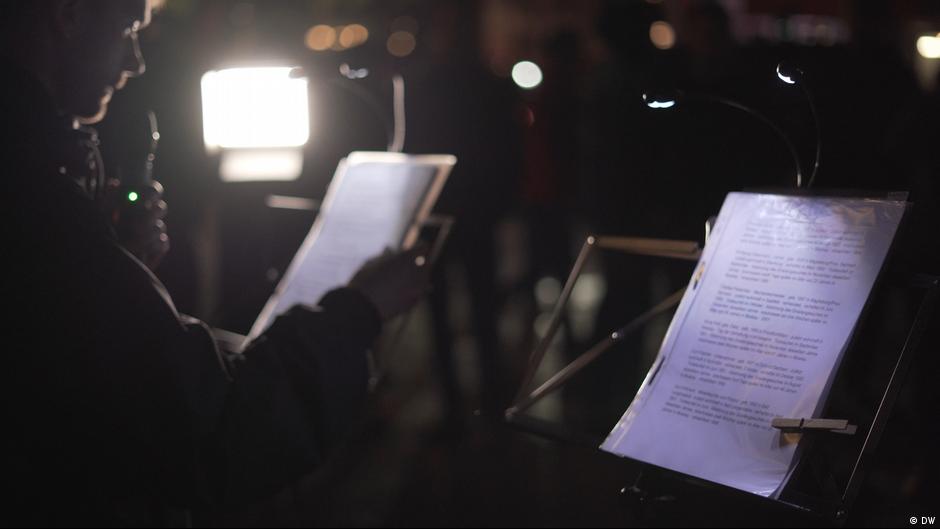
The annual Return of the Names commemoration for victims of Stalin-era repression took place in countries around the world on Thursday, October 29, ahead of Russia’s Day of Remembrance for Victims of Political Repression.
The campaign’s website listed 101 cities where commemorations were held this year, either on October 29 or earlier. Participants traditionally read aloud the names of people executed or persecuted by the Soviet state, preserving individual identities within the broader history of mass political violence.
For Washington, the commemorations touch on a persistent issue in relations with Moscow: the narrowing space for independent civil society and historical remembrance inside Russia. That environment forms part of the political risk assessed by American officials, companies and institutions maintaining ties to the country.
US Embassy absent from Moscow ceremony
In Moscow, diplomats from Sweden, the Czech Republic, the Netherlands, Poland and other countries visited the Solovetsky Stone on Lubyanka Square, a monument associated with victims of Soviet repression.
RusNews reported that no representative from the US Embassy attended this year. The report did not provide a reason for the American absence, and the source article offered no comment from US officials.
The distinction is relevant in Washington because diplomatic attendance at memorial events can carry political meaning even when no formal policy announcement accompanies it. In this case, however, the absence alone does not establish a change in US policy toward Russian human rights or civil society.
The event has not received official approval in Russia since 2020, initially under measures presented as part of the response to the coronavirus pandemic. Pressure on independent historical-memory initiatives intensified after the 2021 liquidation of the international Memorial society, according to RFI.
“However, the campaign did not disappear: it continued in other countries, while people in Russia still find ways to honor the dead,” RFI said.
Memorial, one of Russia’s most prominent organizations documenting Soviet repression, first organized Return of the Names in 2007. On October 29 of that year, people gathered at the Solovetsky Stone and read the names of individuals shot or otherwise repressed by Soviet authorities.
Private commemorations return inside Russia
This year, Russia saw what The Insider described as the first independent commemorations for victims of repression since Memorial was banned. Events were held in the Irkutsk region, Kirov and Veliky Novgorod.
Similar gatherings were scheduled for October 30 in St. Petersburg; Kopeysk, in the Chelyabinsk region; and Tolyatti, in the Samara region, according to the publication. The development indicates that private remembrance efforts continue despite the lack of official authorization for the main campaign.
Outside Russia, Germany hosted events in 15 cities, including Berlin, Munich, Hamburg, Cologne, Bonn, Düsseldorf, Bremen and Bielefeld. In Paris, Memorial France organized a ceremony at a monument to Parisians killed in World War I on Boulevard de Ménilmontant, RFI reported.
The reading of names takes place both in person and remotely each year, while organizers also provide online broadcasts of events. The campaign’s website says Return of the Names was held in 150 cities in 2025, compared with the 101 cities listed for the current year.
Implications for American organizations
The campaign does not directly impose new costs or regulatory requirements on US companies. Its significance for American business lies instead in the broader operating environment it reflects: restrictions on independent organizations, sensitivity around historical narratives and heightened scrutiny of international engagement.
Those conditions can affect how US businesses, universities, nonprofit groups and media organizations evaluate partnerships, employee exposure and public communications connected to Russia. The commemorations also show that Russian civil-society initiatives can persist through decentralized events and international networks even after their principal organizing institution has been dissolved.
For US policymakers, the contrast between events abroad and restricted activity within Russia provides another measure of the country’s domestic political trajectory. Yet this year’s Moscow ceremony also presents a specific diplomatic question: while several European countries were represented at the Solovetsky Stone, the United States was not.
Without an explanation from the embassy, no broader conclusion can be drawn from that absence. The larger record is clearer: Return of the Names has expanded beyond its original Moscow gathering into an international commemoration, while participants inside Russia continue to seek private ways to preserve the names of those persecuted by the Soviet state.