UK, Netherlands Expand Ukraine Aid as Washington Weighs Allied Burden
New European financing for Ukraine signals sustained allied support as US policymakers assess defense needs, sanctions and reconstruction.
Britain and the Netherlands have announced new financial and military support for Ukraine, expanding Europe’s role as Washington evaluates the future distribution of costs within the Western coalition backing Kyiv.
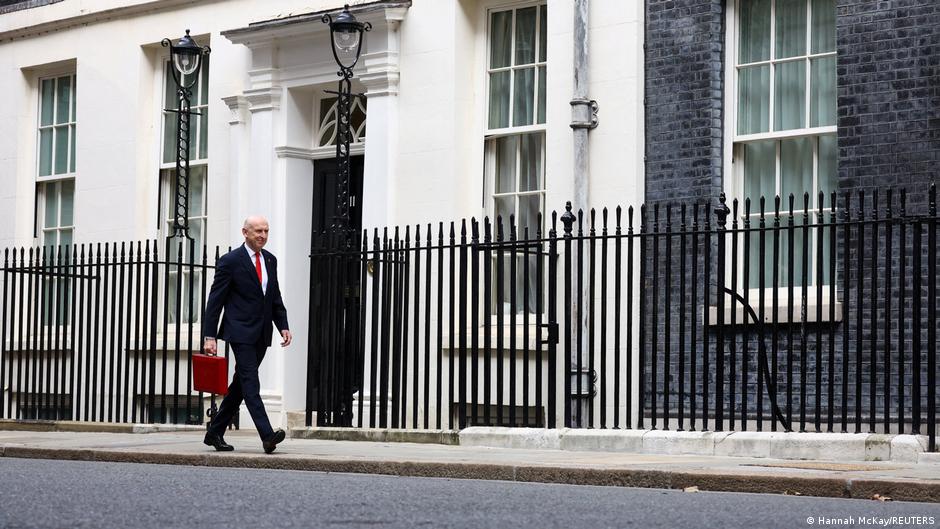
London approved an additional £10 billion, or roughly €12 billion, for Ukraine, British Finance Minister John Healey told the House of Commons. The package combines loans, export-finance guarantees and £500 million in emergency military assistance intended to meet Ukraine’s needs during the coming winter.
A British government spokesperson quoted by Reuters said the £500 million allocation should address urgent gaps in Ukraine’s air defenses. That focus carries implications beyond Europe: air-defense capacity remains a central question for US policymakers balancing Ukraine’s battlefield requirements against American military inventories and competing security commitments.
European commitments shape the Washington debate
Healey said he and British Prime Minister Andy Burnham spoke with Ukrainian President Volodymyr Zelensky before the parliamentary announcement. According to Healey, Zelensky responded to the additional £10 billion commitment by saying, “You made my day.”
Zelensky separately described the British financial and military assistance on Telegram as a “truly powerful and timely step.” He said Moscow must see and feel that Ukraine will not be left alone with problems that Russia is seeking to expand.
“Every step to strengthen Ukraine brings Russia closer to understanding that it must end this war,” Zelensky said.
The scale and structure of the British package are likely to matter in Washington because they demonstrate that European support is not limited to direct weapons transfers. Loans and export-finance guarantees can mobilize commercial activity while emergency military funding targets immediate security needs. For American companies, the distinction is important: allied financing may influence future competition and partnership opportunities in defense production, energy repair, industrial equipment and eventual reconstruction.
Sanctions were another subject of Zelensky’s discussion with Burnham. The Ukrainian president said Britain would continue to take a principled position on sanctions, calling its approach an important example for the world. Continued coordination between London, European capitals and Washington will affect compliance obligations and commercial risk calculations for US businesses operating across international markets.
Russia’s Foreign Ministry said on October 27 that seven representatives of British defense plants would be added to its entry ban list in response to what Moscow called London’s hostile anti-Russian policy. The action underscores the political and personal risks facing executives and other representatives of defense companies involved in supporting Ukraine.
Dutch funding combines defense and reconstruction
The Netherlands also increased its commitment. Following a meeting with Zelensky in The Hague on October 28, Dutch Prime Minister Rob Jetten announced €500 million in military assistance for the coming winter. Reuters reported that the funding is intended for drones and other materiel required to reinforce Ukraine’s defenses.
The Dutch government will additionally provide €1.2 billion in nonmilitary assistance over the next three years. Of that total, €380 million is designated for reconstruction in 2027, followed by €410 million in both 2028 and 2029.
Part of the funding will go to programs that help Dutch companies invest in Ukraine’s reconstruction. Other allocations will support urgent repairs to Ukrainian energy infrastructure and purchases of machine tools for industry. The explicit connection between public financing and domestic corporate participation offers a model that US officials and businesses may examine as governments begin positioning their industries for a long reconstruction cycle.
For US companies, the bottom-line impact will depend on procurement rules, allied coordination and the durability of Western financial commitments. European programs designed around their own national companies could intensify competition for reconstruction contracts. At the same time, the scale of Ukraine’s defense, energy and industrial needs may create openings for American suppliers working independently or alongside European partners.
Zelensky also said on X that he and Jetten met with Ukrainian and Dutch companies in the defense, energy and software sectors on October 28. The two sides instructed their teams to develop a special air-defense initiative named Bliksem.
The announcements do not settle the broader US debate over Ukraine funding, but they add evidence that major European allies are committing capital across both immediate defense and longer-term rebuilding. For Washington, the packages strengthen the case that allied burden-sharing is expanding. For American businesses, they also show that government-backed European competitors are already preparing for Ukraine’s military procurement, infrastructure repair and reconstruction markets.