Russian Drone Strike Hits Kharkiv Homes, Wounding Four, Including Child
The overnight attack highlights continuing risks to Ukrainian civilians and businesses as Washington weighs its response to the war.
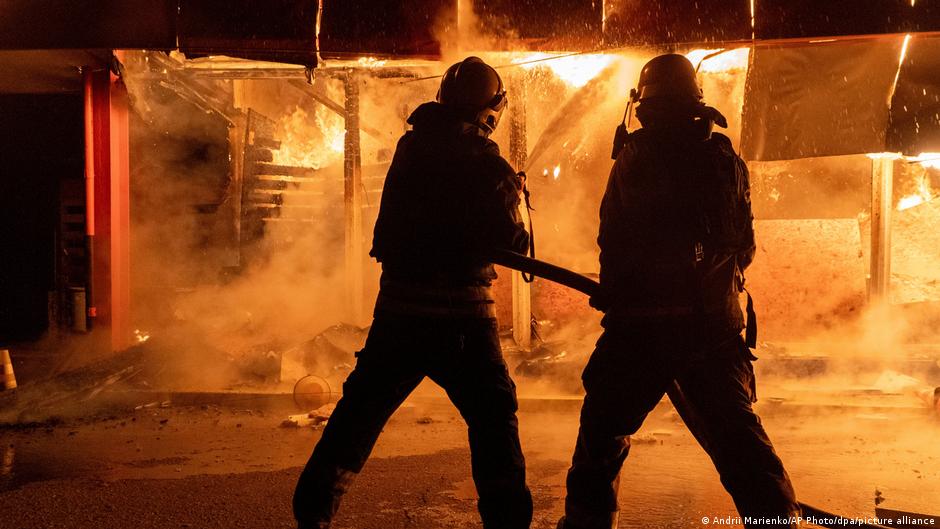
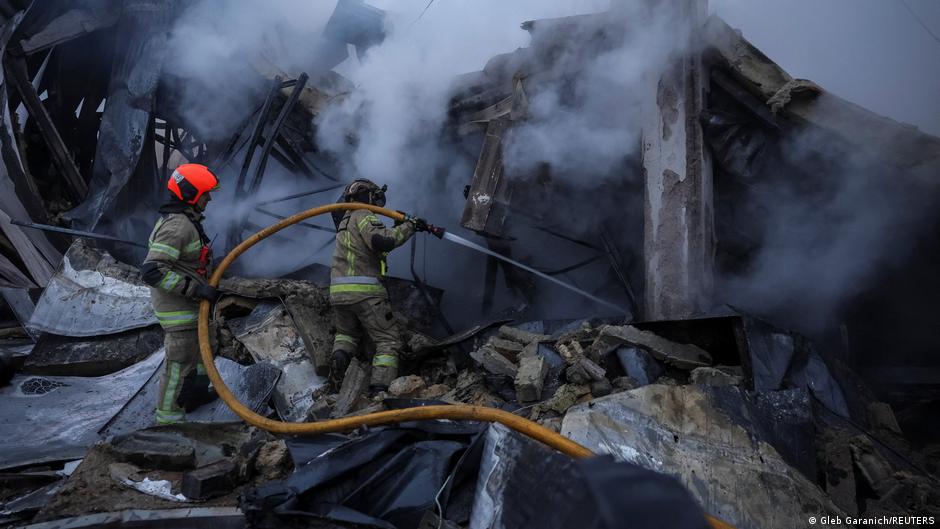
A Russian drone struck a residential building in Kharkiv overnight, wounding four people, including a four-year-old boy, as attacks continued toward several Ukrainian regions and Kyiv, according to Ukrainian authorities.
The strike hit Kharkiv’s Osnovianskyi district during the night leading into Wednesday, Oct. 28. Oleh Syniehubov, head of the Kharkiv regional military administration, said fires broke out at a two-story industrial building, a two-story apartment building and a single-story residential home.
Syniehubov later identified the injured as women aged 32 and 65, a 56-year-old man and the four-year-old boy. Three of the four required hospitalization. The authorities did not provide further information about their conditions.
Kharkiv Mayor Ihor Terekhov also reported that a Russian unmanned aerial vehicle had hit an apartment building. Early information indicated that people were trapped inside, he said.
“A hit on a residential apartment building. According to available information, people are trapped inside,” Terekhov wrote.
The reports did not specify the model of the drone, the full extent of the property damage or whether rescue operations had been completed. They also did not provide an estimate of losses at the industrial site.
Washington and US Business Implications
For Washington, the Kharkiv strike adds another civilian-impact episode to the continuing debate over US policy toward Russia’s war in Ukraine. The immediate facts concern casualties, fires and threats to multiple regions, but the broader policy question for American officials is how continued aerial attacks affect decisions on security support, diplomacy and pressure on Moscow.
The attack also underscores the operational uncertainty facing American companies with direct or indirect exposure to Ukraine. A strike that affects homes and an industrial building in the same district illustrates how civilian and commercial risks can overlap in an urban area. Even without a disclosed damage estimate, such incidents can disrupt employees, facilities, transport arrangements and local suppliers.
US businesses do not need to operate a site in Kharkiv to encounter consequences from sustained attacks. Companies working with Ukrainian contractors or customers may need to account for interruptions caused by air alerts, damage to buildings and the displacement or hospitalization of workers and their families. The reported fire at a production building is particularly relevant to corporate risk teams because it shows that commercial property can be affected during attacks directed at or passing through populated areas.
For executives, the bottom-line issue is less the cost of this single incident—which Ukrainian authorities did not quantify—than the persistence of unpredictable security threats. Businesses assessing Ukrainian operations may have to maintain contingency plans for personnel safety, communications, logistics and continuity. Insurers, lenders and compliance teams may likewise treat renewed strikes as material inputs when evaluating exposure, although the source reports offered no specific information about insurance claims or corporate losses.
Air Threats Extended Beyond Kharkiv
Ukraine’s Air Force separately warned of a potential ballistic-weapons threat from Russia’s Bryansk region toward Kyiv. That warning was later canceled. The cancellation did not mark an end to the broader overnight danger, according to messages published through the Air Force’s Telegram channel.
Attacks involving jet-powered unmanned aerial vehicles and guided aerial bombs continued in the direction of the Kharkiv and Dnipropetrovsk regions, as well as Kyiv and the surrounding region, the Air Force reported. The source account did not state whether those additional attacks caused casualties or damage.
The combination of a confirmed residential strike in Kharkiv and alerts covering other major regions presents a wider challenge for Ukrainian authorities and international partners. It requires officials to respond simultaneously to immediate rescue needs, fire damage and the possibility of further airborne attacks.
From a US political perspective, the episode is likely to be viewed through the established divide over the costs, objectives and duration of American engagement in Ukraine. The reported injuries to civilians, including a young child, may reinforce calls for measures intended to improve Ukraine’s protection against aerial attacks. At the same time, policymakers focused on limiting US commitments may point to the continuing nature of the conflict when scrutinizing future decisions.
No new US policy announcement was included in the reports about the strike. Nor did the Ukrainian authorities cited provide figures for reconstruction costs, business interruption or the financial effect on Kharkiv. For American companies and policymakers, however, the incident supplies another concrete indication that residential safety and economic activity remain exposed to the same continuing aerial threat.