Bolsonaro Election Challenge From Miami Raises Stakes for Washington
Flávio Bolsonaro’s unsupported fraud claims put Brazil’s political stability and US ties under renewed scrutiny.
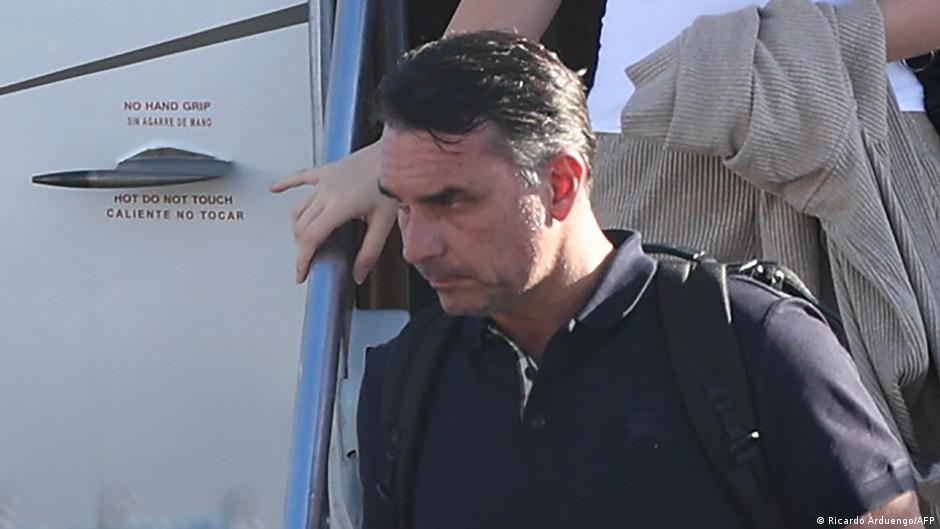
Flávio Bolsonaro, the Brazilian senator and defeated presidential candidate of the right-wing Liberal Party, has declared himself the “leader of Brazil” after reportedly leaving the country for the United States, escalating a post-election confrontation with direct implications for Washington and American businesses operating in Latin America’s largest economy.
In a “letter to the Brazilian people” published on X early Thursday, October 29, Bolsonaro alleged that the election had been subject to “disgusting electoral fraud” and said he would lead a campaign for Brazilian democracy from abroad. He offered no specific evidence to support the fraud allegation.
Media reports said the politician initially described himself as Brazil’s “true president” and “president-elect,” but later removed those formulations. His remaining claim to national leadership nevertheless challenges the authority of incumbent President Luiz Inácio Lula da Silva, who won the October 25 runoff with 51.79% of the vote, compared with Bolsonaro’s 48.21%.
Washington Faces a Diplomatic Test
Bolsonaro thanked US President Donald Trump and Argentine President Javier Milei for their support, placing Washington closer to a politically sensitive dispute over the legitimacy of Brazil’s election. His presence in Miami could create pressure on the US administration to clarify whether it regards him simply as a foreign visitor, a political ally or a figure seeking to organize an opposition movement from American territory.
For US policymakers, the immediate concern is the durability of democratic institutions in a major regional partner. Brazil is central to Washington’s commercial, diplomatic and security interests in the Western Hemisphere. A prolonged legitimacy dispute could complicate bilateral engagement with Lula’s government and force American officials to balance ties with Brazil’s recognized institutions against political affinities between Trump and the Bolsonaro movement.
The episode may also increase scrutiny of Bolsonaro’s immigration status and the circumstances of his departure. Argentine migration authorities previously said Bolsonaro, his wife Fernanda and their daughters Carolina and Luiza entered Argentina through the Tancredo Neves international border crossing in Misiones Province. Authorities said the family presented valid travel documents and faced no legal barriers to entry.
Bolsonaro apparently traveled from Argentina to Ecuador and then continued to Miami. It remains unknown whether he complied with an October 26 Supreme Court order requiring him to surrender his ordinary and diplomatic passports. The order barred him from leaving Brazil amid investigations involving allegations of corruption, money laundering and tax evasion. Media reports have said he also holds Italian citizenship.
“Brazil will not tolerate interference in its democratic process,” several Brazilian political parties said in a joint statement.
Business Exposure Extends Beyond Brasília
For American companies, the principal risk is not an immediate change in Brazilian economic policy but an extended period of political and legal uncertainty. US businesses with Brazilian operations depend on predictable regulation, enforceable contracts, stable currency conditions and functioning transport and financial systems. A confrontation over presidential legitimacy could weaken confidence, delay investment decisions and increase compliance risks for companies dealing with politically exposed individuals.
Businesses will also be watching for any deterioration in relations between Washington and Brasília. Trade, energy, agriculture, technology and financial services all depend on regular government-to-government engagement. If Bolsonaro attempts to direct political activity from the United States, Lula’s administration could demand cooperation from Washington or portray American inaction as outside interference.
Brazilian officials and politicians have sharply rejected Bolsonaro’s claims. Senator Alessandro Vieira reportedly called the attempt to dispute the result “ridiculous” and noted that Bolsonaro’s own party had recognized the outcome. Senator Randolfe Rodrigues, the Lula government’s leader in the National Congress, described the letter as an “attack” on the electoral process.
Cássio Nunes Marques, president of Brazil’s Superior Electoral Court, said the voting took place “with the greatest possible degree of normality” and in accordance with the law and constitution. The Liberal Party acknowledged Bolsonaro’s defeat on October 26, one day after he refused to recognize the result and alleged fraud.
Family History Deepens the Crisis
The dispute carries additional weight because of the legal history of Bolsonaro’s father, former President Jair Bolsonaro. The younger Bolsonaro received the passport-surrender order while visiting his 71-year-old father, who is under house arrest and was sentenced to 27 years in prison for attempting a coup after losing Brazil’s 2022 presidential election.
Jair Bolsonaro had traveled to the United States for three months after that election and was sentenced after returning to Brazil. The parallel between the two post-election departures is likely to intensify debate in both countries about whether the United States is becoming a base for challenges to Brazil’s elected government.
Flávio Bolsonaro denies allegations involving money laundering, corruption and unlawful influence over the election campaign, matters under investigation by Brazil’s Supreme Court. His letter did not resolve questions about how he left Brazil after the travel prohibition or what legal and political steps he intends to take from Miami.
For Washington and US corporate leaders, the bottom line is that a closely divided Brazilian electorate has entered a potentially destabilizing phase. The key issues now are whether Brazilian institutions can contain the dispute, whether US authorities become involved in Bolsonaro’s legal status and whether political friction begins to affect investment, trade or bilateral cooperation.