Pentagon Watchdog Declines Starlink Ukraine Probe Sought by Senators
The decision shifts scrutiny to the Air Force as lawmakers examine SpaceX’s influence over critical US-funded defense communications.

The Pentagon’s inspector general has declined to investigate disruptions affecting Starlink and its military-oriented Starshield service in Ukraine, directing a bipartisan group of US senators to raise the matter with the Air Force instead, according to AP.
The response from Inspector General Platt Moring is likely to intensify debate in Washington over the US military’s dependence on systems associated with Elon Musk’s SpaceX. Nine senators—four Republicans and five Democrats—had requested an inquiry into whether US officials ordered, approved or knew about changes to satellite communications and intelligence-sharing arrangements affecting Ukraine.
For American businesses, the dispute highlights the growing commercial and political risks facing technology companies whose products become indispensable to national security. SpaceX’s satellite network has provided crucial connectivity for Ukrainian forces, while Starshield is described as a separate system controlled by the US government. The controversy raises questions about oversight, contract terms and the division of authority between private suppliers and federal agencies.
Lawmakers Question Pentagon Oversight
Lawmakers are concerned that the Pentagon—and even its independent oversight office—may be unwilling to confront Musk’s influence over defense communications, AP reported. An unnamed congressional aide characterized the inspector general’s response as a refusal to investigate Musk and Starlink despite the office having the capacity to do so.
The senators asked the inspector general to determine whether Pentagon officials or other US government representatives had directed changes to intelligence-sharing agreements or altered warning capabilities and Starlink or Starshield services affecting Ukraine. They also wanted to know whether officials coordinated or approved such changes, or possessed detailed knowledge of them.
According to the congressional aide cited by AP, lawmakers were seeking answers to two central questions: whether any US government officials were involved and whether Musk had exploited a loophole in the system. Those findings could shape future congressional oversight and legislation, potentially affecting procurement rules and government contracts with private space and communications companies.
The inspector general’s recommendation that senators approach the Air Force leaves those questions unresolved. It could also complicate congressional efforts to establish accountability across agencies when a commercial service, military network and active conflict overlap.
Service Limits and Battlefield Consequences
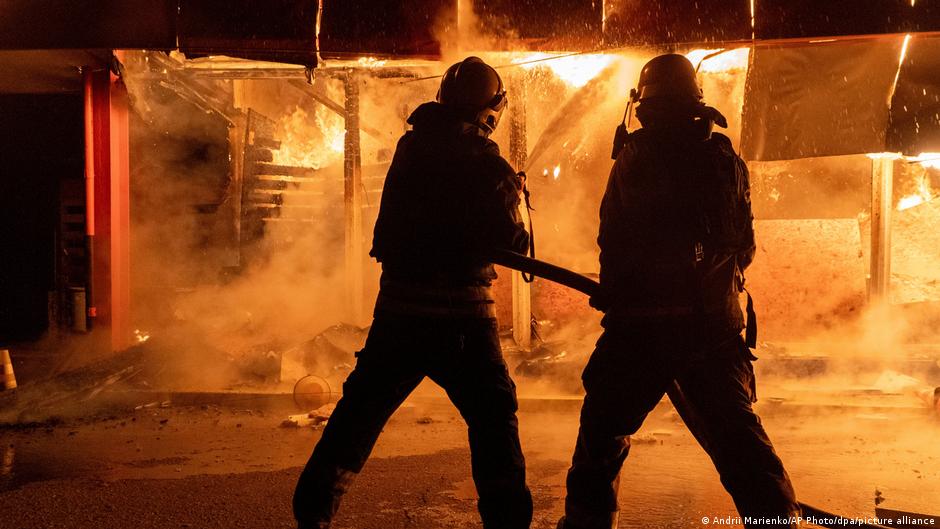
Starlink and its military package, Starshield, are critically important to Ukrainian forces. Ukrainian officials reported earlier in October that reduced service performance had impaired their ability to intercept fast-moving Russian drones.
Connectivity problems began during the night of October 14, when Starshield terminals started losing connections while moving at high speeds. Ukrainian defense force reports indicated that service resumed the following day, but additional disruptions were recorded soon afterward.
On October 24, Musk confirmed that his company had limited Starlink connection speeds in Ukraine, saying Kyiv had violated the service’s terms of use. He accused Ukrainian forces of using Starlink for offensive drone attacks intended to kill people.
“This loophole was closed last week. Starshield is a different system that is under US government control. How they use it is up to them,” Musk wrote on X.
Also on October 24, Ukrainian Defense Minister Yevhen Khmara said Starlink and Starshield service had been restored for operations at speeds exceeding 400 kilometers per hour.
Several media outlets, including Britain’s Telegraph and The Wall Street Journal, reported that Musk had proposed imposing restrictions on Ukrainian military use of Starlink. According to those reports, he discussed the idea with the Pentagon and obtained the department’s support. The White House, however, said it had issued no instructions to restrict operation of the satellite network in Ukraine.
Implications for US Contractors
The dispute carries broader implications for American defense and technology companies. Washington increasingly relies on commercial providers for satellite communications, cloud computing, artificial intelligence and other infrastructure that can become operationally essential during a crisis. When a supplier’s usage policies intersect with US foreign policy, the government may face pressure to clarify who has the authority to modify service and under what circumstances.
Congress could respond by seeking tighter notification requirements, more explicit service guarantees or alternative suppliers for critical communications. Such measures could raise compliance and contracting costs for US companies, but they could also reduce uncertainty by setting clearer rules for systems deployed in war zones.
SpaceX’s position is particularly sensitive because Starlink’s commercial service and Starshield’s government-controlled role are distinct but closely associated in the public debate. Musk’s statement placed responsibility for Starshield’s use with Washington, while the inspector general’s referral to the Air Force shifts the immediate oversight burden elsewhere inside the Defense Department.
The bottom-line issue for US businesses is whether federal agencies will tolerate strategic dependence on privately operated infrastructure without stronger safeguards. The senators’ next steps—and any Air Force review—could influence how Washington structures future contracts with companies providing communications capabilities essential to US allies and military operations.