Italy Protests Put Cost Pressures and Defense Spending in Focus
Mass demonstrations and a nationwide strike highlight European tensions with implications for Washington and US companies.
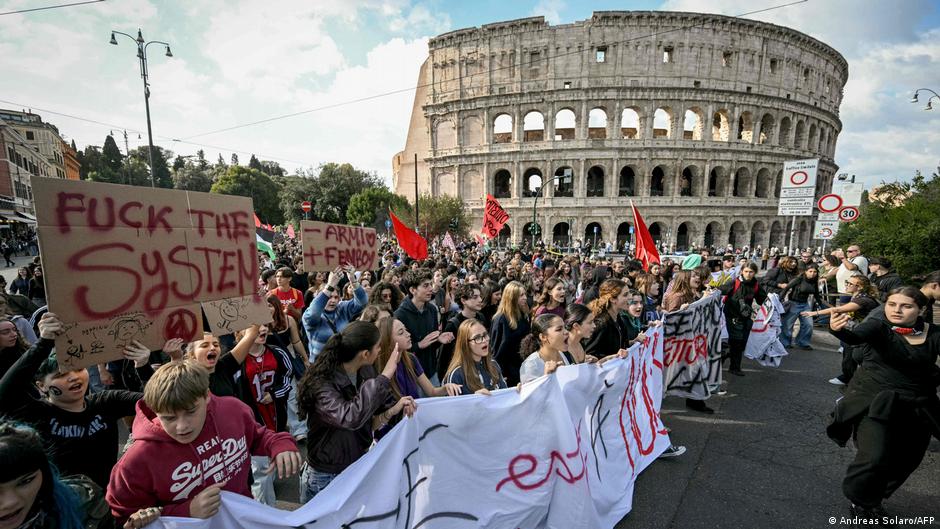
Hundreds of thousands of people took to the streets across Italy on Oct. 30 to protest the rising cost of living and increased military spending, adding to a wave of demonstrations in Europe that carries political and commercial implications for Washington and American businesses operating in the region.
Protests were held in more than 60 Italian cities, according to national news agency ANSA. Unione Sindacale di Base, or USB, the labor union that organized the demonstrations, estimated participation at between 1 million and 1.5 million people. Italy’s Interior Ministry provided a substantially lower figure of 255,000. USB also initiated a nationwide 24-hour general strike.
The large gap between the organizers’ estimate and the government count reflects competing assessments of the demonstrations’ scale. Both figures, however, point to significant public dissatisfaction over household expenses and national spending priorities.
Housing, Fuel and Defense Budgets Drive Discontent
Demonstrators focused on higher apartment rents and rising fuel prices, two costs that directly affect household finances and the broader economy. One protest slogan summarized the movement’s argument: “We need more housing, not more bombs.”
That message presents a challenge for European governments seeking to balance domestic spending demands with pressure to devote more resources to defense. For Washington, the demonstrations illustrate the political constraints facing allies as the United States encourages European countries to shoulder a greater share of regional security costs.
“We need more housing, not more bombs.”
The dispute is also relevant to US businesses. American companies with operations, employees or customers in Italy face exposure to labor disruptions and weakening consumer confidence when rent, transportation and energy costs absorb more household income. A general strike can interfere with commuting, logistics and normal commercial activity even when demonstrations remain peaceful.
US defense contractors and their suppliers, meanwhile, must account for the possibility that public resistance could make military budget increases more politically difficult. The protests do not establish that Italy will reverse any spending decisions, but they show that defense allocations are being contested alongside everyday economic concerns.
Clashes Reported in Rome and Turin
ANSA reported that the demonstrations were largely peaceful in Italian cities other than Rome and Turin. In those two cities, some protesters began setting fire to garbage containers and throwing objects at police officers during the evening. Law enforcement responded with tear gas and water cannons.
Italian Interior Minister Matteo Piantedosi defended the authorities’ handling of the unrest in a post on the social media platform X.
“The measures adopted were balanced and effective: this is precisely what made it possible to protect one of citizens’ fundamental rights — the right to demonstrate peacefully — despite attempts by certain individuals to provoke disorder and violence,” Piantedosi wrote.
The disturbances could sharpen debate over policing and public order while increasing scrutiny of the government’s response to economic grievances. For companies, the immediate concern is operational continuity in major urban centers, particularly when demonstrations overlap with strikes or transport interruptions.
European Protest Wave Widens
The Oct. 30 actions in Italy were part of a wider protest wave that has spread across other European countries in recent weeks. Demonstrations have also taken place in France, where protests in multiple cities escalated into vandalism and clashes with police, and in Belgium.
Similar protests were scheduled for Oct. 31 in more than 30 German cities. The Gen-Z regelt movement, whose name translates as “Generation Z decides,” called for the demonstrations. Tens of thousands of predominantly young participants were expected to object to the rising cost of living and the potential return of military conscription while demanding increased education spending.
Experts expected the German demonstrations to proceed largely without disorder. Even so, the spread of coordinated protests across several major European economies suggests that affordability and military policy are becoming intertwined political issues.
Bottom-Line Risks for Washington and US Companies
For US policymakers, the demonstrations underscore a difficult trade-off inside allied governments. Higher defense expenditure may support shared security objectives, but voters facing more expensive housing and fuel may demand that public money be directed toward domestic priorities instead. That tension can complicate negotiations over burden-sharing and the pace of European military investment.
For American companies, the most immediate risks are strikes, transport disruption and softer household demand. Businesses in retail, travel, logistics and consumer services may be particularly sensitive to reduced discretionary spending or interruptions in large cities. Employers also need to monitor pressure for higher wages and benefits as workers seek relief from rising living costs.
The contrasting turnout estimates and mostly peaceful nature of Italy’s demonstrations make their long-term political effect uncertain. Nevertheless, the scale claimed by organizers, the official count of 255,000 and the accompanying nationwide strike ensure that affordability and defense spending will remain closely watched by governments and businesses on both sides of the Atlantic.