France Detains 565 as Nationwide Protests Draw 320,000 Demonstrators
The unrest highlights political and economic pressures in a major US ally and a key European market for American companies.
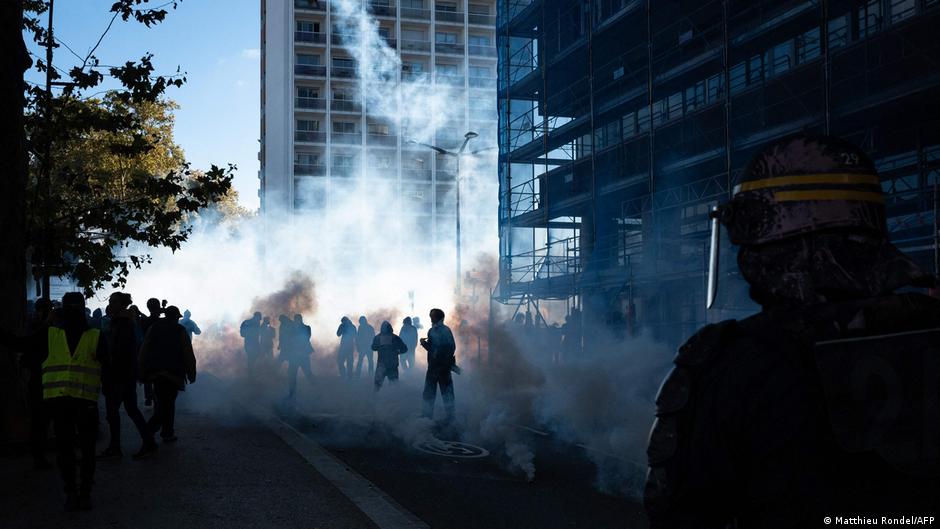
French authorities detained 565 people during a third consecutive Saturday of nationwide protests, as demonstrations over education, the cost of living and broader social concerns drew hundreds of thousands of people across the country.
The Interior Ministry said 320,000 demonstrators participated nationwide on Saturday, October 31, including 70,000 in Paris. Protest organizers offered a substantially higher estimate, saying nearly 500,000 people took to the streets.
The official turnout was lower than during the two previous Saturdays. Authorities estimated that 550,000 people demonstrated on October 17 and 410,000 on October 24, indicating that participation has gradually declined even as confrontations with police have continued.
Interior Minister Laurent Nuñez said the demonstrations were largely peaceful but accused members of far-left groups of using what he described as “monstrous violence” against law enforcement officers. France deployed 70,000 police officers nationwide to provide security during the protests.
Clashes spread beyond Paris
In the French capital, five police officers were injured in clashes involving several hundred protesters, according to authorities. Three officers were hurt by Molotov cocktails. One officer’s clothing caught fire, and he was diagnosed with a burn to his leg.
Protesters also threw paving stones and rocks at police in Paris. Officers responded with tear gas and batons.
Authorities said the demonstrations were mostly peaceful, although confrontations in several major cities led police to deploy tear gas, water cannons and batons.
Police in Toulouse used water cannons and tear gas against participants in an unauthorized demonstration. An unapproved march involving about 10,000 people also took place in Marseille before escalating into clashes with law enforcement.
Further confrontations occurred in Lyon, where police used tear gas against people involved in the unrest. The disturbances followed a pattern seen during earlier demonstrations, which increasingly featured burning trash containers and vehicles, vandalism, looting and forceful clashes with police.
Economic pressure broadens student-led movement
The nationwide demonstrations began in late September with protests by school and university students. Their initial complaints included teacher shortages, overcrowded classrooms, excessively long school days, aging school buildings and the absence of modern equipment.
Students also expressed anxiety about their prospects, including difficulties gaining admission to universities. The movement later expanded to include people dissatisfied with other social problems, including the rising cost of living.
The widening agenda matters beyond France because the country is a central political and commercial power in Europe. For Washington, sustained unrest in a major ally can complicate coordination on economic policy and other shared priorities. For American businesses, the immediate bottom-line concern is operational uncertainty in a large European market, particularly when demonstrations affect major cities and require extensive security deployments.
The source information did not identify specific disruptions to US companies, supply chains or investment. Still, the protests put renewed attention on the pressures facing consumers and public institutions in France. Cost-of-living grievances can shape household spending, labor relations and the political environment in which both domestic and foreign companies operate.
The deployment of 70,000 police officers also illustrates the scale of the government response. Continued demonstrations and urban clashes could require companies operating in France to monitor employee travel, storefront access and local transportation conditions, even as the lower official turnout suggests that the movement’s national participation may be losing momentum.
Protests inspire action elsewhere in Europe
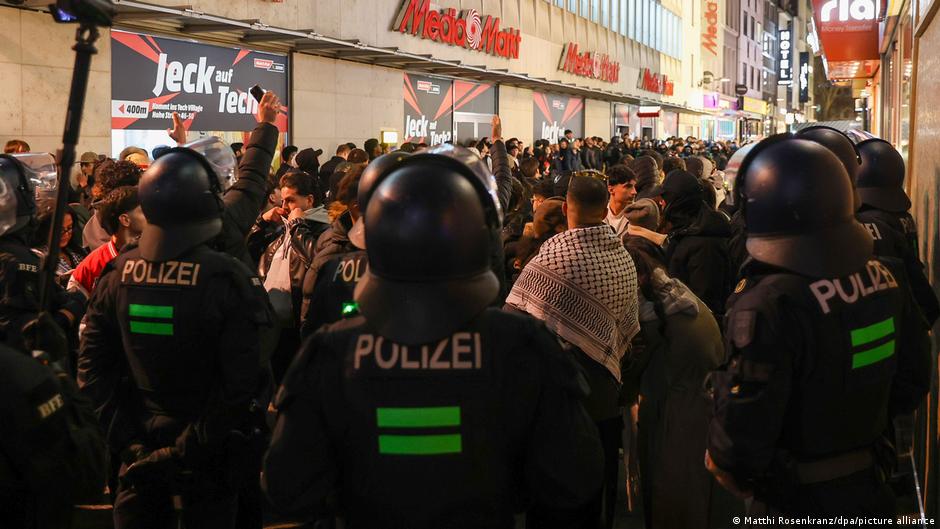
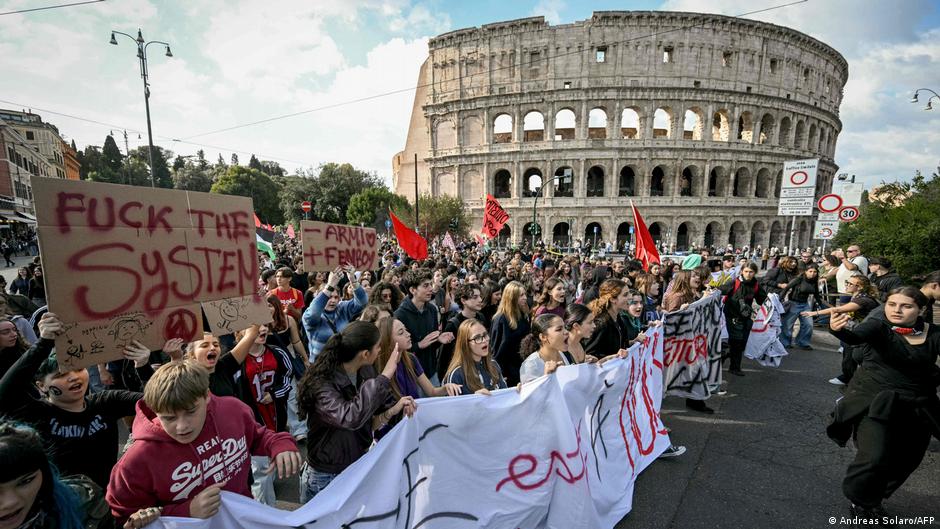
The French demonstrations have also inspired young people to protest in other European countries, including Italy, Germany and Belgium. Demonstrations in major German cities on October 31 ended in unrest.
That regional spread adds another consideration for US companies with operations across multiple European markets. Although the protests began with grievances specific to French education, their evolution toward broader social and economic discontent shows how quickly a student-led movement can become a wider challenge for governments and businesses.
The competing attendance estimates also underscore the political dispute surrounding the movement’s strength. While organizers claimed almost 500,000 participants on Saturday, the government’s figure of 320,000 continued the official downward trend from the previous two weekends.
Whether that decline marks a sustained loss of momentum remains uncertain. The latest demonstrations nevertheless showed that France continues to face a sizable protest movement capable of mobilizing nationally, producing serious clashes in several cities and influencing youth activism elsewhere in Europe.