Drone Attack Hits St. Petersburg Oil Terminal and VK Data Center
The overnight strike disrupted transport, power and digital infrastructure, highlighting risks around Russian energy and technology assets.
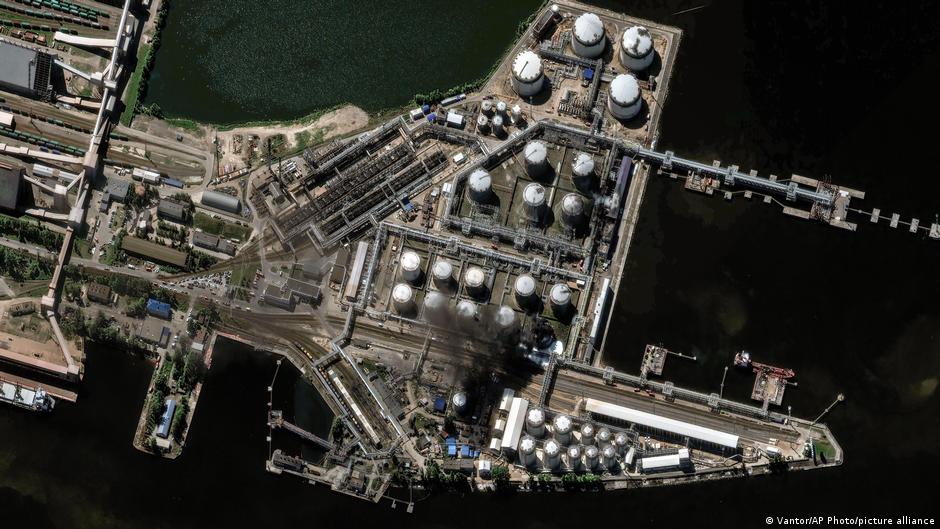
St. Petersburg and the surrounding Leningrad region came under a large-scale drone attack overnight into Sunday, October 18, damaging an oil terminal and a data center operated by Russian technology company VK, according to officials and company representatives. Residents also reported localized power failures, while unconfirmed reports said a drone struck a major toll-road bridge.
The incident affected several categories of infrastructure at once: energy, telecommunications, aviation and road transport. For Washington and American businesses monitoring Russia, the attack underscores the operational uncertainty surrounding assets and supply chains connected to the Russian market, particularly in oil logistics, cloud infrastructure and regional transportation.
St. Petersburg Governor Alexander Beglov said early Sunday that emergency crews were responding to fires at civilian infrastructure sites in the city’s Nevsky, Krasnoselsky, Krasnogvardeysky and Moskovsky districts, as well as at the St. Petersburg Oil Terminal.
“For security reasons, operations at Pulkovo Airport have been restricted. There are no casualties. Mobile internet disruptions are possible,” Beglov wrote on Telegram.
The extent of the damage at the oil terminal was not immediately specified. The facility’s role in petroleum handling makes the fire particularly relevant to energy-market observers, although the available reports did not indicate whether shipments had been interrupted or quantify any potential effect on supply.
Power, transport and technology systems affected
Leningrad region Governor Alexander Drozdenko said 126 drones had been shot down over the region. According to Drozdenko, debris fell on an apartment building in Vsevolozhsk, a private home near Kirovsk and four vehicles in the village of Nizino.
“Brief power outages are being recorded in connection with debris falling on power lines,” Drozdenko said. Residents who contacted the St. Petersburg online publication Fontanka also reported electricity problems in several parts of the city, including the Kalininsky and Krasnogvardeysky districts and the Ruchyi area.
VK confirmed that its data center in the Leningrad region had been attacked by drones. The company, which owns the VKontakte social network and the Max messaging service, said its services remained available to users under normal operating conditions. However, the monitoring websites Sboy.rf and Detector404.ru recorded a surge in user complaints about VKontakte.
The combination of a physical strike on a data center and reports of mobile internet interruptions illustrates the potential for regional attacks to affect digital services even when core platforms remain online. For U.S. companies, the immediate direct exposure may be limited by years of sanctions, corporate withdrawals and restrictions on business with Russia. The broader concern is the reliability of counterparties, communications and infrastructure in operations that retain any permitted connection to the country.
Reported bridge strike raises logistics concerns
Telegram channels Dnipro Osint, Astra and Varlamov News reported that one drone strike hit the cable-stayed bridge over the Korabelny Fairway. The bridge forms part of the Western High-Speed Diameter, a toll motorway that serves as an important transport route through St. Petersburg.
Authorities had not confirmed a strike on the bridge. Fontanka reported, however, that the Western High-Speed Diameter was closed between the Ekateringofka River and the Shkipersky Channel. The bridge over the Korabelny Fairway is located within that closed section.
No casualties were reported by the St. Petersburg governor. Officials had not provided a full damage assessment or a timetable for restoring unrestricted airport operations, affected electricity service or the closed motorway section.
From a U.S. policy perspective, the reported attack places renewed attention on the resilience of Russian commercial infrastructure and the expanding economic consequences of drone warfare. Washington officials and American companies will be watching for verified evidence of prolonged disruption, particularly at the oil terminal, before drawing conclusions about any impact on energy flows or sanctions policy.
The immediate bottom-line issue for businesses is continuity rather than confirmed market loss. The reports establish damage and temporary disruptions across multiple systems, but they do not provide figures for lost oil capacity, data-center downtime, cargo delays or repair costs. Until those details emerge, the event is more clearly a warning about infrastructure risk than a measurable shock to international markets.