German Far-Right AfD Party Gains Popularity Amid Debate Over Possible Ban
With AfD leading CDU/CSU by 8%, German public opinion remains divided on banning the far-right party, raising concerns for U.S. business and political interests.
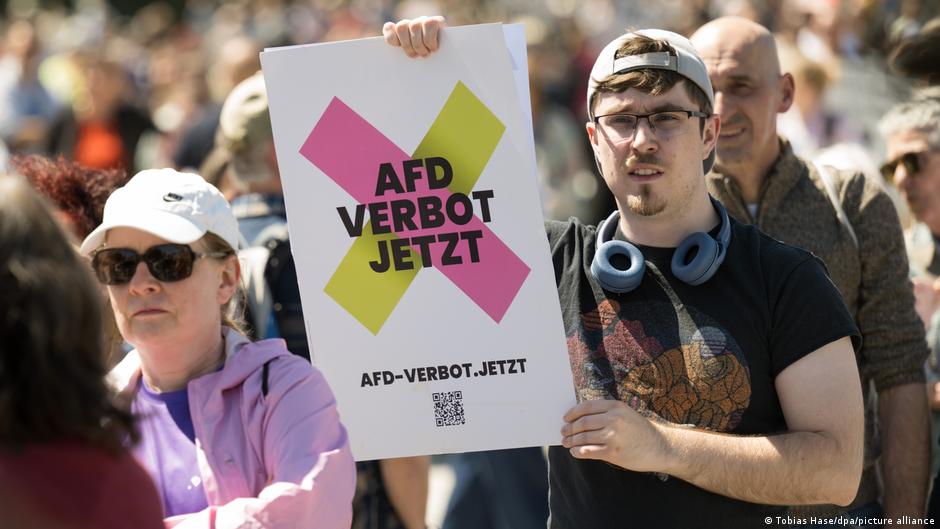
Recent polling data from the German sociological institute Insa reveals a nation divided over the future of the far-right Alternative for Germany (AfD) party. According to the survey, only 40% of Germans support banning AfD despite the party’s growing popularity, which currently surpasses the conservative CDU/CSU bloc by 8 percentage points. Meanwhile, 45% oppose such a ban, and 15% remain undecided.
This division in public opinion comes amid increasing scrutiny of AfD by German authorities. Since February 2021, the Federal Office for the Protection of the Constitution (BfV) has placed AfD under observation for right-wing extremist tendencies. Despite this, AfD's political influence continues to strengthen. The party recently declared its ambitions to claim political leadership in Germany, with co-chair Alice Weidel asserting that AfD is "the new people's party in Germany."
Implications for U.S. Business and Political Interests
AfD’s rising popularity and the uncertainty surrounding its potential ban carry significant ramifications for U.S. businesses and policymakers. Germany is a key economic partner and political ally of the United States, and shifts in the German political landscape can reverberate through bilateral relations and transatlantic cooperation.
German Chancellor Friedrich Merz’s conservative CDU/CSU bloc currently trails AfD with 21% support compared to AfD’s 29%. This marks a decline in conservative voter approval, partly reflecting growing public dissatisfaction as only 13% of Germans approve of the federal government's performance. Such political volatility could introduce unpredictability into Germany’s economic and regulatory environment, affecting American companies operating there.
"We are the new people’s party in Germany," declared AfD co-chair Alice Weidel during the party congress in Erfurt, underscoring AfD’s ambition to reshape German politics.
For U.S. businesses, a stronger AfD presence might translate into shifts in German policy on trade, foreign investment, and regulatory standards. The party’s nationalist and anti-EU rhetoric could complicate Germany’s role in shaping EU-wide economic policies, potentially impacting the broader European market where many American firms have significant interests.
Moreover, the political debate around banning AfD exposes deeper societal divisions in Germany, which could translate into policy uncertainty. The "Brandmauer" strategy, aimed at politically isolating AfD with 42% public support, contrasts with 39% who view this tactic as wrong, showing the polarized nature of German politics today.
The far-right's persistence also presents diplomatic challenges for Washington, which has historically positioned itself against extremist political movements in Europe. Maintaining strong transatlantic ties and ensuring continuity in key areas such as NATO, trade agreements, and cooperation on security matters will require careful navigation amid Germany's evolving political landscape.
As the AfD strengthens its foothold, U.S. policymakers and business leaders must stay attuned to developments in Germany, preparing for potential shifts that might affect bilateral relations and the operational environment for American firms in Europe’s largest economy.