Germany Considers Steinmeier as EU Representative in Potential Russia-Ukraine Peace Talks
Berlin explores a joint mediation role for President Steinmeier and ex-Chancellor Schröder amid Kremlin's peace overtures.
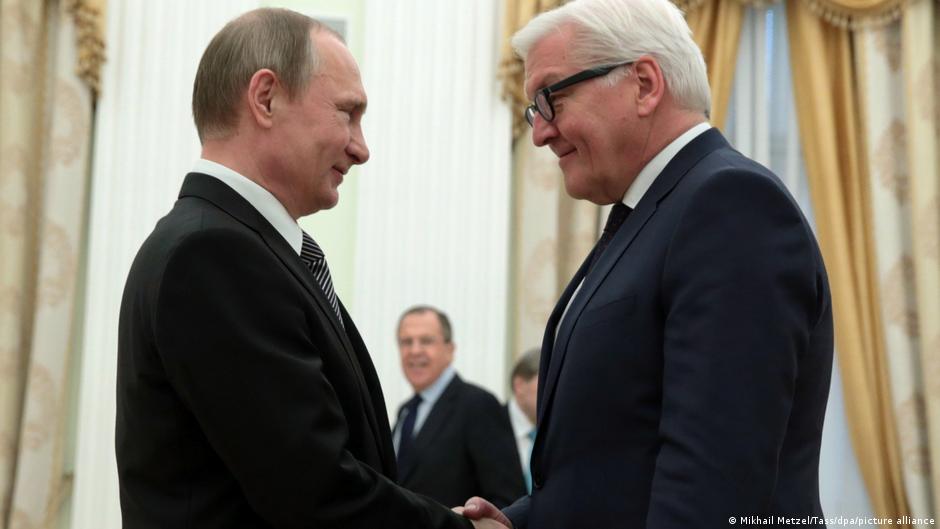
The German government is evaluating the possibility of appointing President Frank-Walter Steinmeier to represent the European Union in peace negotiations with Russia aimed at ending the war in Ukraine, according to reporting by Der Spiegel.
This development emerges as Berlin considers a "mediation duo" comprising Steinmeier and former Chancellor Gerhard Schröder to engage in talks with Moscow, signaling an evolving approach within Germany's ruling coalition toward conflict resolution efforts.
Washington Implications and U.S. Business Impact
From a U.S. business and political perspective, Germany's openness to Steinmeier's participation in peace negotiations holds significant implications for Washington and American companies operating in Europe and Russia.
"The German government views the Steinmeier-Schröder team as an 'interesting option' to represent the EU in dialogue with Russia," said sources close to the government.
Notably, the German coalition appears skeptical of Vladimir Putin's preference to have Schröder—known for his long-standing personal ties to the Russian president—represent the EU alone. Berlin doubts Schröder's ability to manage the talks independently, which may reflect German caution about Russia's intentions and the credibility of the peace proposal.
For the United States, these dynamics underscore the fractured nature of transatlantic approaches to Russia. While Washington maintains sanctions and supports Ukraine militarily and politically, Germany's tentative steps toward direct engagement could affect the unified Western stance. This, in turn, influences the risk assessments of American firms with exposure to Eastern Europe and Russia, including in sectors such as energy, manufacturing, and technology.
Moreover, the potential EU mediation led by Steinmeier may shape the timeline and conditions under which the conflict deescalates, impacting global supply chains and market stability—critical factors for U.S. businesses.
Reports indicate that the German government has dismissed Putin's proposal to appoint Schröder alone, highlighting concerns about Russia's genuine commitment to compromise. Kremlin statements have characterized Russia as open to dialogue but contingent on the EU selecting a negotiator "who has not said nasty things about us," suggesting ongoing challenges in mutual trust.
Currently, official talks between Russia and Ukraine remain stalled, with Russian Foreign Minister Sergey Lavrov confirming the absence of formal negotiations as of mid-April. German officials suggest that credible steps, such as extending ceasefires beyond limited periods, would be necessary to test Russia's intentions.
An official close to the German federal government cautioned that Putin's latest peace overture fits "a series of sham proposals," part of Russia's hybrid strategy aimed at dividing Europe—a concern echoed in Washington when analyzing Moscow's diplomatic maneuvers.
In conclusion, Germany's consideration of Steinmeier as an EU peace envoy reflects a nuanced approach to conflict resolution with Russia that could recalibrate European diplomatic engagement. For U.S. policymakers and businesses, this development warrants close monitoring, as it may influence broader geopolitical stability and economic conditions affecting American interests in the region.