Kyiv Power Outages Raise New Questions for Washington and US Industry
Russian strikes on Ukrainian energy infrastructure intensify pressure on Washington over air defense support and expose business risks.
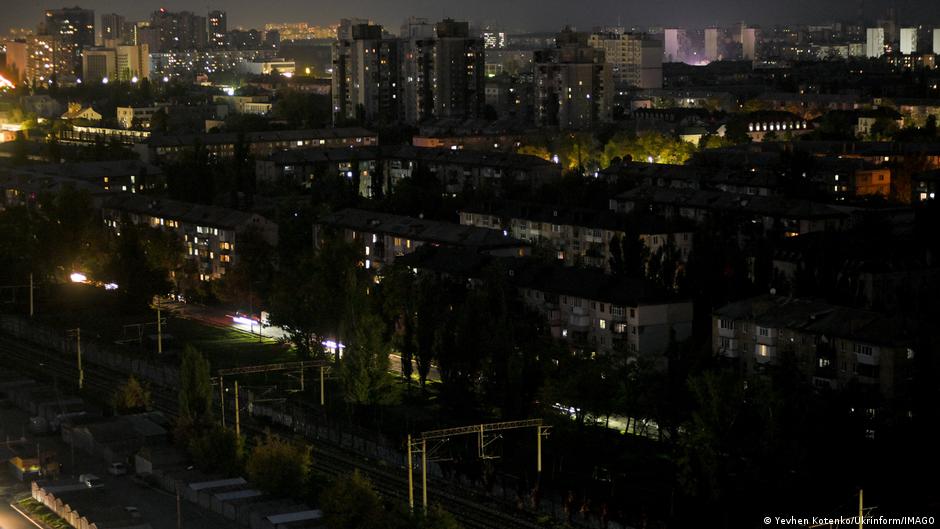
Russian attacks on energy infrastructure in Ukraine caused electricity outages in parts of Kyiv and the surrounding region, while damage elsewhere disrupted power and water supplies in Lutsk, Ukrainian officials said on Thursday evening, October 15.
The latest disruptions carry implications beyond Ukraine’s borders. For Washington, they sharpen the debate over whether the United States and its allies can provide enough air defense equipment to protect Ukraine’s cities and critical infrastructure. For American businesses, renewed attacks on the power grid underscore the operational, supply-chain and investment risks associated with a prolonged war.
Ukraine’s Energy Ministry and Kyiv Mayor Vitali Klitschko said electricity was cut in some districts of the capital and the Kyiv region after Russian forces struck an energy facility. Klitschko said damage to energy infrastructure in the Kyiv region also reduced water pressure in parts of the capital.
“As soon as security conditions permit, crews will promptly begin restoring the electricity supply. Energy workers are doing everything possible to restore power as quickly as possible,” Ukraine’s Energy Ministry said.
The statements did not specify how many homes or businesses lost electricity, how long the outages were expected to last, or the precise scale of the damage. Restoration work depended on security conditions, illustrating how repair crews and utility operators must contend with the risk of additional attacks.
Air defense shortages add pressure on Washington
Volyn region, in northwestern Ukraine, was also attacked on the evening of October 15. Debris from intercepted drones damaged power lines, resulting in interruptions to electricity and water supplies in Lutsk, the regional capital, according to Roman Romaniuk, head of the regional military administration.
Romaniuk said three jet-powered drones entered Volyn’s airspace during evening air-raid alerts and were shot down by air defense forces. Even successful interceptions can leave critical infrastructure vulnerable when falling debris strikes transmission lines or other utility assets.
The attacks may add urgency to discussions in Washington about the availability of air defense systems and interceptor missiles. According to sources cited by The New York Times, Russia could seek to exploit Ukraine’s shortage of air defense resources, particularly interceptor missiles for the US-made Patriot system.
That issue presents US policymakers with a difficult allocation decision. Patriot interceptors are central to Ukraine’s defense against some advanced aerial threats, but American production capacity must also serve US military requirements and commitments to other allies. Any sustained increase in support could affect Pentagon inventories, congressional funding debates and procurement plans for US defense manufacturers.
For American defense companies, continued demand may translate into additional orders and pressure to expand production. The bottom-line opportunity, however, comes with execution risks: long manufacturing lead times, specialized supply chains and competing government priorities can limit how quickly additional systems and missiles reach the battlefield.
Infrastructure campaign threatens wider commercial disruption
The New York Times reported that Russia had prepared a plan intended to disable Ukraine’s energy system and cut Kyiv, Kharkiv and Odesa off from electricity, water and heating. The newspaper cited an intercepted Russian attack plan that Ukraine presented to European officials in early autumn.
The newspaper estimated that carrying out the plan would require about 70 ballistic missiles, 720 long-range drones and 150 guided bombs. If implemented successfully, Kyiv, Kharkiv and Odesa could lose about 90% of their electricity-generation capacity, while heating supplies could fall by 90%, according to the report. Water and sewage systems would also face serious disruption.
Such a scenario would have direct consequences for companies operating in or trading with Ukraine. Extended power cuts can halt factories, interrupt digital services, damage temperature-sensitive goods and force businesses to spend more on generators, fuel, batteries and backup communications. Water and heating failures would further constrain offices, warehouses and employee availability.
US companies with exposure to Ukraine may need to reassess business-continuity plans, including alternative suppliers, distributed data storage, emergency power and staff relocation procedures. Insurers, logistics providers and financial institutions could also face higher costs as infrastructure risks spread beyond front-line regions.
The outages may also influence Washington’s broader strategy toward Ukraine. Protecting the grid is not only a humanitarian and military concern; it is essential to preserving the country’s tax base, industrial capacity and ability to attract private capital. If attacks substantially weaken those foundations, the financial burden on the United States and European governments could grow through additional military, energy and reconstruction assistance.
Thursday’s disruptions do not establish that the larger reported campaign has begun or will achieve its stated objectives. They do, however, demonstrate the vulnerability of interconnected power and water networks. For US officials and businesses, the immediate question is whether air defense supplies and infrastructure support can keep pace with a campaign designed to impose economic costs far beyond the physical damage of each strike.