London Hosts Clashes of Ultra-Right and Pro-Palestinian Marches Amid Rising Social Tensions
Simultaneous mass demonstrations in London reflect growing divisions with potential implications for UK-US relations and American business interests.
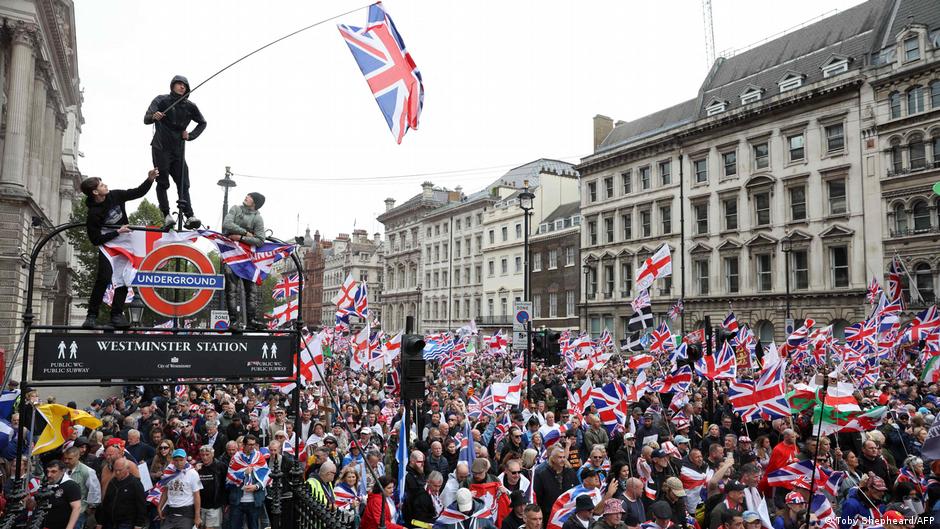
On May 16, London witnessed two major public demonstrations on the same day, highlighting sharply contrasting social and political sentiments in the United Kingdom. Tens of thousands of protesters participated in a far-right anti-immigration march and a pro-Palestinian rally commemorating the Nakba, the displacement of nearly 700,000 Palestinians in 1948 during the establishment of Israel.
Mass Rallies and Their Political Overtones
The anti-immigration march, titled "Unite the Kingdom," was organized by far-right activist Stephen Yaxley-Lennon, also known as Tommy Robinson. Robinson has a history of mobilizing large crowds, with his previous anti-migration demonstration in September 2025 attracting around 150,000 participants. This time, organizers claimed millions attended, though independent estimates suggest tens of thousands took part.
Protesters in this march expressed dissatisfaction with the volume of asylum seekers and overall immigration policy in the UK, while also criticizing Prime Minister Keir Starmer. Prior to the event, Starmer accused the organizers of deliberately spreading hatred and division within the country, underscoring the political sensitivity surrounding immigration debates in Britain.
In parallel, a pro-Palestinian demonstration marked the annual Nakba remembrance, drawing roughly 250,000 supporters according to organizers. This event focused criticism on former US President Donald Trump and British right-wing politician Nigel Farage, whose party recently secured a majority in local elections. The march aimed to highlight Palestinian grievances and oppose recent Western policies perceived as favoring Israel.
Overall, police reported that approximately 4,000 officers were deployed across three related events, resulting in 43 arrests. Authorities emphasized that the demonstrations passed without major incidents, maintaining public order despite the politically charged atmosphere.
"The events underscore the deepening societal rifts within the UK, with reverberations likely affecting transatlantic relations and international business climates," an analyst observed.
Implications for Washington and American Businesses
These demonstrations come at a time when UK domestic politics remain volatile, and the relationship between Washington and London is under close scrutiny. The contrasting protests reflect polarized views on immigration and Middle Eastern policy—issues that resonate in American political discourse and influence US foreign policy decisions.
For US businesses operating in the UK, especially those in sectors sensitive to geopolitical shifts such as finance, technology, and energy, these developments signal potential risks. Heightened social tensions and political unrest can disrupt markets, supply chains, and investor confidence.
Moreover, the criticism directed at key figures like former US President Donald Trump at the pro-Palestinian rally highlights ongoing challenges in aligning transatlantic policies on the Middle East. Washington’s approach to Israel and Palestine remains a divisive topic, affecting diplomatic ties and, by extension, business environments in allied countries.
American companies with interests in the UK should monitor these social dynamics closely, as political polarization may impact regulatory frameworks, public sentiment, and bilateral cooperation. The UK government’s handling of immigration and foreign policy debates will be particularly consequential for transatlantic trade and investment.
As these large-scale protests illustrate, British society is grappling with complex identity and foreign policy questions that echo across the Atlantic, shaping the future landscape for US-UK relations and international business.