NATO Intelligence Flags Russia’s Underwater Nuclear Missile Deployment, Raising US Security Concerns
NATO reveals Russia’s secret ‘Skiff’ project to deploy ballistic missiles on the seabed, posing new challenges for US defense and strategic stability.
NATO intelligence has detected activities by Russia’s Northern Fleet that suggest attempts to deploy ballistic missiles capable of carrying nuclear warheads on the ocean floor. This development, uncovered through investigations by German broadcasters ARD, WDR, and NDR, has significant implications for US security strategy and defense industry planning.
Russia’s Underwater Nuclear Missile Project: An Emerging Threat
For several months, investigative journalists analyzed satellite images, Russian scientific databases, historical documents, and interviewed military experts to piece together the details of a secret Russian project codenamed “Skiff.” According to NATO intelligence, Russia may have been working for years on placing ballistic missiles on the seabed in a way previously unknown. These missile launch systems would be virtually undetectable and nearly impossible to eliminate.
The “Skiff” missile is reportedly a modified version of the “Sineva” missile, currently deployed on Russian submarines. Unlike traditional submarine-launched ballistic missiles, Skiff missiles would be stationed on the seabed and have a range of several thousand kilometers. Initial tests reportedly took place several years ago.
“Deploying missiles on the ocean floor may allow Russia to reduce dependence on costly submarines and maintain nuclear deterrence at a lower expense, despite significant technical challenges.” – Helge Adrians, Expert, Stiftung Wissenschaft und Politik (SWP)
Western intelligence services indicate that these missiles, capable of carrying nuclear warheads, might be housed in specially designed shafts or containers several hundred meters deep underwater. They are believed to remain on the seabed for extended periods and be remotely launchable when necessary.
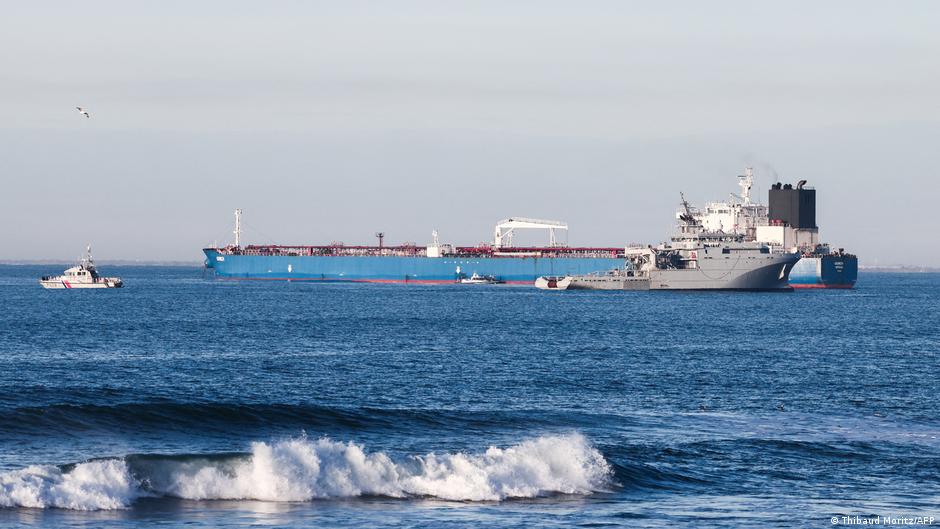
Sources claim that the Russian ship “Zvezdochka” and the submarine “Sarov,” both stationed in the port city of Severodvinsk on the White Sea, could be involved in installing these missile shafts. Neither NATO nor the Russian Ministry of Defense has commented on the Skiff project. The Russian Embassy in Berlin stated it had no information on the matter.
Implications for US National Security and Defense Industry
The United States government faces a complex challenge with this potential shift in nuclear weapons deployment. The 1971 Seabed Arms Control Treaty, signed by the US, USSR, and over 80 other countries, prohibits nuclear weapons placement on the seabed in international waters. However, it does not restrict deployment within a nation’s territorial waters, leaving a loophole that Russia appears to be exploiting.
For US policymakers and defense contractors, the emergence of underwater nuclear missile platforms could upend traditional naval deterrence models. Since these missiles are harder to detect and intercept than those launched from submarines or land-based silos, the US must consider new surveillance technologies and countermeasures. This could drive demand for advanced undersea sensors, unmanned underwater vehicles, and enhanced anti-submarine warfare capabilities.
Furthermore, the strategic calculus in Washington may need adjustment. If Russia successfully deploys these seabed missiles, it could maintain a credible second-strike nuclear capability at a lower cost, complicating arms control efforts and nuclear risk reduction initiatives.
Defense industry leaders are likely monitoring developments closely, weighing the potential impact on budgets and procurement priorities. Increased investment in undersea detection platforms and missile defense systems may become necessary to counter this emerging threat.
As the US government evaluates its response, diplomatic channels and international arms control frameworks may also come under renewed scrutiny to address gaps exposed by Russia’s apparent seabed missile deployment strategy.