Russia Labels Young Street Musicians ‘Foreign Agents’ After Antiwar Shows
The designation highlights Moscow’s widening pressure on cultural dissent, with implications for US policymakers and companies assessing Russia risk.
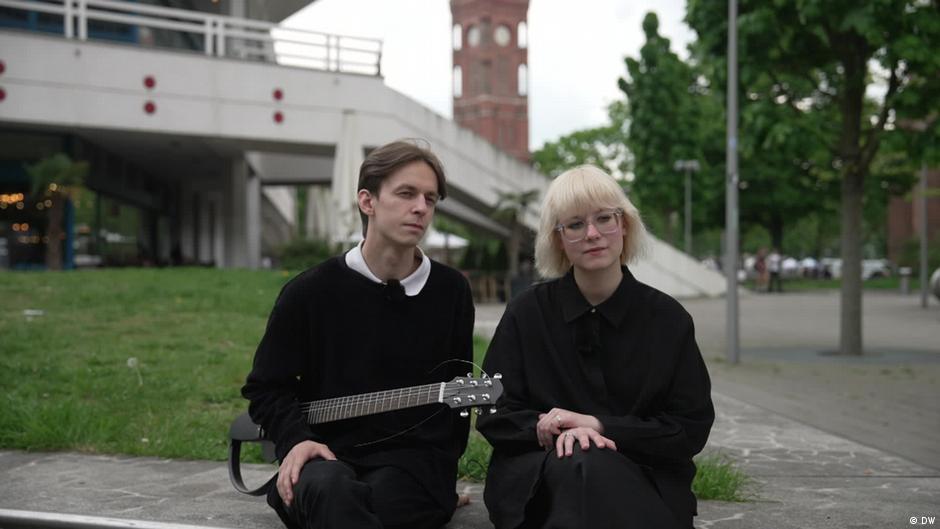
Russia’s Justice Ministry has added 19-year-old singer Diana Loginova, known professionally as Naoko, and her husband, 23-year-old guitarist Alexander Orlov, to its register of “foreign agents,” exactly one year after the members of the street band Stoptime received their first administrative detention.
The ministry published the decision on Friday, October 16. It said Loginova had opposed the war in Ukraine, disseminated what the authorities described as inaccurate information about Russian government decisions and policies, and interacted with people or organizations already classified as foreign agents. The ministry accused Orlov of actively participating in the distribution of materials it characterized as anti-Russian.
The designation extends a campaign of official pressure beyond established political activists and media organizations to young performers whose audiences were built through street concerts and social media. For Washington, the case offers another measure of the Russian government’s treatment of antiwar expression. For American companies, it reinforces the political, legal and reputational uncertainty surrounding any remaining exposure to Russia’s cultural, media or digital markets.
Street performances drew official scrutiny
Stoptime began performing on the streets of St. Petersburg in spring 2025. Alongside Loginova and Orlov, the group included drummer Vladislav Leontyev until January 2026. Its concerts were announced on social media and featured songs by Noize MC, Monetochka, Zemfira and the punk band Pornofilmy. Russia’s Justice Ministry has designated all of those performers as foreign agents.
During one performance in October 2025, Stoptime played Noize MC’s “Swan Lake Cooperative.” A St. Petersburg court had ruled in May that the song constituted information prohibited in Russia.
Russia’s designation links the musicians’ antiwar expression, performances and contacts with previously listed “foreign agents” to the government’s broader enforcement system.
The musicians’ first administrative detention followed a concert near St. Petersburg’s Ploshchad Vosstaniya metro station. Police said about 70 people attended. Loginova, Orlov and Leontyev were found guilty of organizing a mass event that led to a disruption of public order.
When the first detention period ended, authorities immediately filed additional administrative reports against the band members. The successive cases, commonly described as “carousel” detentions, kept them in custody almost until the middle of November. After a third consecutive detention, Loginova and Orlov left Russia. Leontyev remained in the country and consequently departed the group.
Compliance and policy implications
The immediate action is domestic, but the expanding use of Russia’s foreign-agent framework matters to US businesses whose operations can intersect with Russian artists, online audiences or media content. Record labels, streaming services, social platforms, event organizers and payment providers face an environment in which an individual’s regulatory status can change following political speech or the performance of material already targeted by Russian authorities.
The case does not itself announce restrictions on American companies, and the ministry’s stated rationale concerns the musicians’ conduct rather than any disclosed US relationship. Still, it illustrates how cultural activity can become subject to political classification. That raises practical questions for companies evaluating contracts, content availability, advertising, payments and the safety of local partners or personnel.
For US policymakers, the timing may also be significant as a marker of continued pressure on dissent connected to the war in Ukraine. The designation came exactly one year after the musicians’ first detention, turning a local public-order case involving a small street audience into a longer-running regulatory action against performers who had already left the country.
The Justice Ministry also added the movement “Raspberry Wedge — Independent Kuban” to the foreign-agent register on October 16. Russian authorities alleged, among other things, that the movement had called for violating the country’s territorial integrity.
Taken together, the additions show the breadth of the register’s application, spanning musicians and a political movement. For US executives and investors, the bottom-line takeaway is not a new commercial prohibition arising from this specific announcement, but another indication that Russia-related operations remain exposed to abrupt political and legal shifts. For Washington, the treatment of Loginova and Orlov provides a concrete case involving young artists, antiwar expression and repeated administrative enforcement rather than a dispute confined to prominent opposition figures.