Russia Threatens to Cut Gas Supplies to Armenia Amid Its EU Alignment
Moscow signals potential suspension of duty-free energy exports to Armenia, posing risks for US businesses involved in the region.
Russia is warning Armenia that its move to deepen ties with the European Union (EU) could jeopardize key trade and energy cooperation agreements, potentially disrupting the supply of Russian gas and oil products to the country. This development has significant implications for American companies operating in or linked to Eurasian energy markets, as it could alter regional energy stability and supply chains.
Russia’s Ultimatum on Energy Trade with Armenia
According to a letter from Russian Energy Minister Sergey Tsivilev to Armenia's Ministry of Territorial Administration and Infrastructure, Russia may suspend or denounce its 2013 agreement with Armenia that allows duty-free imports of gas, oil products, and unprocessed diamonds. The letter claims that Armenia’s ongoing efforts to align with the EU threaten the foundational trade and investment cooperation between Moscow and Yerevan.
"Continuing practical steps toward deepening Armenia’s interaction with the European Union and the declared government ambition to join the EU endangers the maintenance and development of the fundamentally high level of Russian-Armenian trade and economic cooperation," the letter states.
The current duty-free regime, effective since December 2013, enables Russia to supply Armenia with energy volumes matching its internal consumption, with a prohibition on re-exporting these goods. The letter emphasizes that the agreement's termination would not immediately relieve Armenia from compensatory obligations or recognizing outstanding payments as state debt to Russia.
Armenia is heavily reliant on Russian energy supplies; it imports nearly all its gas and the majority of its petroleum products from Russia. This dependence underlines the potential severity of Moscow’s threat for the Armenian economy and related sectors.
Washington’s Business and Strategic Considerations
The possible disruption in Russian energy exports to Armenia carries a ripple effect for U.S. business interests. American companies involved in energy infrastructure, supply chains, and investment projects in the region could face uncertainty. Moreover, Armenia’s pivot towards the EU aligns with Washington’s broader geopolitical strategy of supporting European integration and diminishing Russian influence in the post-Soviet space.
However, Moscow’s response also signals the risks that U.S. businesses must weigh when engaging in Eurasian markets characterized by geopolitical contestation. Energy market volatility and trade policy shifts could impact American firms’ operations, contracts, and partnerships in Armenia and neighboring countries.
Furthermore, Russia’s threat to revoke privileges such as simplified labor migration for Armenian citizens could destabilize regional labor markets and affect workforce availability, indirectly influencing U.S. companies with Eurasian exposure.
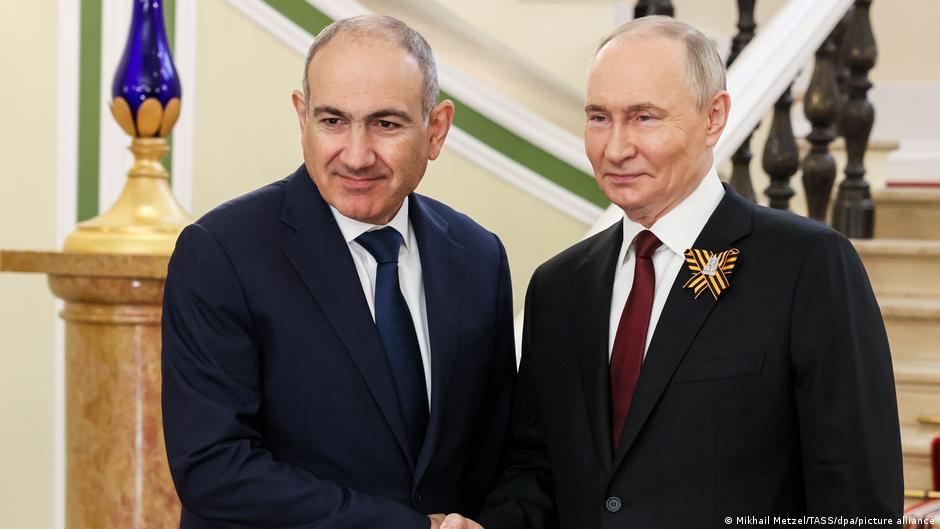
In early May, Russia imposed restrictions on Armenian exports, including wines, brandies, and agricultural produce. Russian President Vladimir Putin has urged Armenia to decisively choose between the EU and the Eurasian Economic Union (EAEU), signaling that Moscow may pursue a calibrated “divorce” if Armenia fully commits to the EU path.
For U.S. policymakers and business leaders, these developments underscore the importance of closely monitoring Eurasian geopolitical shifts and preparing for potential disruptions in regional energy supplies and trade flows.