Serbia Hosts First Ever Joint Military Exercises with NATO, Signaling Regional Shifts
The joint NATO-Serbia military drills mark a historic cooperation that could influence US strategic interests in the Balkans.
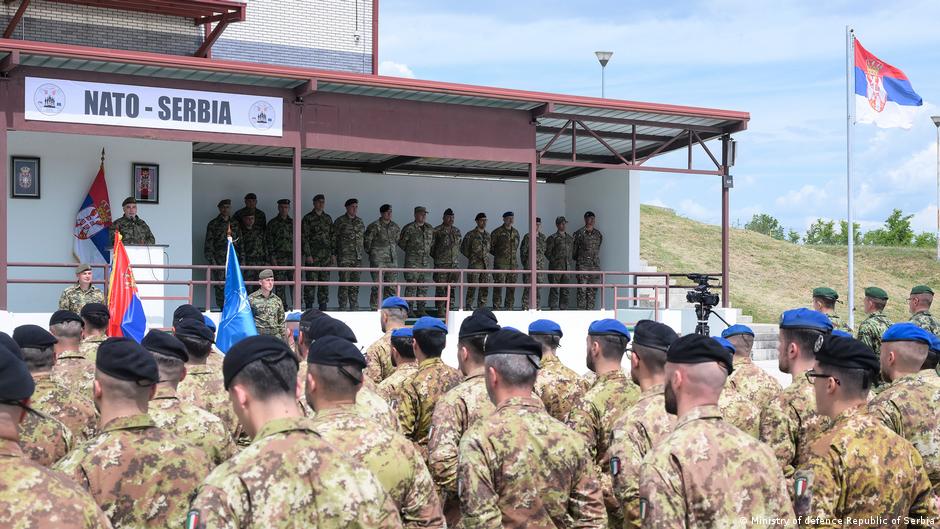
For the first time in its history, Serbia is conducting joint military exercises with NATO forces, a significant development given the country's longstanding military neutrality and its complex relationship with the alliance. The drills, named "NATO-Serbia," are part of NATO's Partnership for Peace program and involve approximately 600 soldiers from Serbia, Italy, Romania, and Turkey, alongside observers from other NATO countries including Germany.
Implications for U.S. and NATO Strategy in the Balkans
Taking place from May 12 to May 23 at the Borovac training ground near the central Serbian city of Bujanovac, these exercises represent the first directly co-organized military maneuvers between NATO and Serbia. The operation was planned by the Serbian Land Forces Command and NATO's Joint Force Command based in Naples, Italy.
While Serbia maintains a policy of military neutrality and is not a NATO member—unlike many of its Balkan neighbors—it has been a member of NATO's Partnership for Peace for almost two decades. These drills deepen military engagement without crossing the threshold of full membership, a sensitive balance maintained by Belgrade, which also continues to foster close ties with Russia.
"These are important exercises. Serbia is the host country, and they are conducted fully in line with Serbia's military neutrality policy," a NATO official remarked.
From a Washington perspective, this unprecedented cooperation has strategic implications. U.S. policymakers have long viewed the Balkans as a geopolitical hotspot where influence is contested between Western alliances and Russia. Since the NATO-led bombing campaign against Serbia in 1999—conducted during the Kosovo conflict—Belgrade's relations with NATO have been cautious and at times strained. The ongoing NATO-led peacekeeping mission KFOR in Kosovo remains a point of tension, as Serbia does not recognize Kosovo's independence.
The joint exercises could be interpreted as a step toward stabilizing Serbia's position within the Euro-Atlantic security framework, potentially easing frictions and opening new avenues for cooperation. For American companies and defense contractors involved in NATO operations, this may also signal expanding opportunities for partnership in the region, including joint training programs, military infrastructure projects, and enhanced interoperability initiatives.
However, the delicate balance Serbia seeks to maintain—engaging with NATO while preserving close ties to Russia—will require careful navigation by U.S. diplomats and policymakers. Washington's ability to encourage further integration without alienating Belgrade will be critical to securing long-term stability and advancing American interests in Southeastern Europe.
As the exercises continue through late May, their outcomes will be closely watched in Washington, Brussels, and Moscow alike, with the potential to reshape the security dynamics in the Western Balkans.