Spain’s Ceuta Migrant Surge Raises Security Concerns Impacting US Business Interests
Spain faces territorial breach in Ceuta as thousands of migrants cross from Morocco, prompting military response and regional border controls with implications for US companies.
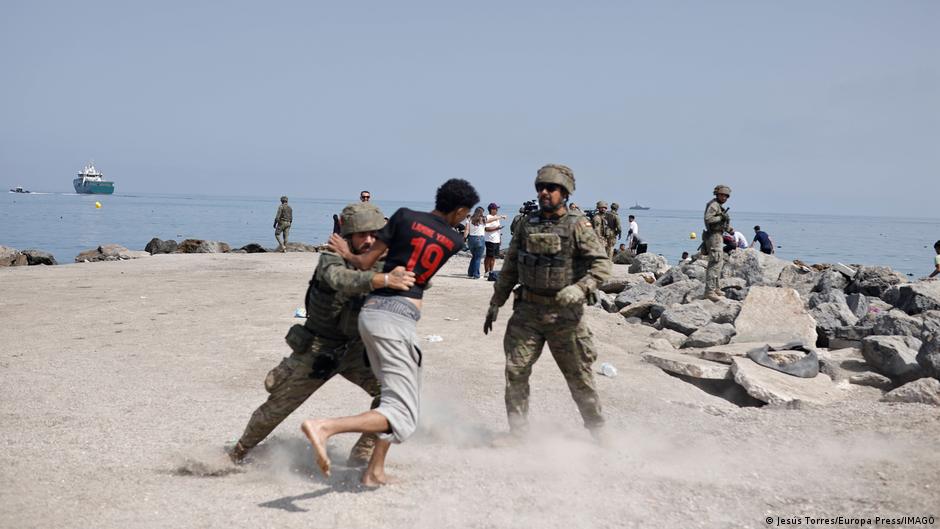
Spain is grappling with a significant migrant surge in its North African enclave of Ceuta, highlighting regional security challenges that could have broader implications for American businesses operating in Europe and North Africa.
On July 31, Spanish Prime Minister Pedro Sánchez visited Ceuta amid a crisis involving the illegal crossing of approximately 60,000 migrants from neighboring Morocco. The influx has been characterized by Sánchez as an "attack" on Spain and a violation of its territorial integrity, marking one of the largest such breaches in recent years.
Security Response and Regional Tensions
In response to the unprecedented surge, Madrid deployed military forces to Ceuta for the first time since 2021 to maintain order and manage the crisis. The enclave's population is around 85,000, and the rapid influx has strained infrastructure and local resources.
"The breach constitutes an attack on Spain and the violation of its territorial sovereignty," stated Prime Minister Sánchez during his visit.
Tragically, the migrant crossings have resulted in at least 57 deaths, as many attempted risky crossings by sea. However, Spanish authorities report that tens of thousands have voluntarily returned to Morocco via the land border, and by the evening of July 31, the immediate crisis was reported as largely contained.
The situation has elicited strong local reactions; residents of Ceuta staged protests against the migrant influx, expressing concerns over safety and accusing the government of losing control. Many shops remained closed due to fears of looting, and residents reported reluctance to leave their homes.
Adding to the regional tension, Italy unilaterally suspended the Schengen Agreement's free border crossing with Spain on July 31, citing the need to protect its citizens and European borders amid migration pressures. Italian Foreign Minister Antonio Tajani emphasized the "temporary suspension" as a necessary security measure.
Implications for US Business and Policy
The Ceuta migrant surge underscores the fragility of border security in a geopolitically sensitive region that is critical for transatlantic commerce and investment. US companies with operations or supply chains in Southern Europe and North Africa could face disruptions due to increased border controls, security spending, and potential instability.
Furthermore, this episode reveals challenges for EU border management that could influence US diplomatic and economic relations with European allies. A hardened stance on immigration and border enforcement may affect labor markets and consumer demand in Spain and neighboring countries, indirectly impacting US exports and multinational corporations.
As the US government continues to monitor global migration trends and their consequences, developments like the Ceuta incident demonstrate the complex interplay between regional security and economic interests, necessitating coordinated responses among allies.



