US-Brokered Ceasefire Takes Effect for Civilian Evacuation in Oleshky
The temporary truce puts Washington in a prominent humanitarian role while creating a closely watched test of limited cooperation.
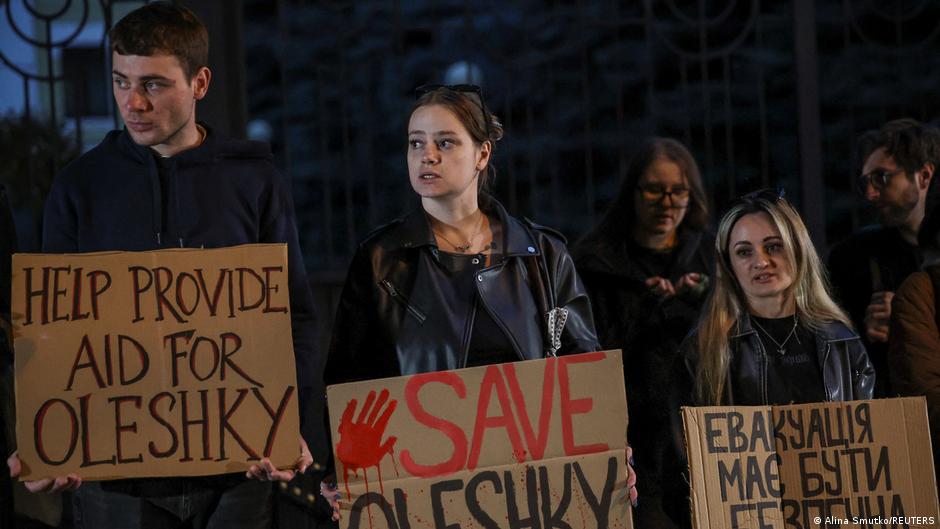
A bilateral ceasefire took effect early Tuesday around the Russian-occupied city of Oleshky in Ukraine’s Kherson region, opening the way for a humanitarian operation involving aid deliveries and preparations to evacuate civilians trapped in the area.
The General Staff of the Armed Forces of Ukraine and Russia’s Defense Ministry separately confirmed that the previously negotiated pause began at 3 a.m. Kyiv time on October 27, equivalent to 4 a.m. in Moscow. Russia said its forces had stopped firing along the Kherson front because of preparations for the humanitarian mission.
Ukraine said the cessation of hostilities applies only within a designated area and exclusively supports the delivery of assistance to people still inside Oleshky and preparations for their free movement out of the city. The Ukrainian military said it would do everything possible to help residents and implement measures intended to protect and rescue Ukrainian citizens.
Washington Faces a Test of Humanitarian Diplomacy
The White House announced the agreement on October 23, saying Moscow and Kyiv would stop firing to allow humanitarian assistance to enter and to prepare the evacuation of civilians through a specially organized safe corridor. The US administration said first lady Melania Trump’s team played a key role in arranging the temporary truce.
Ukrainian President Volodymyr Zelensky told TSN.Tyzhden presenter Alla Mazur that the regional “regime of silence” would start October 27, with the humanitarian mission becoming operational October 29. Under the arrangement, Russia is expected to clear mines from roads while Ukraine prepares to evacuate residents who have been unable to leave.
Zelensky said mediation by the US first lady helped secure the temporary ceasefire announced by Washington. The involvement gives the administration a direct stake in whether the narrow agreement produces a safe and verifiable humanitarian outcome. For US policymakers, its implementation may also provide evidence of whether tightly defined arrangements between the combatants can function despite the broader war.
“The priority for Ukraine is to save the trapped residents and help them reach territory under its control,” Zelensky said.
The Ukrainian president nevertheless warned of a high risk that Russian forces could act to discredit the process. He said Moscow might attempt to persuade residents to move to the Russian side and use the evacuation to produce propaganda material.
Melania Trump said civilian representatives from Russia and Ukraine would jointly visit Oleshky residents in their homes to determine what assistance they require. Those choosing to evacuate would receive support and transportation to a destination of their choice, she said, adding that some people might want to travel to Russia and others to Ukraine.
Personnel from an independent American media organization will accompany representatives of both countries during the house-to-house visits and document what happens, according to the first lady. Their presence adds a US-linked monitoring element to an operation vulnerable to competing claims about civilian treatment, aid delivery and freedom of movement.
Security Risks Carry Wider Economic Implications
Oleshky, also known by the Russian rendering Alyoshky, is a small city on the Russian-occupied eastern bank of the Dnipro River. About 24,000 people lived there before Russia’s full-scale war against Ukraine. Current estimates indicate that roughly 1,700 to 2,000 residents remain, including at least several dozen children.
The city was almost entirely flooded after Russia destroyed the Kakhovka hydroelectric dam in June 2023, and the flooding created additional infrastructure and drinking-water problems. Oleshky has been under blockade for the past several months. Ukrainian-controlled Kherson is only nine kilometers away, but mines cover the surrounding territory, making departure in any direction potentially deadly.
Ukrainian forces previously reported delivering food and medicine with heavy drones, while Moscow has also claimed that it supplied the city. Pope Leo XIV was among those who appealed to the Russian president for a ceasefire in Oleshky.
For American businesses, the immediate commercial effects of the localized pause are limited, but its success or failure could influence assessments of political and operational risk surrounding Ukraine. US companies involved in logistics, infrastructure, energy, communications, insurance and eventual reconstruction must account for mined transport routes, damaged utilities and the possibility that humanitarian agreements will break down.
The operation also carries implications for Washington’s credibility. A safe evacuation would give the White House a tangible, if narrowly focused, diplomatic result and could offer a model for other humanitarian corridors. Violations, manipulated media coverage or disputes over where civilians are taken would instead expose the limits of US influence and complicate future efforts to secure localized arrangements. The bottom line for US policymakers and companies is that the Oleshky mission is a small but consequential test of whether American-backed guarantees can reduce civilian risk in an active war zone.