US Chargé d’Affaires in Ukraine to Depart Amid Tensions Under Trump Administration
Julie Davis to leave Kyiv post in coming weeks amid disagreements with President Trump’s reduced Ukraine support
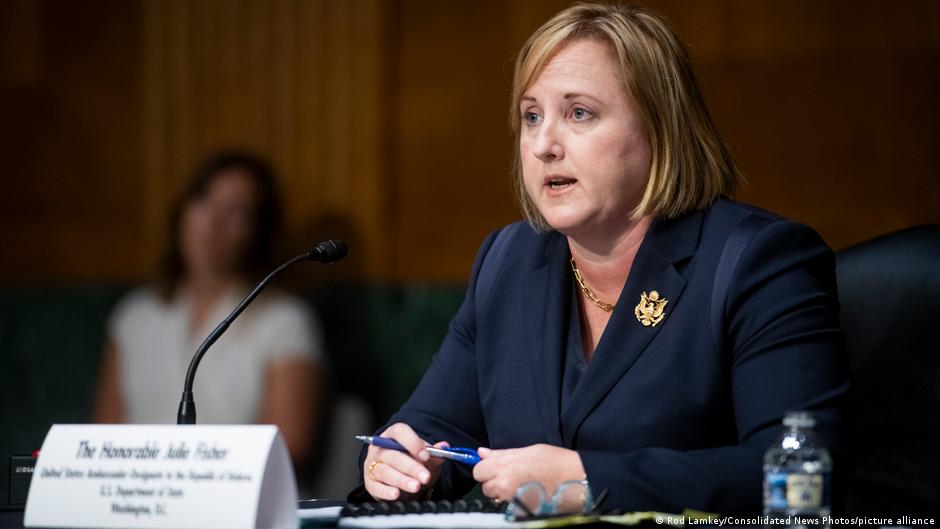
Julie Davis, the acting Chargé d’Affaires for the United States in Ukraine, is set to depart from Kyiv within the next few weeks, according to reports. This development comes amid reported disagreements with President Donald Trump’s administration, which has notably scaled back support for Ukraine since Trump’s return to the White House.
Davis, who has had a 30-year diplomatic career, has already informed the U.S. State Department of her decision and plans to retire from diplomatic service. Her departure will leave a critical diplomatic vacancy in Ukraine at a time when tensions with Russia are escalating and peace negotiations have stalled.
Impact on US Diplomatic Engagement and Business Interests
Washington’s recalibration of its Ukraine policy under Trump carries significant implications for American businesses and political interests. The reduction in military and intelligence assistance, as well as diplomatic presence, risks undermining stability in the region, which is vital for global supply chains and energy markets that affect the US economy and multinational corporations.
"Her departure highlights the growing rift within US policy circles over the approach to Ukraine, which could impact American strategic and commercial interests in Eastern Europe."
Julie Davis previously served as the US Ambassador to Belarus, but was denied accreditation by the Belarusian government due to her contact with opposition figures. She later acted as a special envoy on Belarus in Lithuania and was appointed US Ambassador to Cyprus in February 2023. She assumed the role of Chargé d’Affaires to Ukraine in May 2025.
Her predecessor in Ukraine, Ambassador Bridget Brink, who was appointed under President Joe Biden, resigned in April 2025. Brink cited pressure from the Trump administration that favored placing blame on Ukraine rather than Russia, which strained diplomatic efforts and contributed to pauses in military aid and intelligence sharing.
These shifts complicate the United States’ ability to support Ukraine amid Russia’s looming military operations. For US companies invested in Ukrainian markets or involved in supply chains dependent on regional stability, the diplomatic vacuum and policy uncertainty could heighten risks.
Historically, US diplomats in Ukraine have played a critical role in facilitating military aid and political support. The removal of experienced envoys like Davis and Brink signals a potential deprioritization of Ukraine in Washington’s foreign policy agenda, raising concerns among defense contractors, energy firms, and investors monitoring Eastern European dynamics.
Moreover, the political friction surrounding US policy toward Ukraine echoes earlier controversies involving former Ambassador Marie Yovanovitch, who stepped down in 2019 after President Trump reportedly sought her removal. Yovanovitch’s testimony during impeachment proceedings highlighted the intersection of US domestic politics and foreign policy in Ukraine.
For Washington policymakers, balancing domestic political considerations with international strategic commitments remains a challenge, with direct consequences for American businesses operating in or with interests in the region.