King Charles III Visits US Amid Strained UK-US Relations Over Iran Conflict
The British monarch's visit aims to mend ties strained by geopolitical tensions impacting US and UK interests.
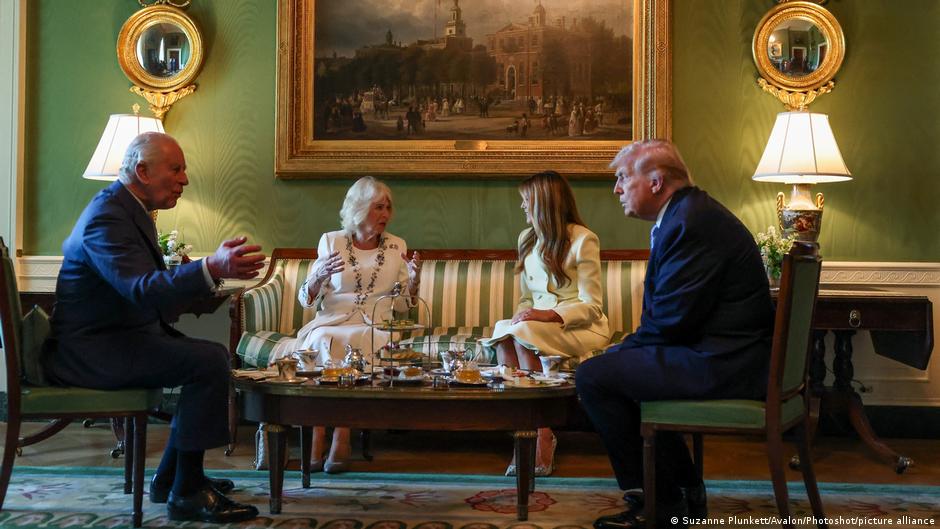
King Charles III and Queen Camilla arrived in the United States on April 27 for an official visit marked by heightened security, following a shooting incident near the Washington Hilton hotel. The royal couple was warmly received by former President Donald Trump and First Lady Melania Trump at the White House in Washington, D.C.
Restoring the Transatlantic Alliance Amid Tensions
This visit, the first by a British monarch to the US since 2007, comes at a delicate time in US-UK relations. Recent disagreements over the ongoing conflict involving Iran have introduced strain into the historically close partnership between the two nations.
In March, UK Prime Minister Keir Starmer declined US requests to use British military bases for strikes on Iran and refused to send Royal Navy vessels to the strategic Strait of Hormuz, signaling a cautious approach divergent from Washington's policies. These decisions highlight the UK's independent stance on Middle East security matters, which contrasts with the US's more aggressive posture.
"King Charles III arrived in the US with a 'delicate' mission: to revive the traditionally close Anglo-American relationship shaken by the Iran conflict."
Adding to the tension, in an interview published on April 1, former President Trump criticized the Royal Navy's capabilities in the Strait of Hormuz, describing British warships as "too old" to effectively unblock the vital shipping lane. Trump also disparaged NATO allies as "cowards" for their hesitant positions regarding the Iran conflict and labeled the alliance a "paper tiger," suggesting he might consider withdrawing the US from NATO altogether.
Prime Minister Starmer responded in early April by expressing frustration over the volatility of British energy prices, which he attributes to the geopolitical maneuvers of leaders such as Russian President Vladimir Putin and Donald Trump. He emphasized his government's commitment to investing in domestic energy to reduce dependence on foreign actors manipulating gas prices.
Despite these political frictions, Trump has downplayed the potential impact on King Charles III's visit, noting that the monarch is "not involved" with NATO and referring to him as a "great guy" and "friend."
Significance for US Businesses and Political Landscape
The visit holds considerable implications for US businesses and political observers. The strained diplomatic ties and contrasting stances on Iran could affect transatlantic trade agreements, defense cooperation, and energy markets. British reluctance to support US military initiatives may signal shifts in security collaboration, potentially increasing uncertainties for American companies with UK operations or interests.
Moreover, the ongoing debate over NATO's role and cohesion, underscored by Trump's sharp criticisms, raises questions about the future of multinational defense partnerships crucial to US and European business stability. Energy market volatility driven by geopolitical conflicts further complicates the operational environment for companies reliant on steady supply and pricing.
King Charles III's address to both houses of the US Congress, only the second by a British monarch in history after Queen Elizabeth II in 1991, is expected to emphasize the importance of renewing transatlantic relations. His participation in the 9/11 memorial event in New York also reinforces shared historical ties and collective security commitments.
Overall, the visit serves as a strategic effort to realign UK-US relations and mitigate the business and political uncertainties stemming from diverging approaches to international crises, particularly in the Middle East.