U.S. House Passes Resolution Restricting Trump’s Military Action Against Iran Without Congressional Approval
For the first time, the House voted to limit the president’s authority to wage war on Iran, signaling growing bipartisan concerns with White House policy.
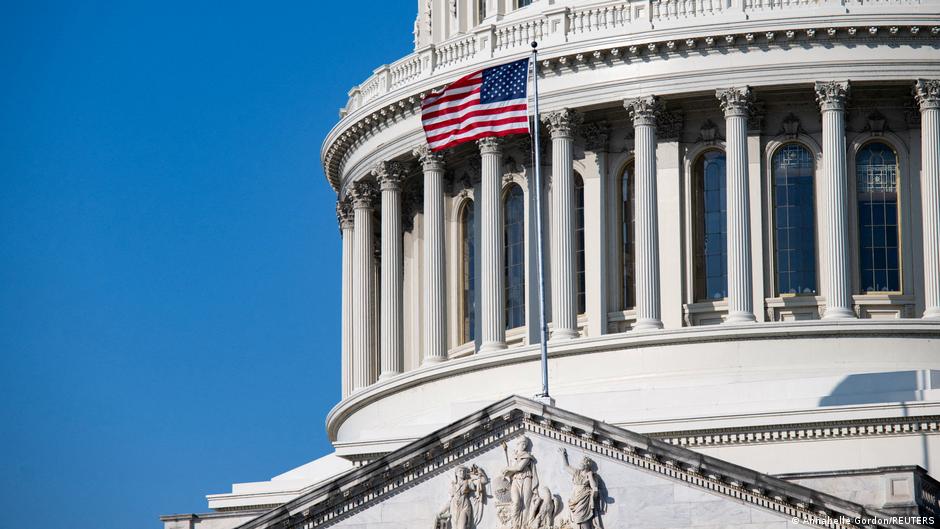
The U.S. House of Representatives has approved a resolution that prohibits President Donald Trump from continuing military operations against Iran without explicit congressional consent. This marks the first instance where the lower chamber of Congress has formally opposed the Trump administration’s stance on the escalating conflict with Tehran.
The resolution passed on June 3, with 215 members voting in favor and 208 opposed. While the Democratic caucus largely supported the initiative, it also garnered backing from four Republicans, whose votes were critical given their numerical majority in the House. This bipartisan support highlights a shifting sentiment within Congress, including among some of the president’s own party members.
Implications for U.S. Business and Political Landscape
This congressional intervention carries significant implications for U.S. businesses and the broader Washington political environment. By seeking to restrict unilateral presidential military action, lawmakers aim to inject a greater level of checks and balances into foreign policy decisions that carry considerable risk for American economic interests and global stability.
"The growing congressional resistance reflects concerns about unchecked military escalation and its potential to disrupt markets and supply chains," analysts note.
Earlier, on May 19, the U.S. Senate narrowly supported a similar resolution requiring President Trump to seek legislative approval before continuing hostilities against Iran. The Senate vote was 50 in favor to 47 against, with three Republican senators absent due to their ongoing election campaigns, reducing the likelihood of full Senate approval for the measure.
Despite repeated attempts this year to advance such resolutions—initially triggered by a U.S.-Israeli military operation against Iran—Republican opposition has consistently blocked progress. The House resolution had been stalled three times by Republicans before finally passing.
Reuters reports that even if the resolution passes both chambers, President Trump is expected to exercise his veto power, underscoring the constitutional tug-of-war over war powers between the executive and legislative branches.
Context Under the War Powers Act
The resolution is grounded in the War Powers Act of 1973, which limits the president’s ability to engage in military conflict without congressional approval to 60 days. After this period, the president must either halt military operations or obtain express legislative authorization.
On May 1, 2026, marking the expiration of this 60-day window, President Trump notified Congress that combat operations against Iran had concluded. However, hostilities have continued, including Iranian missile and drone attacks targeting U.S. bases in Kuwait and Bahrain, and a retaliatory strike by U.S. forces against an Iranian military installation on Qeshm Island in the Strait of Hormuz.
The Trump administration maintains it is engaged in negotiations with Iranian leadership to formally end the conflict, but the continuation of military action complicates the political and economic calculus.
Potential Impact on American Companies
Heightened tensions with Iran carry risks for American businesses, particularly those involved in energy, defense contracting, and global supply chains. An expanded conflict could disrupt oil markets, increase costs for manufacturers reliant on Middle Eastern resources, and negatively affect investor confidence.
By asserting congressional authority over war decisions, lawmakers aim to prevent unpredictable escalations that could harm the U.S. economy and corporate bottom lines. The partial bipartisan consensus signals a growing wariness in Washington about the broader consequences of prolonged military engagement without legislative oversight.