German Foreign Minister Meets U.S. Secretary of State in Washington to Discuss Transatlantic Partnership and NATO Support
Germany and the U.S. reaffirm indispensable partnership amid global economic instability and plan discussions on NATO contributions and Ukraine aid ahead of summit.
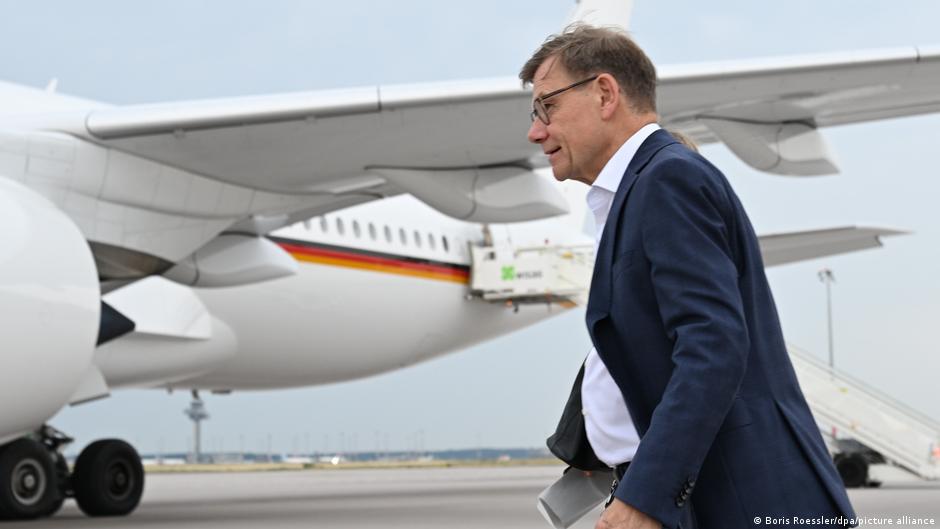
On June 29, German Foreign Minister Johann Wadephul met with U.S. Secretary of State Mark Rubio in Washington to strengthen ties between the two nations and address pressing geopolitical challenges. The meeting underscored the critical nature of the transatlantic partnership amid mounting global crises that threaten economic stability and international cooperation.
Reaffirming the Transatlantic Partnership Amid Global Challenges
In a joint statement following their discussion, Wadephul emphasized the essential role of U.S.-German relations, stating, "Numerous crises undermine the stability of the global economy and risk driving a wedge even between close partners. But we are resolutely countering this. Our partnership with the United States is indispensable—especially during times of profound change." His remarks reflect the shared concern over economic uncertainties and geopolitical tensions impacting both sides of the Atlantic.
"Our partnership with the United States is indispensable—especially during times of profound change." — Johann Wadephul, German Foreign Minister
The dialogue took place amid ongoing efforts to maintain ceasefire agreements in conflict regions. Wadephul confirmed that representatives from Washington and Tehran, who recently accused each other of violating a ceasefire agreement, would resume negotiations on June 30 in Doha. Both parties reportedly aim to uphold the truce, signaling a cautious but important step toward de-escalation in a volatile area.
Strategic Discussions Ahead of NATO Summit and Regional Engagements
Prior to his trip to Washington, Wadephul indicated his intention to discuss with Secretary Rubio the reallocation of military and financial contributions among NATO member countries. These conversations are particularly relevant as the alliance prepares for its summit on July 7-8 in Ankara, where long-term support for Ukraine remains a key agenda item. The German minister's focus on equitable burden-sharing reflects ongoing debates in Washington about U.S. commitments versus allied responsibilities within NATO.
Following the Washington meeting, Wadephul planned to travel to Asunción, Paraguay, to attend the Mercosur summit on June 30. Mercosur, South America's largest trade bloc, represents a strategic economic partner for both Germany and the U.S., offering opportunities for expanded trade and cooperation. Subsequent visits to Argentina and Brazil were also scheduled through July 3, indicating a broader diplomatic and economic outreach to the Latin American region.
While the discussions primarily centered on political and economic cooperation, Wadephul also engaged in lighthearted cultural exchanges. Ahead of Germany’s round of 16 World Cup match against Paraguay on June 29, he confidently predicted a 3-1 victory for the German team, illustrating the soft diplomacy that often accompanies formal engagements.
Implications for U.S. Businesses and Policymakers
The reinforcement of U.S.-German relations carries significant implications for American industries and policymakers. Stability in transatlantic partnerships supports continued collaboration on technology, defense, and trade policies that benefit U.S. companies operating in Europe and beyond. Furthermore, the planned dialogue on NATO contributions may influence defense spending priorities and international burden-sharing, topics closely monitored by defense contractors and government agencies.
Additionally, the Mercosur summit engagement signals potential opportunities for U.S. businesses to expand trade ties with South American markets, facilitated by coordinated diplomatic efforts alongside European partners. Maintaining open lines of communication regarding ceasefire agreements and geopolitical stability also helps mitigate risks for multinational corporations exposed to regional conflicts.
In summary, the Washington meeting between Wadephul and Rubio reinforced the enduring nature of the U.S.-Germany alliance amid global uncertainties. Their discussions set the stage for collaborative approaches to NATO strategy, support for Ukraine, and economic diplomacy in the Americas, all of which bear direct relevance to U.S. business interests and strategic policy considerations.