Ukraine's Zelensky Proposes National Pantheon and 'Order of Europe' Amid Diplomatic Tensions with Poland
President Zelensky initiates new honors to celebrate Ukrainian heroes, intensifying diplomatic strains with Poland and raising considerations for U.S. business and political interests.
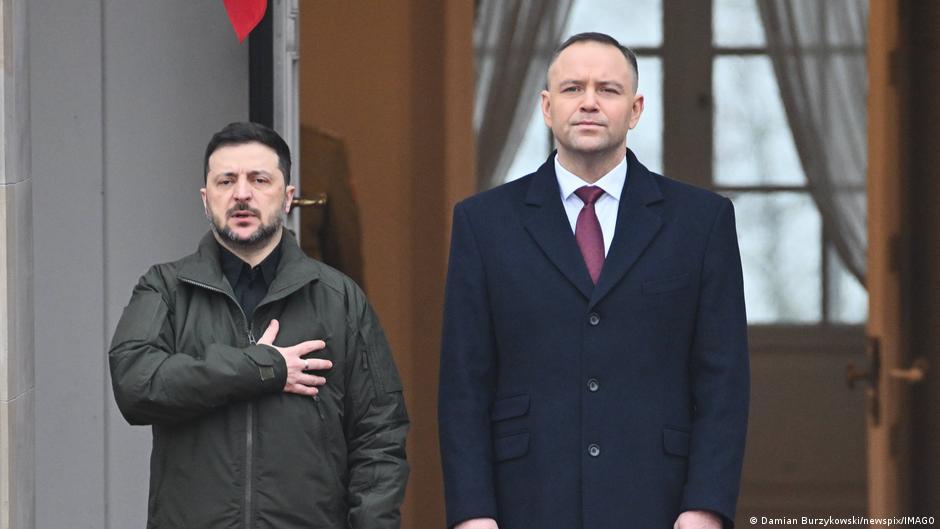
Ukrainian President Volodymyr Zelensky announced plans to establish a Ukrainian National Pantheon dedicated to honoring heroes who have fought for Ukraine across different eras. He also proposed creating a new state award named the "Order of Europe" to recognize individuals defending European security and Ukraine's future.
National Honors Amid Diplomatic Conflict
Speaking on June 28 during a ceremony marking Ukraine's Constitution Day, Zelensky emphasized the importance of commemorating those who have contributed to the country's sovereignty. "The names of all heroes who, in different centuries and epochs, fought for Ukraine and inspired the nation will be united and forever inscribed in our history with great respect and attention from the state," he stated.
He added firmly, "No one will ever dictate how we live, speak, whom to love, whom to be grateful to, or which heroes to honor." This declaration came amid ongoing diplomatic tensions with Poland triggered by Ukraine's decision to name a military unit after the Ukrainian Insurgent Army (UPA), a group whose legacy is deeply contentious in Poland due to associations with the Volhynia massacre during World War II.
Poland, a pivotal U.S. ally in supporting Ukraine against Russian aggression, viewed Zelensky's move as provocative. In response, Polish President Karol Nawrocki revoked Ukraine's highest Polish honor, the Order of the White Eagle, originally awarded to Zelensky. The situation escalated as Polish politicians, including Jarosław Kaczyński, leader of the national-conservative Law and Justice Party (PiS), called for blocking Ukraine’s EU accession talks. This political stance appears partly aimed at consolidating domestic support ahead of Poland’s 2027 parliamentary elections.
"No one will ever dictate how we live, speak, whom to love, whom to be grateful to, or which heroes to honor," Zelensky said, underscoring his commitment to Ukrainian sovereignty and historical narrative.
According to a mid-June survey in Poland, 58.3% of respondents hold a negative view of Zelensky’s attitude toward Poles, while 30.1% think otherwise. Meanwhile, President Nawrocki's approval rating reached a record high of 54.8%, reflecting popular support for his response.
Implications for U.S. Business and Political Interests
The diplomatic rift between two key U.S. allies in Eastern Europe could have broader implications for Washington, particularly in the context of European security, transatlantic unity, and economic cooperation.
Poland remains a critical partner for the United States in supplying military aid and coordinating responses to Russian aggression in Ukraine. The deterioration of Ukrainian-Polish relations risks undermining regional cohesion and the efficient deployment of resources, which may complicate U.S. strategic objectives.
Additionally, the controversy may affect American companies operating in Poland and Ukraine, as political instability often translates into economic uncertainty. The EU accession process for Ukraine is a significant factor for investors, and any delays or obstacles may impact market confidence and long-term investment decisions.
Furthermore, the creation of a new Ukrainian "Order of Europe" and National Pantheon reflects Kyiv’s efforts to solidify national identity and international recognition amid ongoing conflict. While symbolically powerful, these moves coincide with real geopolitical frictions that could influence diplomatic negotiations and transatlantic alliances.
For U.S. policymakers and business leaders, monitoring these developments is crucial to understanding the evolving landscape in Eastern Europe and adjusting strategies to maintain stability and support for democratic partners.